Languages
Friday, September 4, 2026



News and Views from the Global South
Opinion
How the Environment Affects Us
Today, society is rightly concerned about the rising prevalence of autism among children worldwide; affecting up to 1% of children, it has a profound impact on families. Neuroinflammation and environmental origins are increasingly implicated. But what causes them?
My Niece Was Killed Amid Mexico’s Land Conflicts. The World Must Hold Corporations Accountable
My niece Roxana Valentín Cárdenas was 21 years old when she was killed. She was a Purépecha Indigenous woman from San Andrés Tziróndaro, a community on the shores of Lake Pátzcuaro in the Mexican state of Michoacán.
When Frontline Communities Lead: Lessons From Five Years of Just Climate Action
Efforts to combat climate change too often sideline the very communities hit hardest by the crisis and who have contributed the least to it. This injustice was the core idea of the Voices for Just Climate Action (VCA) program. Now that VCA has concluded after five years, Job Muriithi and Winny Nyanwira from Hivos reflect on its achievements and share recommendations for governments and donors to ensure fair and equitable climate action.
Killer Robots: The Terrifying Rise of Algorithmic Warfare
Machines with no conscience are making split-second decisions about who lives and who dies. This isn’t dystopian fiction; it’s today’s reality. In Gaza, algorithms have generated kill lists of up to 37,000 targets.
Asia and the Pacific Preparing for a New Era of Disaster Risks
Cyclones Ditwah and Senyar are indications of a shifting disaster riskscape, not anomalies. Both storms broke historical patterns: Ditwah tracked unusually south along Sri Lanka’s coast before looping into the Bay of Bengal, dumping over 375 mm of rain in 24 hours and triggering landslides.
Asylum Seekers: Offshore, Off Course
The debate on reforming the European asylum system has gained significant momentum following the agreement reached by EU interior ministers last week. Alongside questions of solidarity and distribution, the possibility of establishing ‘return hubs’ outside the EU was at the heart of the meeting.
Trump Reboots US National Security Strategy, Foreign Policy
The new US National Security Strategy (NSS) repositions the superpower’s role in the world. Hence, foreign policy will be mainly driven by considerations of ‘making America great again’ (MAGA).
Will the Song “White Christmas” Become a Clarion Call for Climate Change Action?
As each Christmas approaches, one song permeates the airwaves across the United States and elsewhere: White Christmas. According to the Guiness Book of World Records, “White Christmas” is the #1 selling physical single of all times with over 50 million copies sold.
Will Low Fertility Rates Return to the Replacement Level Any Time Soon?
Will low fertility rates return to the replacement level of 2.1 births per woman any time soon? A simple answer to this vital demographic question is: unlikely.
As Attacks on Women Defenders Intensify, so Must Our Support
A global crackdown on civic freedoms is intensifying – and women are on the frontlines of the attack. CIVICUS’s 2025 People Power Under Attack report analyses the extent to which freedoms of association, expression and peaceful assembly are being respected or violated. The report reveals that people in 83 countries now live in conditions where their freedoms are routinely denied, compared to 67 in 2020. In 2020, 13 per cent of the world’s population lived in countries where civic freedoms were broadly respected; now it’s more like 7 per cent. Among the most documented violations in 2025 were detention of human rights defenders, journalists and protesters, and women human rights defenders (WHRDs) were among the most affected.
UNDP’s Digital Rights Dashboard: A Conversation Starter on Human Rights in the Digital Age
Within a generation, digital systems have changed much of how we learn, work and participate in civic life, especially in more connected regions. This shift is unfolding at different speeds in developing countries, but the direction of travel is unmistakable.
From Law to Lives Saved: How the Maternal Newborn and Child Health Bill Can Deliver Universal Health Coverage
For women in labour across Kenya, reaching a health facility, finding skilled health workers, and affording care can be a matter of life and death. These challenges are not rare, but daily realities for many families.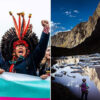
Funding for Human Rights Organizations – including at the Grassroots Level – have Been Slashed Worldwide
Human rights are underfunded, undermined and under attack. And yet. Powerful. Undeterred. Mobilizing. This year no doubt has been a difficult one. And one full of dangerous contradictions. Funding for human rights has been slashed, while anti-rights movements are increasingly well-funded.
The Daunting Tasks Ahead for the New UN Secretary-General
The election of the next Secretary-General of the United Nations comes at a highly inopportune moment in 2026, when the UN is being bypassed, and multilateralism—with the UN at its core—is under increasing challenge from some of the world’s most powerful states and leaders.
Sri Lanka & the Global Climate Emergency: The Lessons of Cyclone Ditwah
Tropical Cyclone Ditwah, which made landfall in Sri Lanka on 28 November 2025, is considered the country’s worst natural disaster since the deadly 2004 tsunami. It intensified the northeast monsoon, bringing torrential rainfall, massive flooding, and 215 severe landslides across seven districts.
The New Fragility: Peacebuilding Meets Digital Democracy
Established democracies are exhibiting governance stresses that were once associated primarily with fragile and conflict-affected states. Polarisation is weakening institutional trust, fragmenting civic norms, and reducing societies’ ability to solve problems collectively. This is the new fragility. At the same time, governments and civil society organisations are adopting digital tools to support public participation. These deliberative technologies hold real promise, but in polarised environments they also carry risks. Their success depends on the same principles that have guided peacebuilding efforts for decades.

Africa’s Industrial Future is Within Reach: What we Need now is Intentional Investment
Africa enters 2025 at a pivotal moment in its development. The ambition to transform the continent’s economies through sustainable industrialization, regional integration, and innovation is clearer than ever, and is picking up pace. The foundations are being laid. Industrial strategies are expanding, regional integration is progressing, infrastructure projects are advancing, and a young, dynamic private sector powers local economies.
UNGA’s Long-Drawn Revitalization Efforts Need a Meaningful Outcome, Not Another Repetitive Regularity of an Omnibus of Redundancy
From its inception, the UN General Assembly (UNGA) has been engaged in improving its working methods, mindful of, as early as in 1949, “… the increasing length of General Assembly sessions, and of the growing tendency towards protracted debates.”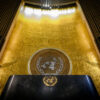
UN80 is Less a Reform Than a Survival Manual
Let’s just say the quiet part out loud: the UN is not reforming because it suddenly woke up one morning inspired by efficiency. It’s reforming because the Organization is broke. Not metaphorically broke. Not diplomatically broke. Actually broke. The kind of broke where arrears sit at $1.586 billion and everyone pretends that’s just an unfortunate bookkeeping hiccup instead of the fact that the lights are flickering.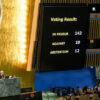
For 78 Years, the Palestinians have Been Denied their Inalienable Rights & their Right to Self-Determination
For seventy-eight years, the question of Palestine has been on the agenda of this General Assembly, almost as long as the institution itself.
Why the UN Environment Assembly is Essential to a Safer, More Resilient Planet
As geopolitical challenges and tensions escalate globally, one thing is clear: fragmented politics will not fix a fractured planet. This is why the United Nations Environment Assembly (UNEA) – the world’s highest decision-making body on the environment – is so critical to address our shared and emerging environmental threats.« Previous Page — Next Page »


The views expressed in these articles are those of the authors and do not necessarily represent the views of, and should not be attributed to, IPS-Inter Press Service

The Week with IPS

NEXT STOP - SDGs
Tracking global progress towards a sustainable world
Tracking global progress towards a sustainable world
