Languages
Monday, November 9, 2026



News and Views from the Global South
Opinion

Perpetrators of Crimes against Humanity Must be Brought to Justice
On the occasion of the 2017 International Day of Human Solidarity observed on 20 December, the Chairman of the Geneva Centre for Human Rights Advancement and Global Dialogue Dr. Hanif Hassan Ali Al Qassim calls for peace for and human solidarity with, the Rohingya minority in Myanmar.
Rise of Teenage Pregnancy Deters Development Goals
A few years ago, someone shared a video with me that deeply impacted me. It was called "The Girl Effect". In three minutes, the video demonstrates the fate of millions of girls and teenagers around the world.
Production Diversity, Diet Diversity and Nutrition in Sub -Saharan Africa
Lack of diet diversity is viewed as the major cause of micronutrient malnutrition in Sub-Saharan Africa. Imbalanced diets resulting from consumption of mainly high carbohydrate based-diets also contribute to productivity losses and reduced educational attainment and income. Consequently, micronutrient malnutrition is currently the most critical for food and nutritional security problem as most diets are often deficient in essential vitamins and minerals. In Tanzania, for example, most rural and urban households consume mainly staples as their main food, which are high in carbohydrates, but low in micronutrients and vitamins. Staple food items increase energy availability but do not improve nutritional outcomes if not consumed together with micro-nutrient rich foods.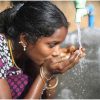
Water, Water Everywhere, Costs More Than You Might Think
Without reliable access to water, human beings cannot survive. Yet 3 out of 10 people do not have a safely managed water supply, and 6 out of 10 lack safely managed sanitation. Over 2 billion people drank water that was fecally contaminated in 2015, and the World Bank estimates that the annual cost of poor sanitation is in excess of $260 billion annually.
Our Right of Passage Should be Safe Migration, Not Leaky Boats
“I’m a migrant, but didn't have to risk my life on a leaky boat or pay traffickers. Safe migration cannot be limited to the global elite.” Thus spoke United Nations Secretary General Antonio Guterres in September 2017.
Why the Rohingya Can’t Yet Return to Myanmar
On Nov. 23, the governments of Myanmar and Bangladesh signed an agreement to return the Rohingya refugees — more than 600,000 people who escaped from Rakhine state in western Myanmar to Cox’s Bazar in Bangladesh — after ethnic cleansing carried out by Myanmar’s armed forces since August.
Shedding Diplomacy, Roberto Savio Speaks about Fear as a Tool to Gain Power
At the outset my thanks to Dr Hanif Hassan Ali Al Kassim, and Ambassador Idriss Jazairy who lead the Centre for Human Rights Advancement and Global Dialogue for organizing this panel discussion at a critical moment in history. The Centre, is one of the few actors for peace and cooperation between the Arab world and Europe. As a representative of global civil society, I think it will be more meaningful if I speak without the constraints of diplomacy, and I make frank and unfettered reflections.
In Defense of Uganda’s Imprisoned Journalists
The Committee to Protect Journalists (CPJ) has included eight staffers of the controversial Ugandan tabloid Red Pepper in its 2017 global census of imprisoned journalists. Some may disagree with that decision.
Can Korea Power Past Coal? A New World in Which “Solar+Batteries” Becomes the Cheapest Form of Energy
Renewable energy became the cheapest form of electricity in 58 emerging economies last year. This year, the 11th Lazard’s Levelized Cost of Energy Analysis (LCOE 11.0) showed that solar and wind energy generation costs (at $46 to $53 per megawatt-hour of generation) easily beat coal and gas (at $60-68).
The Journey to Oslo
On December 10 in Oslo, the International Campaign to Abolish Nuclear Weapons (ICAN) was awarded the Nobel Peace Prize. ICAN started as a grassroots campaign in 2007. Its aim was to shift the paradigm of discussion about nuclear weapons from security and deterrence to the environmental and humanitarian effects of nuclear explosions. As the prize demonstrates, ICAN has succeeded brilliantly. But, as ICAN acknowledges, this is still only the beginning of the end of nuclear weapons.
The Protracted Refugee and Migrant Crisis: A Challenge to Multilateralism
It is an incontrovertible fact that more people are on the move owing to globalization. Fifteen percent of the world’s population are on the move worldwide. In other words, of the world population of 7 billion, one billion are on the move. Seven hundred and forty million people are referred to as internal or as domestic migrants within their countries of origin. The number of internally displaced persons reaches about 60 million. On top of this, the world has more than 244 million international migrants who cross borders often into the unknown. Lastly, there are 22.5 million refugees – encompassing the 5.3 million Palestinian refugees – registered by the United Nations High Commissioner for Refugees who have been forced to flee their home societies as a result of violence and armed conflict. The first two decades of the 21st century will go down in history as the era in which the world has witnessed the most complex and massive movement of people since the end of the Second World War.
For Freedom from Poverty, Universal Health Coverage Is a Must
Today is 12 December 2017 is an auspicious day, as it marks Kenya’s independence from colonial rule in 1963. Today is also Universal Health Coverage Day. It is the anniversary of the first unanimous United Nations resolution calling for countries to provide affordable, quality health care to every person, everywhere.
Are Value Chains a Pathway to Nutrition in Sub-Saharan Africa?
Although difficult to ascertain whether it is a trend reversal, two recent FAO reports (2017a, b) show a rise in hunger globally as well as in Africa. The number of undernourished (NoU) in the world suffering from chronic food deprivation began to rise in 2014 –from 775 million people to 777 million in 2015 – and is now estimated to have increased further, to 815 million in 2016. The stagnation of the global average of the proportion of undernourished (PoU) from 2013 to 2015 is the result of two offsetting changes at the regional level: in Sub-Saharan Africa, the share of undernourished people increased, while there was a continued decline in Asia in the same period. However, in 2016, the PoU increased in most regions except Northern Africa, Southern Asia, Eastern Asia, Central America and the Caribbean. The deterioration was most severe in Sub-Saharan Africa and South-Eastern Asia (FAO 2017a,b).
Should Foxes Rule the Chicken Coop? Reflections on Security Council Reform
Since the end of the Cold War, the UN Security Council has dramatically increased its activity and authority. Though the Council has exercised unprecedented global power, it has remained a very insular, secretive and undemocratic body, dominated by its five Permanent Members, armed with their notorious vetoes and benefiting from perpetuity in office.
Food Sovereignty as a Pillar of Self-Determination
A recent meeting in Rome between our Pacific leaders and UN Food & Agriculture Organisation (FAO) highlighted the urgency of food security in our region given the reality of climate change affecting our agriculture and aquaculture.
Despite Progress, Gay & Abortion Rights Face Threats in Latin America
Cancun, Mexico, of white sand beaches and spring break-style nightlife, was, this past June, the unusual backdrop for a regional gathering on human rights and democracy.
Pacific Islands Struggling to Meet SDG7 Energy Targets
The four Pacific Island nations who are amongst the Least Developed Countries (LDCs) may be falling behind in meeting energy access targets because they are too busy devoting resources towards climate change.
“Migrants Deserve Dignity” says CIVICUS While Trump Pulls out of Proposed Migrant Compact
Continuing his “America First” approach, President Donald Trump has pulled the U.S. out of a proposed United Nations global compact seeking an agreement to protect the safety and rights of migrants and refugees.
Action Needed to Avoid the End of Modern Medicine
The next time you have a bad cold and reach for the antibiotics left over from your last visit to the doctor, think again.
Strengthening Governments to Cope with PPPs
Public-private partnerships (PPPs) have emerged in recent years as the development ‘flavour of the decade’ in place of aspects of the old Washington Consensus. Instead of replacing the role of government or consigning it to the garbage bin of history, corporations are increasingly using governments to advance their own interests through PPPs.
“Will Civil Society & Democracy in India Rise to the Existential Challenges They Face?”
A cursory glance at international funding of the social sector in India reveals that it has grown at over 25% annually over the past three years.« Previous Page — Next Page »





The views expressed in these articles are those of the authors and do not necessarily represent the views of, and should not be attributed to, IPS-Inter Press Service

The Week with IPS

NEXT STOP - SDGs
Tracking global progress towards a sustainable world
Tracking global progress towards a sustainable world
