Languages
Tuesday, November 10, 2026



News and Views from the Global South
Opinion
Will We One Day Reunite as ‘Akhand Bharat’?
INDIA'S ruling BJP's General Secretary, Mr. Ram Madhav, recently said in an interview to Al Jazeera that the RSS, his core organisation, still believes that one day Bangladesh, India and Pakistan, “which have for historical reasons separated only 60 years ago, will again, through popular goodwill, come together and 'Akhand Bharat' will be created". The idea of Akhand Bharat is a dream of the RSS, and of the BJP, which is a right-wing party with close ideological and organisational links to the former, and of other Hindutvadi organisations and their adherents. I am not going to speak for Pakistan. But, whether future generations of Bangladeshis will reunite their country with India will depend fully on those generations that are probably yet to be born.
UNDP at 50 Seeks Broad Coalition Targeting Sustainable Development
Fifty years ago, one in every three people around the world was living in poverty. It was against that backdrop that the United Nations Development Programme, UNDP, was founded in 1966. Ever since, UNDP has been a leader in working for a more fair and prosperous world for all. We have worked with governments, civil society, the private sector, and philanthropy to empower people and build resilient nations.
Elections in Iran, a Test for the Regime
Iran will hold two crucial elections on February 26, 2016, which could decide the fate of the Islamic Republic for many years to come. Earlier this month, Iranians celebrated the 37th anniversary of the victory of the Islamic Revolution. During that period, the country experienced revolutionary upheavals, a disastrous eight-year war with Iraq that killed and wounded nearly a million Iranians, eight years of populist rule by a hard-line president, Mahmoud Ahmadinejad, and crippling Western sanctions.Children of Alcoholics – Hidden Human Rights Crisis & Crucial SDGs Issue
Children of alcoholics are the forgotten victims of someone else’s alcohol use. All too often they do remain invisible and alone, neglected by their parents, overlooked by teachers, down prioritized and ignored by governments and authorities.
World Leaders Agree to Save the Planet – Now It’s Time to Actually Do It!
The day, 12 December 2015 was historic. Following decades of negotiations, countries agreed to sign the first global, legally binding climate agreement.
Boutros Boutros-Ghali Turning Point in the United Nations
It is no coincidence that Boutros Boutros-Ghali was the only Secretary General in the history of the United Nations able to serve only one term instead of the two that have become traditional. The United States vetoed his re-election, in spite of the favourable vote of the other members of the Security Council.
The Nuclear Deal Implementation Day: Can the Deal with Iran Survive Iranian and US Elections? (part three)
Although the implementation of Iranian nuclear deal has been welcomed by all those who had been involved in the negotiations as part of the P5+1, the deal has had many vociferous opponents.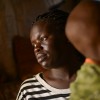
Gang-Raped and Nowhere to Turn
Owuor P.’s 16-year-old sister Nekesa tried and tried to get an abortion after she was gang-raped and found herself pregnant during Kenya’s post-election violence in 2007-8. “We are not sure how many raped her,” Owuor told me. “She told us that she saw three men rape her and then she lost consciousness. She was quiet most of the time after the rape.” In desperation after the birth of the child, she killed herself. The baby survived, and today Owuor is raising the child, who has a serious mental health condition, and is still grieving for his sister.
TPP’s Threat To Multilateralism
2015 proved challenging for multilateralism, especially in relation to development concerns. July’s Addis Ababa third Financing for Development (FfD) conference delivered little real progress. Nevertheless, the September Sustainable Development Goals summit redeemed hopes with an ambitious and universal Agenda 2030.
ACP countries unite on empowerment of rural women and youth
Women make up, on average, over 40 percent of the agricultural labour force in the developing world and yet typically they do not have sufficient access to critical resources and services to become as productive as their male counterparts. In fact, across all regions, rural women and girls continue to face significant discrimination compared with men and boys, with women being more likely than men to hold poor quality jobs and benefit less from agricultural value chains.
Views Split on Nuclear Deal Implementation (Part Two)
The implementation of the Iranian nuclear deal with the P5+1 (the United States, Russia, China, the United Kingdom, France and Germany) on January 16, which resulted in the lifting of the sanctions imposed on Iran, has split the views of current and former US politicians.
Violence Is a Preventable Disease
The World Health Organization has said that ‘Violence is a preventable disease’ and people are not born violent, rather we all live in cultures of violence. This can be changed through nonviolent peacemaking and the persuit of ‘just peace’ and nurturing of cultures of peace.
Rural Youth Can Be Tomorrow’s Entrepreneurs
Bolstering widespread prosperity in Africa is a key necessity if the world is to achieve its commitments to eradicate poverty and hunger by 2030.
The Nuclear Deal Implementation Day: A Win-Win Agreement (part one)
After many years of unprecedented, crippling Western sanctions that stopped Iran’s oil exports and even banking transactions, the long and arduous negotiations between Iran and the P5+1 (the United States, Russia, China, United Kingdom, France and Germany) culminated in the Joint Comprehensive Plan of Action (JCPOA) agreed on 14 July 2015. That agreement finally reached the Implementation Day on 16th January 2016, coincidentally 37 years to the day when the late Mohammad Reza Shah left Iran for good and paved the way for the victory of the Islamic revolution.
Women and Girls Imperative to Science & Technology Agenda
Can you imagine an entire day without access to your mobile phone, laptop, or even to the internet? In our rapidly changing world, could you function without having technology at your fingertips?
IPS joins in the call to enforce international law to protect journalists
While our goal at Inter Press Service is to provide information – a precious global public good – we naturally applaud all efforts to foster and promote the safety of journalists, and so applaud UNESCO’s international conference in Paris on Friday, February 5, 2016 with media executives and member states to discuss just that.
Europe is disintegrating while its citizens watch indifferent
We are witnessing the slow agony of the dream of European integration, disintegrating without a single demonstration occuring anywhere, among its 500 millions of citizens. It is clear that European institutions are in an existential crisis but the debate is only at intergovernmental level.
2 Billion Couples and 10 Relationship Challenges
The relationship challenges that the world’s 2 billion couples confront vary considerably by circumstances, including age, sex, education, income, marital status, family size, length of relationship, urban-rural residence, customs, religion and region of the world. Nevertheless, 10 major challenges among married and cohabiting couples may be identified across countries.
Women’s Empowerment Will Accelerate Kenya’s Economic Prosperity
When President Barack Obama made his first visit to Kenya as US President in July 2015, one of the poignant messages he left was an exhortation for communities to shun cultures that degrade women and girls.
TPP: Lessons from New Zealand
A new paper* on the implications of the Trans-Pacific Partnership (TPP) Agreement for New Zealand examines key economic issues likely to be impacted by this trade agreement. It is remarkable how little TPP brings to the table. NZ’s gross domestic product will grow by 47 per cent by 2030 without the TPP, or by 47.9 per cent with the TPP. Even that small benefit is an exaggeration, as the modelling makes dubious assumptions, and the real benefits will be even smaller. If the full costs are included, net economic benefits to the NZ economy are doubtful. The gains from tariff reductions are less than a quarter of the projected benefits according to official NZ government modelling. Although most of the projected benefits result from reducing non-tariff barriers (NTBs), the projections rely on inadequate and dubious information that does not even identify the NTBs that would be reduced by the TPP!
Tackling Climate Change in the Caribbean: Natural Solutions to a Human Induced Problem
The world is still celebrating the Paris Agreement on Climate Change, the main outcome of the 21st Conference of the Parties of the United Nations Framework Convention on Climate Change. Its ambitions are unprecedented: not only has the world committed to limit the increase of temperature to “well below 2°C above pre-industrial levels,” it has also agreed to pursue efforts to “limit the temperature increase to 1.5 °C.”« Previous Page — Next Page »





The views expressed in these articles are those of the authors and do not necessarily represent the views of, and should not be attributed to, IPS-Inter Press Service

The Week with IPS

NEXT STOP - SDGs
Tracking global progress towards a sustainable world
Tracking global progress towards a sustainable world
