Languages
Wednesday, October 28, 2026



News and Views from the Global South
Opinion
Grand Planetary Challenges Need a Grand Coalition to Solve Them
Several coalitions exist today to defend the territories in which people live and work. Global leaders have long understood the importance of shared responsibility for collective security and have invested significant time in establishing networks, partnerships and alliances. In 2025, global spending on defense reached a record $2.9 trillion.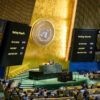
A Divided Vote for the UN’s Human Rights Chief
On 24 July, the United Nations (UN) General Assembly reappointed Volker Türk as High Commissioner for Human Rights for a further four years. Only 10 states – among them Israel, Russia and the USA – opposed the decision.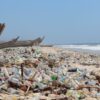
The Plastics Treaty Process Needs Greatly Improved Observer Participation at this Critical Point in the Negotiations and Beyond
In 2022, the United Nations Environment Assembly mandated an Intergovernmental Negotiating Committee (INC) to develop a global, legally binding instrument addressing the full life cycle of plastics, from production and product design to disposal. After the resumed fifth session adjourned without consensus in Geneva in August 2025, the divided process moved into informal consultations before INC-5.4 in March 2027.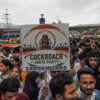
Cockroach Insult Unleashes Biggest Challenge yet to Modi’s Repressive Rule
India’s strongman leader, Narendra Modi, has just been forced to do the thing he likes least: making concessions in response to protests.
How Mexico’s Search Collectives Claimed a Place at the World Cup
Weeks have gone by since the World Cup ended. Its aftermath has sparked a broader conversation about who football’s biggest tournament belongs to and how it should look in 2030. One postscript to that conversation comes from Mexico.
Remembering Fidel Castro, a Hero of the World’s Oppressed People
The 13th of August marked the 100th birthday of Cuba’s revolutionary leader Fidel Alejandro Castro Ruz - in short Fidel Castro. Amidst an intensified US siege and the threat of invasion, Cubans commemorated their dear leader’s centenary birth anniversary with events that included an International Book Fair, art exhibitions, concerts and gatherings of delegates from left-wing organisations across the continent.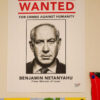
International Criminal Court Under Attack
In a recent Wall Street Journal piece, US Secretary of State Marco Rubio pledged to ‘dismantle’ the International Criminal Court (ICC). The Trump administration intends to pressure states into quitting the court, threatening sanctions, travel bans, visa restrictions and ‘increased scrutiny’ of states that receive its funding. At stake is the court’s ability to stand with victims of the gravest of human rights crimes.
Western-Led Green Revolution Failing Africa
As AGRA turns 20, a new report exposes its worsening failure to double productivity and incomes and halve undernourishment in participating African nations as promised.
Why Dhaka Floods Every Monsoon
Dhaka’s recent and recurrent flooding is often treated as a natural disaster, but rain is only the trigger. The deeper causes are political, planning and ecological failure: wetland loss, canal encroachment, unplanned growth, weak enforcement, fragmented institutions and short-term engineering fixes. Dhaka is not drowning because it rains; it is drowning because it has been built as if water had nowhere to go.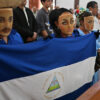
Nicaragua: End of the Electoral Illusion
On 19 July, the 47th anniversary of the Sandinista revolution that first brought him to power, Nicaraguan President Daniel Ortega declared that his country would hold ‘no more elections’ so that the opposition could never again try to ‘seize power’. Just like that, he scrapped a presidential vote that had previously been pushed back to 2027, abandoning even the fiction of democratic legitimacy. The move changes little in practice, since no free vote had been possible for years. But it’s still revealing: a government that controls the army, the courts, the electoral machinery and the police, and will still not risk even a stage-managed ballot, is one that has lost confidence in its people.
Frankenstein in Charge: Netanyahu Rejects Trump’s Gaza Plan
Should anyone be surprised that Israel has rebuffed Donald Trump? The unconditional support of the US and its Western allies for Israel has emboldened the rogue state. Thus, Israel continues its genocide against the Palestinians in defiance of international humanitarian law and the Genocide Convention, and despite the so-called ceasefire agreement under the Trump plan. This is the pay-back for protecting Netanyahu from his arrest warrant by the International Criminal Court (ICC) for committing war crimes and crimes against humanity.
The Earth Is Burning — And We Are Still Choosing to Let It
I have spent my life on an island. From the granite hills of Mahé, one can watch the sun rise over an ocean that has fed, protected and defined the Seychellois people for centuries.
Living Longer at Age 80
Upon reaching the age of 80, men and women are living longer than ever before. These gains in longevity among octogenarians represent a remarkable demographic achievement. The additional years of life provide new opportunities for older adults and their families while also presenting important social, economic, and healthcare challenges for societies.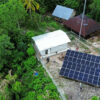
Asia’s Energy Progress Is Great, But Must Pick Up Pace
In much of the Asia-Pacific region, energy is a success story. Electricity access has greatly increased and the use of clean cooking fuels is now widespread. The region has kept pace with the rest of the world in adopting renewable energy. Many countries have made energy efficiency gains; the Republic of Korea is one of those in the lead worldwide. Progress has continued even in the face of recent energy crises sparked by the war in Ukraine and conflict over the Strait of Hormuz.
Hiroshima’s Question: Will We Continue to Live Under the Nuclear Shadow?
This year’s Hiroshima Peace Declaration did not begin with words of remembrance alone. It opened instead with what the declaration called “military invasions using nuclear weapons as tools of intimidation,” “imperious actions by major powers in violation of international law,” and the failure of the Nuclear Non-Proliferation Treaty, or NPT, Review Conference — for the third consecutive time — to adopt a final document.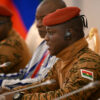
Burkina Faso’s Cancelled Democracy
Burkina Faso’s charismatic young military leader, army captain Ibrahim Traoré, has stopped pretending. In April, he declared that people should ‘forget about the question of democracy’ because ‘democracy isn’t for us’. When Traoré seized power in September 2022, ousting a leader who’d staged a coup earlier that year, he promised elections by June 2024. The junta broke that pledge, pushing any transition back to 2029. Now Traoré has confirmed he has no intention of restoring democracy. Instead, Burkina Faso’s military junta is tightening its repression, while working with neighbouring states to internationalise its dangerously undemocratic model.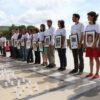
The World’s Aid Workers Must Be Protected
This summer, an ambush on a marked humanitarian convoy in Duk County, South Sudan, left 17 dead and five injured. While the UN called for an immediate investigation, history suggests the victims’ families will wait indefinitely for answers.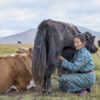
The Year of Pastoralists Must Be More Than Symbolic
This is supposed to be the year the world finally sees and recognizes pastoralists. The United Nations has designated 2026 as the International Year of Rangelands and Pastoralists, bringing long-overdue attention to communities who have sustained some of the world’s most fragile and important landscapes for generations.
Green transition: Pay the Least, Benefit the Most
Inaction and maintaining the status quo of fossil fuel dependence carry significant costs. The recent closure of the Strait of Hormuz, for instance, caused enormous losses to the global economy, with many Asia-Pacific countries bearing disproportionately larger adverse impacts. Had these economies had a more diversified energy mix, they would have benefited from such resilience under current circumstances.
After Restoring Stability, Argentina Needs to Turn Hard-Won Gains into Lasting Prosperity
My first meeting in Buenos Aires began with an unexpected gift. Economy Minister Luis Caputo presented me with an Argentine national team jersey bearing my name and the number 10—Lionel Messi's iconic number.
Trade Liberalisation Never Lifted All Boats
President Trump has blamed trade liberalisation advocated by globalists for US deindustrialisation. Instead, his own weaponisation of economic policies, instruments and institutions purport to ‘make America great again’ (MAGA).« Previous Page — Next Page »





The views expressed in these articles are those of the authors and do not necessarily represent the views of, and should not be attributed to, IPS-Inter Press Service

The Week with IPS

NEXT STOP - SDGs
Tracking global progress towards a sustainable world
Tracking global progress towards a sustainable world
