Languages
Monday, October 26, 2026



News and Views from the Global South
Opinion
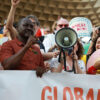
UNGA 81: A United Nations at a Turning Point
The 81st session of the UN General Assembly (UNGA81) opens tomorrow at a particularly important moment for multilateralism. The UN80 reform initiative has entered what the Secretary-General describes as a decisive phase. Member States are selecting the next Secretary-General. The 2030 Agenda is entering its final four years, while conversations about what should follow it are beginning.
Bridging Digital Transformation in an ASEAN-EAEU Cooperation
Physical borders are shrinking, and digital ones are quietly taking their place. As governments use digital transformation as a powerful driver of economic and sustainable development, the challenge is no longer simply a digital divide between those with technology and those without it. It is a question of digital fragmentation, where infrastructure, standards and regulations make cross-border cooperation more difficult.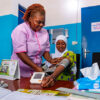
Midwives: The Workforce That Will Determine Maternal and Newborn Survival and Africa’s Future
Tonight, thousands of women across Africa will give birth. Whether they survive to see daylight will largely depend on where they live, how quickly they reach care, and whether the health system around them is ready to respond.
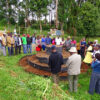
Africa’s Rangelands Are the Frontline of Resilience – COP17 Showed Why
Across the Kenya-Tanzania rangelands, communities have long understood a reality that the global community is increasingly recognising: healthy rangelands support livelihoods, wildlife, water resources and local economies. They are among Africa's most important natural assets and a foundation for resilience in a changing climate.
Between the Reef and the Stars
A reflection on humanity’s twin longings.
There is an older wisdom, quieter than the noise of our times, that whispers a simple truth: we are not the architects of nature, only its guests. Long before there were nations, economies, or even language, there was the pulse of the tide, the patience of coral, the breath of forests exchanging air with the sky. Into that ancient conversation we arrived — late, curious, and forgetful — mistaking our cleverness for sovereignty and our tools for wings.
Africa Has the Answers to Its Food Security Challenges. What It Needs Is the Architecture to Act on Them
As leaders gather in Kigali for the Africa Food Systems Forum, they face an urgent question: why do so many proven agricultural innovations still fail to reach the farmers and communities that need them most?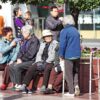
Population Age Structures of Countries
The age structures of populations vary considerably across countries. Some countries have relatively young populations, with large proportions consisting of children and adolescents. Other countries have much older age structures, with a substantial proportion of people aged 65 years or older.
Pakhshan Azizi’s Letter from Evin Prison
Writing from the women's ward of Evin Prison on 10 June 2026, Kurdish political prisoner Pakhshan Azizi, who remains under a death sentence, reflects on her legal case, political principles, humanitarian work, and the broader historical and political dynamics shaping the Middle East.
The Drylands Dividend: The Smart Investment for Powering a Water-Scarce World
Open a can of something fizzy and the reason the sugar doesn’t separate immediately is gum arabic, tapped by hand from acacia trees across the Sahel. Spray on perfume and the reason the scent is still there at dinner is frankincense, a resin cut from Boswellia trees on the dry escarpments of the Horn of Africa. The fat that gives a chocolate bar its snap may well be shea, gathered and pressed by women in the parkland belt of West Africa. The cashmere jumper came from goats that can only be raised on cold, dry rangelands.
Dollar Dominance Eroding Slowly but Surely
The US dollar’s role as the world’s reserve currency has been eroding gradually for decades. However, various US policies, including recent deliberately unexpected actions, have at times accelerated de-dollarisation.
Zambia: An Uneven Contest, an Easy Win
On 24 August, police sealed off access to Zambia’s courts, closed the day before the deadline for petitions to challenge the results of the 13 August presidential election. The judiciary’s top official cited security reasons, but the timing left little doubt that authorities meant to block the defeated candidate’s legal challenge.
Beyond Resilience: Climate Change and the Rights of Char Dwellers in Bangladesh
Bangladesh’s riverine and coastal chars have always been landscapes of movement, but climate change is making that movement more violent, frequent, and unequal. The shifting islands of the Jamuna, Brahmaputra, Padma, and other rivers now reveal how climate stress multiplies deprivation, weakens citizenship, and forces char dwellers to absorb the costs of a crisis they did little to create.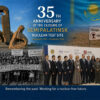
35 Years After Semipalatinsk, Kazakhstan’s Nuclear Choice Still Challenges the World
Across the vast steppe of northeastern Kazakhstan, the scars of the Cold War remain visible. At the Semipalatinsk Nuclear Test Site, the Soviet Union conducted 456 nuclear tests between 1949 and 1989, exposing nearby communities to radiation and leaving health and environmental consequences that have endured across generations.
Family Planning and Population Dynamics Are Key to Water Security
This week is World Water Week, the annual conference of governments, business, and civil society on building a water-secure future as global population, climate disruptions, and water demand increase. In Washington, it’s also Water Resources Development Act season, when every two years the US Congress reauthorizes the legilslation that funds US drinking water, wastewater systems, and flood risk management projects.
U.S. Midwest Flooding Is a Growing Threat to Agriculture
Across the U.S. Midwest, from Illinois to Indiana to Ohio, severe storms and heavy rains caused devastating flooding, extensive damage to infrastructure, and the displacement of hundreds of thousands of people. The historic scale and severity of flooding led to the issuance of disaster proclamations for the States of Illinois and Indiana.
The Indian Ocean Is Sounding the Alarm and Its Islands Are Among the First to Hear It
Across this vast ocean, the latest monitoring by Mercator Ocean International shows marine heatwave conditions ranging from moderate to severe. At the same time, the World Meteorological Organization expects a strong El Niño to intensify through August to October, with a positive Indian Ocean Dipole also likely to develop. These are not distant scientific signals. They are an urgent warning that the ocean system on which millions depend is under mounting stress.
Grand Planetary Challenges Need a Grand Coalition to Solve Them
Several coalitions exist today to defend the territories in which people live and work. Global leaders have long understood the importance of shared responsibility for collective security and have invested significant time in establishing networks, partnerships and alliances. In 2025, global spending on defense reached a record $2.9 trillion.
A Divided Vote for the UN’s Human Rights Chief
On 24 July, the United Nations (UN) General Assembly reappointed Volker Türk as High Commissioner for Human Rights for a further four years. Only 10 states – among them Israel, Russia and the USA – opposed the decision.
The Plastics Treaty Process Needs Greatly Improved Observer Participation at this Critical Point in the Negotiations and Beyond
In 2022, the United Nations Environment Assembly mandated an Intergovernmental Negotiating Committee (INC) to develop a global, legally binding instrument addressing the full life cycle of plastics, from production and product design to disposal. After the resumed fifth session adjourned without consensus in Geneva in August 2025, the divided process moved into informal consultations before INC-5.4 in March 2027.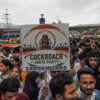
Cockroach Insult Unleashes Biggest Challenge yet to Modi’s Repressive Rule
India’s strongman leader, Narendra Modi, has just been forced to do the thing he likes least: making concessions in response to protests.
How Mexico’s Search Collectives Claimed a Place at the World Cup
Weeks have gone by since the World Cup ended. Its aftermath has sparked a broader conversation about who football’s biggest tournament belongs to and how it should look in 2030. One postscript to that conversation comes from Mexico.« Previous Page — Next Page »





The views expressed in these articles are those of the authors and do not necessarily represent the views of, and should not be attributed to, IPS-Inter Press Service

The Week with IPS

NEXT STOP - SDGs
Tracking global progress towards a sustainable world
Tracking global progress towards a sustainable world
