Languages
Friday, September 25, 2026



News and Views from the Global South
Opinion

Climate Governance, Adaptation, and Digital Solutions
Let's take a moment to reflect on a critical question: In the decade since the Third International Conference on Small Island Developing States (SIDS3), what tangible progress have we made in addressing the challenges faced by our SIDS?
Food Security and Food Safety in Africa Must Go Hand in Hand
Russia’s invasion of Ukraine has restricted international exports and sent food costs soaring – particularly for vulnerable populations still experiencing shocks from the pandemic and who can least afford to pay more to feed their families. Two years on, global food supply chains are still just as susceptible to serious disruptions caused by war, disease, and climate change. Those inevitable disruptions are leaving those on the African continent particularly vulnerable.
Rwanda: A Ravaged Country That Bounced Back
As we contemplate the clouded futures of Gaza, Ukraine, and other dire conflict zones that get far less coverage, it may be instructive to recall the surprising success story of a ravaged country that bounced back: Rwanda.
The US Must Address More Than LNG To Mitigate Climate Change
Earlier this year, the Biden administration paused action on pending approvals for U.S. liquefied natural gas exports to countries without a U.S. free-trade agreement, with President Biden citing ”the urgency of the climate crisis.” The decision was hailed by climate activists and criticized by oil and gas industry representatives.
To Mitigate Climate Change Associated Disasters That Impact the Agricultural Sector – Launch Multipronged Efforts
Recently, the United Nations in collaboration with the World Meteorological Organization released a report that highlighted the impacts of climate change including on agriculture.
China, India & Sri Lanka Embroiled in the Geo-Politics of the Indian Ocean
Unfortunately, a rivalry that should not exist and did not exist historically between China and India is being stoked by the media and some policy makers, especially in the West. It is not too difficult to discern the Machiavellian geo-strategic objectives of this complex game plan.
Carbon Markets Biased, Distorted, Undermined
Carbon dioxide emission taxes, prices and markets have been touted as key to stopping global heating. However, carbon markets have failed mainly because they favour the rich and powerful.
El Salvador’s Cycles of Violence Through a Teenager’s Eyes
Two years since President Nayib Bukele announced a “war against gangs” in El Salvador, the country has gone through rapid change.
A Hamas-Israel Cease-Fire, Perhaps?
While the international consensus and world public opinion are resoundingly clear in demanding an immediate cease-fire to the Hamas-Israel war, it remains uncertain whether a cease-fire will be observed.
Kwibuka30: Learning from the Past, Safeguarding the Future Against Genocide
One should never lose sight that for people who experienced genocide, the warning signs were there. Genocide is a process. It requires preparation and capacities to carry it out.
In the Shadows of the Wars in Ukraine & Gaza, Iran and Russia are Growing Ever Closer
Russia and Iran currently appear to be pulling firmly in the same direction in terms of foreign policy; ‘What has caused humanity’s suffering is unilateralism and an unjust global order, one manifestation of which can be seen in Gaza today.’ These were the words of Iranian President Ebrahim Raisi during a meeting with his Russian counterpart, Vladimir Putin, on 7 December.
Following Asian Countries’ Leads, Climate Action Opportunity for Developing Nations
In the deserts of Gujarat, something remarkable is happening. On my recent visit I saw hundreds of trucks moving under the warm Indian sun. Thousands of hardworking young people from all corners of Bharat, as Indians now often call their nation, are turning around the previously empty and harsh landscape.
Senegal’s Democracy Passes Crucial Test
The fact that Senegal’s election took place on 24 March was in itself a triumph for civil society. That an opposition candidate, campaigning on an anti-establishment and anti-corruption agenda, emerged from jail to become the continent’s youngest leader offered fresh hope for democracy.
Social Protection, a Key Solution for Directing Climate Finance To Poor Small-Scale Farmers
Climate change is exacerbating inequalities between and within countries, disproportionately affecting poor households in rural areas. In fact, we know that more than half of the resources of the poor – a large part of whom are small-scale farmers - are lost due to climatic hazards. This has negative impacts on the incomes of these people and their ability to meet their essential needs, including food.
Civil Registration is Shaping World’s Largest Election Year With 76 Nations Going to the Polls
Over four billion people will take to the polls in 2024 as 76 countries are set to hold elections. In Asia, this includes populous countries such as Bangladesh, India, Indonesia, Pakistan, and Russia.
Taking Charge: Three Actions to Help Combat Climate Change and Save Amazonia
Climate change is the defining crisis of our time––it is the ultimate equalizer from which no one is immune. The Earth's ecosystems are on the brink of collapse, threatening biodiversity and human societies in unprecedented ways at a global scale.
‘The World Is Bigger than 5’
The title of this piece is not mine. It’s from the President of Turkiye calling for a reform of the United Nations Security Council. It has since become a motto in the UN reform campaign encapsulating the shared resentment at a global system that gives the five Permanent members – The P5 of the UN Security Council – the United States, France, Britain, China and Russia – unfair and often destructive veto powers that undermines the very ideals for which the UN was established.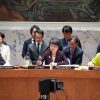
UN Security Council Holds Rare Nuclear Disarmament Debate
Japan chaired a rare, high-level UN Security Council meeting on nuclear disarmament and nonproliferation on March 18. Although the meeting underscored the urgency of addressing the growing threats posed by nuclear weapons, it also highlighted the chronic divisions among key states on disarmament and nonproliferation issues.
Food Security Issues in Asia
Asia has about 60% of the World’s population but only about a third of the world’s arable land. This region additionally has some of the most economically active countries with increasing urbanisation and a growing middle class. Asia is also home to some of the most affected countries by climate change. For these and other reasons, food security in Asia affects global food security through many inter-links. A new book, “Food Security Issues in Asia”, edited by Paul Teng and with multiple authors, explicates many of the key issues continuing to cause food insecurity in Asia as well as discourses on exciting developments. Through its twenty-seven chapters, the book, published by World Scientific Publishers Singapore was launched on 27 March 2024 in Singapore by Ambassador Ong Keng Yong, former ASEAN Secretary General.
Breaking the Silence: Gender-Based Challenges in the Lesotho Highlands Water Project ll
In the journey towards gender equality and justice, recent decades have seen strides made, yet the road ahead remains treacherous. In the race to achieve the Sustainable Development Goals (SDGs) by 2030, attention is turning to the role that over five hundred public development banks worldwide could play.
Developing Countries’ Government Debt Crises Loom Larger
Developing countries are being blamed for having borrowed and spent irresponsibly. But they have only been doing what foreign powers and financial interests have urged them to do.« Previous Page — Next Page »


The views expressed in these articles are those of the authors and do not necessarily represent the views of, and should not be attributed to, IPS-Inter Press Service

The Week with IPS

NEXT STOP - SDGs
Tracking global progress towards a sustainable world
Tracking global progress towards a sustainable world
