Languages
Sunday, November 8, 2026



News and Views from the Global South
Opinion

Fear of Population Ageing
Fear of population ageing is all over the news media and in government offices of country capitals worldwide. Planet Earth is becoming “planet ageing”.
Role of Regional Economic Cooperation in Inclusive Digital Transformation in Asia
Digitalization is a key driver of competitiveness and development. As the world takes the path to unprecedented digital advancement, Asia continues to be a powerhouse of digital transformations in a wide range of areas from microchip manufacturing to electric vehicles, from digital currency to e-commerce.
UN Confronts Existential Challenge After Russia’s Invasion of Ukraine
Paralysed by its own Charter and structure, the world organisation that is charged with preventing wars confronts an existential challenge from Russia’s invasion of Ukraine.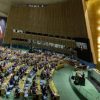
When Two Elephants Fight: How the Global South Uses Non-Alignment To Avoid Great Power Rivalries
An African proverb notes that “when two elephants fight, it is the grass underneath that suffers”. Many states in the global south are, therefore, seeking to avoid getting caught in the middle of any future battles between the US and China. Instead, they are calling for a renewal of the concept of non-alignment. This was an approach employed in the 1950s by newly independent countries to balance between the two ideological power blocs of east and west during the era of the Cold War
Taking a Stance on Feminists’ Prejudice Against Religious Minority Women
Since researching the experiences of gender discrimination against women in poverty who belong to religious minorities, many fellow feminists have turned their back on me.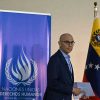
Venezuela: The End of Civil Society as We Know It?
In late January, the UN High Commissioner for Human Rights, Volker Türk, finished an official visit to Venezuela. He said he’d found a fragmented society in great need of bridging its divides and encouraged the government to take the lead in listening to civil society concerns and responding to victims of rights violations.
One Year Later: The Impact of the Russian-Ukrainian Conflict on Africa
In today’s interconnected world, shots fired in one corner of the globe create ripple effects in other, seemingly far, places. One year since the Russian invasion of Ukraine, African countries, although physically miles away, have not been spared its aftershocks.
How the Privatization of Eletrobras May Lead To an Uncertain Future in Brazil’s Energy Transition and Favor Price Increase to the End-Consumer
Eletrobras is Latin America’s biggest electricity company, responsible for around 30% of Brazil’s power capacity and 50% of all its transmission lines. In 2021, the Brazilian government announced it would reduce its controlling shares in this state-owned company from 72% to 10%. Given Eletrobras’ dominant role in Brazil’s power sector, this divestment in the government’s controlling shares merits a more complete understanding of the implications for Brazil’s energy transition and energy security.
China and Russia Fail to Defund UN Human Rights Work
United Nations member states agreed to fully fund UN human rights mechanisms that China, Russia, and their allies had sought to defund in the 2023 budget. This should set a precedent for UN human rights funding in the future.
Outlook for 2023: Children in ‘Polycrisis’
The year 2022 was incredibly difficult for people around the world. We were confronted by a series of major crises, including a continuing pandemic, a major war in Europe, an energy crisis, rising inflation and food insecurity.
Let’s Eat Plastics!
With one in ten people in the world going hungry, food prices hitting record highs, and the worsening conditions of the environment and climate, it’s time for the world’s population of 8 billion to eat something that is available, abundant and inexpensive: plastics.
Pakistan Floods: Need for Tackling Development from a Different Perspective
Last year’s devastating floods in Pakistan cost the country more than US$30 billion, about 6.4 trillion rupees. The entire Public Sector Development Programme (PSDP) for 2021-2022 was valued at 900 billion rupees. This means that the floods wiped out development gains worth more than six PSDPs. This disproportionately affects the vulnerable segments of society, especially women, girls, the elderly and persons with disabilities.
Expanding E-bus Networks in Latin America Can Further Decarbonization Goals
Latin America’s (LATAM) transportation sector produces the largest share of regional emissions and is a large source of air pollution, making transforming transportation technology systems key to energy transition and decarbonization. In particular, electrifying public transportation systems across the region through a transition to electric bus (e-bus) fleets will reduce fossil fuel demand and greenhouse gas (GHG) emissions.
Eswatini: Democracy a Matter of Life and Death
Thulani Maseko knew speaking out in Eswatini was a risky business. An activist and well-known human rights lawyer, he’d previously spent 14 months in jail for criticising the country’s lack of judicial independence. Now he’s dead, shot in his home by unknown assailants.
The Opioid Addiction Crisis & U.S. National Security
The opioid addiction crisis in the United States is an acute public health emergency and a profound threat to national security – which is caused by the over-prescription, misuse, illegal production, and criminal trafficking and sale of opioid pharmaceutical drugs to Americans. It is estimated that over 130 people die every day from opioid overdoses in the U.S.
Mental Health Must Be Addressed in Medical Facilities and in Communities
Patients who visit public clinics in Abu Dhabi, United Arab Emirates, are asked mental health questions to detect signs of stress and depression early. The process starts with a basic checklist, with patients referred to a nurse, doctor, or specialist. Asking these questions at primary care not only can identify issues early on, but it also helps decrease the stigma often associated with mental health while maintaining anonymity.
Making the Energy Transition a Reality in the Pacific
The last three years have seen the Pacific impacted negatively due to the COVID-19 pandemic. The tourism industry, a key source of national revenue and jobs creation, received a severe blow due to closure of borders and reduced travel.
Work in Teams and Win the Race: A Hub-centered Strategy to Unleash Latin America’s Hydrogen Potential
Latin America has the potential to become the world’s dominant exporter of hydrocarbon. According to the IEA, Latin America could produce 25 percent of the 12 Million tons (Mt) of low-carbon hydrogen exports expected by 2030.
Solar-powered UN House Lights Way for Greener & More Efficient Timor-Leste
Access to energy remains a concerning challenge for many in Timor-Leste. The centralised nature of the local electricity supply chain has traditionally kept consumers reliant on the national grid to overcome chronic energy shortages.
Rigidity and Tolerance within the Vatican
When the Pope Emeritus Benedict XIV/Ratzinger died on the last day of 2022 it did not cause much of a stir in the global newsfeed. Maybe a sign that religion has ceased to play a decisive role in modern society Nevertheless, religious hierarchies are still highly influential, not least for the world’s 1, 4 billion baptized Catholics, and a pope’s policies have a bearing not only on morals, but also on political and economic issues. By contrast, there are more Muslims in the world, 1.9 billion, though adherents are not so centrally controlled and supervised as Catholics and hierarchies do not have a comparable influence on global affairs.
Bhutan’s Civil Servants are Building a Digital Government System — Here’s How
New UNCTAD software does to digital government what IKEA did to furniture, allowing Bhutan’s government employees to create their own user-friendly services for citizens online.« Previous Page — Next Page »





The views expressed in these articles are those of the authors and do not necessarily represent the views of, and should not be attributed to, IPS-Inter Press Service

The Week with IPS

NEXT STOP - SDGs
Tracking global progress towards a sustainable world
Tracking global progress towards a sustainable world
