Languages
Tuesday, October 6, 2026



News and Views from the Global South
Opinion

Progress on Tuberculosis Can Be Achieved in Africa
The news in many parts of the world is that tuberculosis (TB) is reclaiming the title of the world’s most deadly infection, even as the COVID-19 pandemic continues to kill an estimated 1,450 people daily around the world. But this is not news to African countries, which are home to one third of the people globally who die from TB, even though they have less than one fifth of the world’s population.
World Population after 8,000,000,000
Contrary to the often-cited hype and nonsense of some celebrities reported in the news media, the world’s population of 8,000,000,000 human beings is not going to collapse any time soon.
UN Needs a Sea Change in its Handling of Sexual Exploitation & Abuse (SEA)
Calling it “so disappointing and disheartening” in social media on 17 October, Dr. Rosie James, a British medical expert, announced that “I was sexually assaulted by a World Health Organization (WHO) staff tonight at the World Health Summit.”
Limits to Growth: Inconvenient Truth of Our Times
Ahead of the first United Nations environmental summit in Stockholm in 1972, a group of scientists prepared The Limits to Growth report for the Club of Rome. It showed planet Earth’s finite natural resources cannot support ever-growing human consumption.
COP27: Why Global Action is Needed to Decarbonise Industries Everywhere
Ahead of this year’s COP27 in Egypt, industry and government representatives from 15 developing countries across Asia, Latin America and Africa met in a series of consultations about the challenges and opportunities they face in decarbonizing some of their most energy intensive industries like steel, cement and concrete.
COP27: The Thorny Road to Sharm El Sheikh
The 27th Conference Of Parties (COP27) on Climate Change comes at a time when we are facing unprecedented challenges due to the magnitude and the interconnected nature of our multiple structural crises. The world's average temperature is now at 1,1℃.
COP 15: It’s Time to Decide on a Future
It is no secret that humankind’s past actions have accelerated the deterioration of ecosystems, negatively impacting our economies, societies, health, and cultures. It is estimated that humans have altered over 97% of ecosystems worldwide, to date. One million species are currently threatened with extinction (IPBES). The writing on the wall is clear. Our planet is in crisis. The sobering reality is that if we continue on our current trajectory, biodiversity and the services it provides will continue to decline, jeopardizing the achievement of the Sustainable Development Goals and our lives as we know them. The decline in biodiversity is expected to further accelerate unless effective action is taken to address the underlying causes of biodiversity loss. These causes are often justified by societal values, norms and behaviors. Some examples include unsustainable production and consumption patterns, human population dynamics and trends, and technological innovation patterns.
Myanmar and ASEAN: Time is not on the Side of Democracy
For 10 days in November, the world's diplomatic attention will largely be focused on three major diplomatic meetings in Southeast Asia. These include the Group of 20 (G-20) Summit on November 15-16 in Bali, Indonesia, and the annual Asia-Pacific Economic Cooperation (APEC) Summit, which will be held November 18-19 in Bangkok, Thailand.
Why Greta Thunberg Is Wrong to Boycott COP27
So, Greta Thunberg won’t be coming to COP27. She’s condemned it as “greenwashing” and cast doubts on the host’s human rights record and lack of access for activists.
Early Coal Retirement: How about a Global Auction
Report after report highlights that we can only achieve the greenhouse gas (GHG) emission reductions required by the climate goals of the Paris Agreement if much of the existing coal power generation capacity is retired early. To this end, one concept that deserves greater consideration is conducting an auction for early retirement of coal power plants worldwide: a global coal retirement auction. This article sets out the broad outlines of how this global auction might operate.
A Beacon of Light in Dark Times: the Dublin Platform for Human Rights Defenders
Before she was murdered in Honduras in 2016, the Lenca Indigenous woman and human rights defender Berta Cáceres poignantly said: “They are afraid of us because we are not afraid of them.”
Tackling Recurring Hunger Crises at the Horn of Africa – Beginning with Somalia
The statistics are stark. The crisis is unprecedented. Yet again, according to the United Nations, famine looms in Somalia, with hundreds of thousands already facing starvation. In addition, droughts, and catastrophic hunger levels have left over 500,000 children malnourished and at risk of dying. This is already nearly 200,000 more than the 2011 famine. Urgent immediate actions must be taken now, both to address the crisis in the short-term and long-term.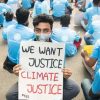
COP27 Climate Summit is an Opportunity to Promote Peace
Peace is precious. The past few months have offered daily reminders of this simple fact. War in Ukraine. Russian and North Korean nuclear threats. Growing tensions over Taiwan. Huge population displacements. Energy crisis. Economic turmoil. Rising global hunger and inequality.
Developing Countries Need Monetary Financing
Developing countries have long been told to avoid borrowing from central banks (CBs) to finance government spending. Many have even legislated against CB financing of fiscal expenditure. Central bank fiscal financing Such laws are supposedly needed to curb inflation – below 5%, if not 2% – to accelerate growth. These arrangements have also constrained a potential CB developmental role and government ability to respond better to crises.
A New Digitalisation Effort in Bangladesh Could Change Community Health Globally
The digital transformation of thousands of community health workers in Bangladesh has dramatically enhanced their work, while enabling the creation and tracking of a healthcare database covering 64 million people. The resulting model holds remarkable promise for the health of the world, especially in the context of evolving pandemics.
A Tale of Cities
For decades, urban practitioners have failed to consider the needs of women in city decision-making and planning. Imagine being a young girl in a bustling metropolis.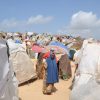
Droughts Don’t Need To Result in Famine: Ethiopia and Somalia Show What Makes the Difference
The Horn of Africa is facing its worst drought in 40 years. Scientists suspect that a multi-year La Niña cycle has been amplified by climate change to prolong dry and hot conditions.
What Does it take to Build a Culture of Equality & Inclusion at the UN? Reflections from Inside a Change Process
The organisational is personal. Every day since the two of us were asked back in 2020 to co-lead the process of culture transformation at UNAIDS, the United Nations organisation which drives global efforts to end AIDS, we have both felt at our very core how crucial it has been to get it right.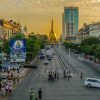
A New Political Reality in Myanmar: A People No Longer Willing to Accept Military Rule
The political, human rights and humanitarian crisis in Myanmar continues to take a catastrophic toll on the people, with serious regional implications.
How China Can Retire Coal Early in Pakistan and Elsewhere Through the BRI
With COP 27 approaching, pressure is mounting on wealthy countries to increase their support to poorer ones in the face of climate change. The recent floods in Pakistan have amplified this issue. China, as the world’s second largest economy, will similarly face increasing pressure to help other developing countries on climate.
War, Greed and Mass Manipulation
In his treatise On War, the Prussian general Carl von Clausewitz (1780–1831) stated that war is “merely a continuation of policy with other means”. With his experience from the Napoleonic Wars von Clausewitz knew that totalitarian regimes could end up conducting huge and ruthless military campaigns. Furthermore, he assumed that to win a war it is necessary to mobilize and indoctrinate the inhabitants of an entire nation. Such an endeavour is called total war, a term that actually can be applied to Putin’s war in Ukraine.« Previous Page — Next Page »





The views expressed in these articles are those of the authors and do not necessarily represent the views of, and should not be attributed to, IPS-Inter Press Service

The Week with IPS

NEXT STOP - SDGs
Tracking global progress towards a sustainable world
Tracking global progress towards a sustainable world
