Languages
Wednesday, October 7, 2026



News and Views from the Global South

Can 70% of the World’s Poor Celebrate International Women’s Day?
The picture is gloomy: not only do women represent 70% of the 1.3 billion people living in conditions of poverty, but also up to 40% of the poorest households in urban areas are headed by women.
With One Million Species Endangered, the Web of Life Is at Risk of Extinction
These are not by any means just mere figures. It is about the risk of extinction of the whole life cycle. See what is at stake.
6 in 7 People Worldwide Experience ‘High Levels of Insecurity’ – Why?
Safety and security are at the base of the ‘hierarchy of needs’ pyramid, second in importance only to life’s absolute necessities—air, water, food and shelter, warns a new report.
Alarm: Every Two Weeks a Mother Tongue Disappears Due to Globalisation
“Every two weeks a language disappears taking with it an entire cultural and intellectual heritage. At least 43% of the estimated 6000 languages spoken in the world are endangered. Only a few hundred languages have genuinely been given a place in education systems and the public domain, and less than a hundred are used in the digital world.”
The New World Wonder: a 100 Million Hectares Wall to Protect Africa
Once completed in 2030, it could well be considered the world’s eighth wonder, this time natural. It is the African-led Great Green Wall or the largest living structure on the planet – an 8.000 kilometres natural hit stretching across the entire width of the continent.
Inequality Kills One Person Every Four Seconds
Inequality is deadly… It contributes to the deaths of at least 21,300 people each day—or one person every four seconds. This is a “highly conservative estimate” for deaths resulting from hunger, lack of access to healthcare and climate breakdown in poor countries…
Many Good Reasons to Eat More Pulses – And Perhaps Less Meat!
Pulses and meat are both needed as part of your diet, however… While the total emissions of greenhouse gases from global livestock amount to 7.1 Gigatonnes of Co2-equivalent per year, representing 14.5% of all anthropogenic emissions, pulses have root nodules that absorb inert nitrogen from soil air and convert it into biologically useful ammonia, a process referred to as biological nitrogen fixation.
Teleworking: All That Glitters Is Not Gold
Now it comes to teleworking, the double-edged, relatively recent phenomenon imposed by COVID-19 lockdowns. On the one hand, it improves work-life balance, opportunities for flexible working hours and physical activity, reduced traffic and commuting time, and a decrease in air pollution. So far so good, but…
The “Kidneys of the Earth” Are Disappearing
This is about Wetlands, which are considered as a natural solution to the global threat of climate change. They absorb carbon dioxide, help slow global heating and reduce pollution, hence they are often referred to as the “Kidneys of the Earth”.
Up to 70% of Children in Developing Countries to Be Left Unable to Read?
“Unless we take action, the share of children leaving school in developing countries who are unable to read could increase from 53 to 70 percent.”
Asia-Pacific: Just 5% of the Region’s Population Owns 70% of Its Total Wealth
The Asia-Pacific region is experiencing growing inequality even while registering impressive economic growth and poverty reduction. Such sharp inequalities continue to be persistent in the region, with nearly 2 in 4 people still unable to afford a healthy diet.
Fully Ready to Kill, Shockingly Unprepared to Save Lives
While absolutely ready to kill, with the biggest military powers spending in 2020 nearly two trillion US dollars on weapons, the world is shockingly unprepared to save the lives of millions of unarmed, innocent civilian victims of wars… and other man-made catastrophes.
Disparities in the Arab Region: Hunger Doubles, Indebtedness Triggers, Recovery Uneven
The panorama is bleak: hunger in the Arab region continues to rise, with more than 90% increase since 2000, while indebtedness is growing, and the economic recovery is tenuous and uneven.
Too Harmful: The March of Salt and Plastics on World Soils
There are more under-reported consequences of human activities unmatching the rhythm of Mother Nature. Such is the case, among many others, of the growing salinisation and ‘plastification’ of the world's soils.
Severe Water Stress, Absolute Scarcity for 2 to 4 Billion Humans by 2025
Now it comes to the scary water crises, as it is estimated that, globally, over two billion people live in countries that experience high water stress.
What Would Europe, the US, Do with One Billion Climate Refugees?
A bit of fiction. Or maybe not. If things keep going the way they are, the result will be that such a massive flux would create instability and tensions, impact the global markets, cause record prices of fossil fuels, food and everything else, and the bankruptcy of big private financial corporations…
All Humans Are Born Equal in Rights? That’s Still Far from Being True
”All human beings are born free and equal in dignity and rights.” These words are a sound introduction to the transcendental issue of human rights and equalities, as stated by the 1948 Universal Declaration of Human Rights (UDHR).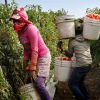
Call It ‘Old’, ‘Contemporary’, ‘Modern’ or Whatever: It Is Slavery
No matter what it is called -- it is the abhorrent daily life of a billion enslaved humans. The real number of “modern” slaves is understandably unknown. The International Labour Organisation (ILO) estimates that more than 40 million people worldwide are victims of modern slavery.
Yet Another Scourge: A Third of All Women are Subjected to Violence
Thirty percent of women and girls suffered physical or sexual violence in their lifetime, most frequently by an intimate partner. And more than 70 percent of all sold, bought and enslaved victims of human smuggling and trafficking are women and girls -- three out of four of them are sexually exploited.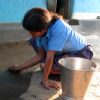
‘The Brutal Death of a Child’s Dream’
Kailash Satyarthi, an Indian social reformer and co-recipient of the 2014 Nobel Peace Prize, along with Malala Yousafzai, spoke in a recent international forum about the devastating impacts of child labour.
1 in 2 Humans Cannot Celebrate World Toilet Day – This Is Why
Did you know that half of the world's population do not have toilets? And that, globally, at least 2 billion people use a drinking water source contaminated with faeces? And that every day, over 700 children under five years old die from diarrhoea linked to unsafe water, sanitation and poor hygiene?« Previous Page — Next Page »





The Week with IPS

NEXT STOP - SDGs
Tracking global progress towards a sustainable world
Tracking global progress towards a sustainable world
