Languages
Monday, September 28, 2026



News and Views from the Global South

Can Africa Slay Its Financial Hydra?
Thanks to growing investor interest, increasing respect for democratic reforms, and its vast food production potential, the Africa Rising narrative is only getting better.
Climate Change, A Goat Farmer’s Gain
Bongekile Ndimande’s family lost more 30 head of cattle to a ravaging drought last season, but a herd of goats survived and is now her bank on four legs.
Will Free Expression Equal Terrorism in Zimbabwe?
Four years ago, a faceless writer using the nom de guerre Baba Jukwa set Facebook agog with detailed exposes of machinations within the ruling Zimbabwe National People’s Union Patriotic Front (ZANU PF).
The Beating Pulse of Food Security in Africa
Elizabeth Mpofu is a fighter. She is one of a select group of farmers who equate food security with the war against hunger and shun poor agricultural practices which destroy the environment and impoverish farmers, especially women.
Will the World’s Largest Single Market Transform Africa Fortunes?
Getting just a sliver of the global trade in goods and services worth more than 70 trillion dollars, Africans have every excuse to decide to trade among themselves.
Fertilizer Access Grows Farmers, Food and Finance
Brightly coloured cans, bags of fertilizer and packets containing all types of seeds catch the eye upon entering Nancy Khorommbi’s agro dealer shop tucked at the corner of a roadside service station.
Drought Dries Up Money from Honey
“It is everything” is how smallholder farmer Nyovane Ndlovu describes beekeeping, which has long been an alternative sweet source of income for drought-beaten farmers in Zimbabwe.
Natural Capital Investment Key to Africa’s Development
Plugging Africa’s funding gaps to accelerate social and economic development requires a fresh approach to using its natural capital, environment experts said on Monday.
New Generation Aims to Plug Africa’s Research Deficit
The tonnes of uncollected garbage piling up on the streets of her home in Cairo was a brain wave for Sherien Elagroudy.
Innovations Boost Income for Women Rice Farmers
Salabanya Tabaitou no longer squints from the irritating wood smoke each time she has to parboil her rice paddy. Now Tabaitou feeds logs into a chute of a specially designed brick stove with a chimney that draws away the smoke. The stove with a stainless steel parboiling vessel cooks her rice in 20 minutes - something she would have spent two hours doing using the traditional method.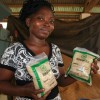
Rice: Africa’s Ticket Out of Poverty
Africa is eating more rice than other food staples, though it produces less than it needs. This is good news for the cereal's potential to help Sub Saharan Africa out of poverty according to researchers. Rice is the second most important source of calories in Sub-Saharan Africa, according to the Africa Rice Center (AfricaRice), a research organisation working to contribute to poverty alleviation and food security.
Science: Not Just a Western Sector, It Can Help Africa Too
Small-scale farmer Augustine Sibanda has grown resilient traditional sorghum varieties passed down through generations but has increased his yields after he adopted improved seed varieties developed through research.
Africa Closer to a Cure for Banana Disease
In one Ugandan dialect, 'kiwotoka', describes the steamed look of banana plants affected by the Banana Xanthomonas Wilt (BXW) - a virulent disease that is pushing African farmers out of business and into poverty.
Analysis: Are Young People the Answer to Africa’s Food Security?
Are you young, energetic, creative, ambitious and need a job? Africa's agriculture sector needs you!
Aflatoxins: Poisoning Health and Trade in Sub-Saharan Africa
Aflatoxin contamination is a growing threat to trade, food and health security in sub-Saharan Africa, where smallholder farmers are challenged by food production and now climate change, researchers said.
Zimbabwe’s Smallholder Farmers Seek Address Food Security and Health Risks with Air Tight Storage Technology
Last season, Mollene Kachambwa lost a tonne of the 5 tonnes of maize the family harvested to weevils and fungi.
Sustainable Settlements to Combat Urban Slums in Africa
Slums are a curse and blessing in fast urbanising Africa. They have challenged Africa's progress towards better living and working spaces but they also provide shelter for the swelling populations seeking a life in cities.
Zimbabwean Women Weave Their Own Beautiful Future
Seventy-seven-year-old Grace Ngwenya has an eye for detail. You will never catch her squinting as she effortlessly weaves ilala palm fronds into beautiful baskets.
Zimbabwean Women Weave Their Own, Beautiful Future
 Seventy-seven-year-old Grace Ngwenya has an eye for detail. You will never catch her squinting as she effortlessly weaves ilala palm fronds into beautiful baskets.

Good Harvest Fails to Dent Rising Hunger in Zimbabwe
With agriculture as one of the drivers of economic growth, Zimbabwe needs to invest in the livelihoods of smallholder farmers who keep the country fed, experts say.
More Than Half of Africa’s Arable Land ‘Too Damaged’ for Food Production
A report published last month by the Montpellier Panel - an eminent group of agriculture, ecology and trade experts from Africa and Europe - says about 65 percent of Africa's arable land is too damaged to sustain viable food production.« Previous Page — Next Page »


The Week with IPS

NEXT STOP - SDGs
Tracking global progress towards a sustainable world
Tracking global progress towards a sustainable world
