Languages
Monday, September 21, 2026



News and Views from the Global South

Torture Victims in El Salvador Speak Out
A report containing the testimonies of victims of torture during El Salvador’s 1980-1992 civil war will be published 27 years after it was written, to help Salvadorans today learn more about that chapter in the country’s history.
Fishers Fight Over Dwindling Catch
Boats were tying up at the jetty and there was a bustle of activity as vendors cried their wares, offering shellfish to potential buyers, while young people, sharp knives in hand, filleted sea bass and red snapper. Meanwhile, on the promenade, octogenarian musicians played old-style cumbias and boleros for restaurant patrons.Death Speeding Down El Salvador’s Roads
The combination of widespread disregard for traffic regulations and poor vehicle and road controls puts El Salvador among the countries of Latin America with the highest rates of traffic-related deaths.Cheaper Medicine a New Year’s Gift for Salvadorans
After years of delays and obstacles, a law regulating the pharmaceutical market has come into effect in El Salvador, giving its people access to medicines at more reasonable prices, with discounts of over 50 percent for some drugs sold in high volumes, like diabetes medication.
Challenges Dog Community Radio, Finally on Air in El Salvador
For the first time in El Salvador, a community radio is broadcasting under its own licence. The struggle continues, however, for legislative change that will give these kinds of broadcasters more airspace.
Renewable Energy Alliance Stretches From Germany to Central America
A recent agreement between El Salvador and Germany, with the latter supporting two renewable energy projects that would increase installed capacity in the Central American country by 94.2 megawatts by 2013, points to a promising alliance for carbon-free energy.
Gangs Back Plan for Violence-Free Districts in El Salvador
Salvadoran youth gang leaders have accepted a proposal to declare 10 municipalities free of violence – a bold plan that has run up against the mistrust of vast segments of society with regard to the gangs and their aim of reinsertion in society.Rural Co-ops in Central America Speak Out on Climate Change
Brenda Salazar has her sights set on two things: a good organic cacao harvest for the cooperative she belongs to in northern Nicaragua, and for the governments of Central America to heed the ideas of peasant farmers who have organised to fight climate change.Fighting Abusive Rates on Loans and Credit Cards*
The parliaments of El Salvador and Guatemala are debating bills aimed at halting abusive loans and high credit card costs. But the initiatives have run up against strong opposition from the financial sector.
Communities Organise to Confront Climate Change in El Salvador
Armed with chainsaws, machetes and shovels, local residents of El Salvador’s Lower Lempa River Basin, near the Pacific Ocean, are unblocking the flow of rivers and pruning the branches of trees on riverbanks to keep them from falling into the chocolate-colored water.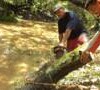
Communities Organize to Confront Climate Change in El Salvador
The river clean-up and mangrove recovery work in the Lower Lempa River Basin reflects the organizational traditions of the local communities.
Mexico, the End of the ‘American Dream’ for Child Migrants
For many undocumented child migrants from Central America, Mexico is the end of the road in their endeavour to reach the United States, driven by economic reasons, gang violence and domestic violence.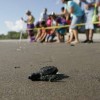
Salvadoran Bay Breeds Hope for Sea Turtles
El Salvador’s Jiquilisco Bay, a tiny hidden corner of the Pacific Ocean, is becoming a haven for endangered sea turtles.
Gangs and Government Put Their Cards on the Table in El Salvador
The two main youth gangs in El Salvador and the government have exchanged the main points they would like to discuss in talks aimed at bringing to an end to two decades of spiraling criminal violence. But the media, legislators and the public at large remain hostile to the possible start of negotiations.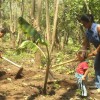
Salvadoran Civil Society Groups Opposed to Carbon Credit Plan
Civil society organisations are asking the World Bank to reject the Salvadoran government's proposal to join a programme for reducing greenhouse gas emissions linked to deforestation, on the argument that it will actually harm the environment.
EL SALVADOR Women Fight Blows from Climate Change with Sewing Machines and Eggs
Amanda Menjívar is moved by the sight of the 16 sewing machines donated to help a group of local women set up a sewing centre to get over the devastating effects of the disaster caused by Hurricane Ida in the Salvadoran town of Verapaz.Trade Unionists Denounce Persecution in El Salvador
Persecution of trade unionists remains a problem in El Salvador, in spite of the fact that the country is governed by a left-wing party that advocates labour rights, union leaders say.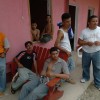
Protection for Salvadoran Migrants En Route to U.S.
A law to protect Salvadoran migrants, who are frequently victims of attacks and abuses on their way to the United States, is nearing entry into force after having been approved over a year ago. All that remains is for a body made up of civil society organisations to be created to implement it.
Native People of El Salvador Finally Gain Recognition
After decades of struggle, indigenous people in El Salvador will finally be recognised in the constitution – a first step towards recovering their community identity, which they have been denied by the state and by society at large.
Energy Forests, the Feminine Art of Reforesting
María Elena Muñoz industriously weeds a clearing in the forest and then digs several holes, where she and another four dozen women are planting plantain seedlings, to help feed their families in this poor farming area in El Salvador.
Truce Between Salvadoran Gangs Brings Fragile Hope
A truce negotiated between El Salvador's main gangs has drastically reduced murders and encouraged hope that this country may have found a way out of the labyrinth of violence in which it seemed lost. But the deal is fragile, causing uncertainty.« Previous Page — Next Page »


The Week with IPS

NEXT STOP - SDGs
Tracking global progress towards a sustainable world
Tracking global progress towards a sustainable world
