Languages
Wednesday, October 14, 2026



News and Views from the Global South

Oscar Win To Boost Kenya’s Fledgling Entertainment Industry
Lupita Nyong’o’s Oscar victory for her supporting performance in the critically acclaimed film “12 Years a Slave” has raised hopes of a much-needed boost to Kenya’s fledgling entertainment industry.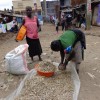
Casting Call for Kenya’s ‘Briefcase’ NGOs
Ben Okoth, 45, was born and raised in Kibera, the largest urban slum in Africa, situated just outside of Nairobi, Kenya’s capital. Over the years, he has encountered many non-governmental organisations (NGOs) working to improve the plight of the poor who live here.
Kenya’s Empty Bread Basket
Jane Njeri from the semi-arid lower Mukurweini district in Kenya’s Central Province has taken to boiling wild roots to feed her five children.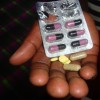
Kenya’s Journey Towards Zero New HIV Infections Falters
In early January 2008, during the violence that rocked Kenya after disputed general elections, a man knocked at Lucia Wakonyo’s gate at Mathare Valley, in the sprawling Mathare slum.
Seasonal Migration Frustrates Ethiopia’s Family Planning
Yohamin Kesete, 32, and her six children live in Dollo Ado, a pastoralist community in Ethiopia’s drought-stricken Somali Region. But this is not where you will always find them.
Africa’s Billions that the Poor Won’t Touch
With its two-trillion-dollar economy, recent discoveries of billions of dollars worth of minerals and oil, and the number of investment opportunities it has to offer global players, Africa is slowly shedding its image as a development burden.
Chinese Dominance in Kenyan Digital Migration Raises Alarm
Controversy and confusion have marked Kenya’s transition from analogue to digital television in keeping with the 2015 International Telecommunication Union deadline when all analogue signal transmission will cease.
Many Kenyan Children Miss Out on Life-Saving Drugs
Thanks to antiretroviral drugs, HIV-positive children can now live to adulthood. Yet a significant number of children living with HIV in Kenya will die due to delay in receiving anti-retroviral drugs (ARVs), inconsistent use of ARVs or, simply, no ARVs.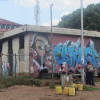
The Scramble for Kenya’s Kibera Slum
Controversy continues to brew here over ownership of the land under Kibera slum, one of Africa’s largest.
Kenya’s Excess of Policies Can’t Deal With Climate Change
Kenya is facing its greatest challenge as weather patterns are starting to significantly affect food production. And experts are blaming the low adaptive capacity of the farming sector on an excess of policy and institutional frameworks that are silent on both climate change and agriculture.
Insuring Cows and Goats Improves Kenyan Lives
“That is the sound I love the most in the whole world,” Hussein Ahmed says as the bells tied to his cattle begin clinking as they return home. Ahmed, a pastoralist in Marsabit district in arid and semi-arid northern Kenya, lost all his animals in 2011 during one of the worst droughts in the region for over 60 years.
When Poverty Quietly Morphs into Catastrophe
Wambui Karunyu, 72, and her seven-year-old grandson are the only surviving members of their immediate family. Karunyu’s husband and five children all succumbed to the hardships of living in the semi-arid area of lower Mukurweini district in central Kenya.
Somalis Caught Between Terrorism and a Border Dispute
Somali militia groups are beginning to operate in Kenya’s remote and arid North Eastern Province, an area that borders southern Somalia – a former stronghold of the extremist group Al-Shabaab.
Extremism Beckons Kenya’s Young
Ali Hassan Gitonga, 33, a recent convert to Islam from the Meru community in Kenya’s Eastern Province, is said to have travelled to Somalia for training with Al-Shabaab in 2011. He is under arrest for alleged involvement in the Sep. 21 Westgate Mall terror attack in Nairobi.
Kenyans Seek Justice as ICC Case Falters
As Kenya’s deputy president William Ruto and co-accused journalist Joshua Sang resumed their trial for crimes against humanity at the International Criminal Court (ICC) on Tuesday, Sept. 17, many in this East African nation were debating if the trial will continue to its end as four more witnesses withdrew from testifying on Sept. 15.
Scarcity Reveals an Inaccessible Excess
For decades Zakayo Ekeno has walked Turkana County’s arid land, herding his livestock, and his father’s before that. Yet nothing about the persistently drought-stricken land in northern Kenya could have given him an indication of the wealth beneath it.
Squatting on Kenya’s Mineral Wealth
Zeinab Mohamed is a 70-year-old squatter in Kwale County, in Kenya’s Coast Province. Like many other Coast Province residents, for decades, Mohamed has lived in what squatters call “floating houses”.
Slum Farmers Rise Above the Sewers
Tucked deep in Kenya’s sprawling Kibera slum is the shanty that Alice Atieno calls home. It is just one among many small, badly-lit shacks built close together in this crowded slum where an estimated one million people live on about 400 hectares.
Kenyan Spring Failing to Blossom
Kenyan police are said to be investigating the rise of a group dubbed the March 4th Movement (M4M), which aims to make Kenya ungovernable by recruiting youths to take part in protests, similar to those that saw Egyptians overthrow their president. But politicians and analysts here say they do not foresee the movement capable of creating an East African Spring.
In Kenya, Small Is Vulnerable
With the country's food security and farmers' livelihoods at risk from climate change, Kenya has divergent policy options. One is reliant on deploying new technologies as well as improving and expanding use of fertilisers and pesticides; while the other would turn to indigenous knowledge and the country's natural biodiversity.
Kenya’s Mothers Shun Free Maternity Health Care
It has been a month since the Kenyan government waived the maternity fee at public health facilities, but Millicent Awino is still one of the many expectant mothers in favour of a home birth.« Previous Page — Next Page »





The Week with IPS

NEXT STOP - SDGs
Tracking global progress towards a sustainable world
Tracking global progress towards a sustainable world
