Languages
Saturday, September 26, 2026



News and Views from the Global South
THREE MEALS A DAY IS A BASIC HUMAN RIGHT
Lula launched the Zero Hunger Programme when he assumed the Brazilian presidency in January 2003, pledging that every Brazilian would be able to eat three meals a day.Ecobreves – LATIN AMERICA: Concerted Efforts Needed to Protect Whales
Close to 20 Latin American organizations devoted to the conservation of whales are urging Venezuela to resume full membership in the International Whaling Commission (IWC).Ecobreves – MEXICO: Japanese Turtles to be Tested for Traces of Radiation
Mexican scientists fear that loggerhead sea turtles (Caretta caretta) crossing the Pacific Ocean between the coasts of Asia and the Americas could be suffering the effects of the Japanese nuclear disaster.Ecobreves – BRAZIL: Plant Fibers Make Concrete More Resistant
Concrete blocks can be made more resistant with the addition of fibers from the sisal plant (Agave sisalana), commonly used to make rope and twine, according to research results from the São Carlos School of Engineering at the University of São Paulo.
HidroAysén Dam Project is Dividing Communities
The effects of the HidroAysén dam project are already being felt in heightened tensions and severed social ties in Chilean Patagonia communities.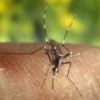
Space Agency Maps Mosquitoes to Combat Tropical Diseases
The European Space Agency will provide epidemiologists with maps of the habitat of mosquitoes that transmit tropical diseases.AS KYOTO EXPIRATION NEARS, EMISSIONS TRADING SHOWN INEFFECTIVE
The Kyoto Protocol expires at the end of 2012. Its global focus on CO2 emissions and trading schemes based in London and other financial centres has grown suspect.
Amazon Dams Mean Progress for Some, Lost Livelihoods for Others
A way of life will disappear under water due to the dams being built in a corner of northwestern Brazil, bringing progress at the cost of life-altering changes.
“The Battle for Patagonia Has Just Begun"
HidroAysén will create an energy duopoly that cuts off access to the market for other actors who want to participate with clean energy sources, says environmentalist Sara Larraín in this interview.Ecobreves – BRAZIL: Sugar Cane Straw Reduces Greenhouse Gas Emissions
Researchers at São Paulo State University in Brazil have determined that leaving sugar cane straw in the soil after harvesting reduces carbon emissions. They reached this conclusion after having compared two methods of harvesting sugar cane: mechanized harvesting and manual harvesting after the straw has been burned off the sugar cane plants.Ecobreves – CUBA: Exotic Weed Used to Produce Charcoal for Export
The exotic plant known in Cuba as marabu (Dichrostachys cinerea), formerly considered a pesky weed, is now being used to produce charcoal, and there are plans to increase production to 40,000 tons for export to Europe this year, official sources told Tierramérica.Ecobreves – VENEZUELA: Argentine Birds Spend the Summer on the Orinoco
During April, May and June, half a million brown-chested martins (Progne tapera fusca) flock from southern Argentina to the city of Guayana on the banks of the lower Orinoco River in northeastern Venezuela, where they set up their “headquarters” in 18 ceiba trees in the downtown square known as Plaza de las Ciencias.Ecobreves – HONDURAS: San Pedro Sula Wants to Sell Carbon Bonds
The local government of San Pedro Sula, 250 kilometers from the Honduran capital, plans to sell carbon credits to finance the preservation of El Merendón mountain, considered the “green lung” of the city.
Sorghum Proving Popular with Kenyan Farmers
Gadam sorghum was introduced to semi-arid regions of eastern Kenya as a way for farmers to improve their food security and earn some income from marginal land. The hardy, high-yielding sorghum variety has not only thrived in harsh conditions, it has won a place in the hearts - and plates - of local farmers.EUROPE: THE EPIDEMIC OF XENOPHOBIA
From Scandinavia to the Mediterranean Europe is being swept by social and political changes so massive that they are calling into question its fundamental principles. Diversity, which has been a positive constant throughout our history, is now considered a threat. The signs are plain to see: a propagation of intolerance and fanaticism, growing support for populist and xenophobic parties, an ever more massive presence of immigrants without status or rights, "parallel" communities that do not interact with the rest of society, the repression of individual freedoms, and democracies in crisis.
South Africans go to the polls on Wednesday 18 May to elect new local government representatives.
 South Africans go to the polls on Wednesday 18 May to elect new local government representatives. But some gender advocates say more than an election is needed to make women equal to men in South African society.

New Forest Code Could Hinder Climate Goals
Proposed amendments to the Brazilian Forest Code raise new alarm over Amazon deforestation.Ecobreves – ARGENTINA: Nuclear Accident Action Plan Proposed
An environmental organization in Argentina has proposed a citizen action plan in the event of a nuclear accident for use in Argentina, Chile, Uruguay and Paraguay.Ecobreves – BRAZIL: Nanotechnology Turns to Sugar Cane
The University of São Paulo Polytechnic School has developed a new technique to produce carbon nanotubes, microscopically thin cylinders of carbon atoms, using the gases generated by burning sugar cane bagasse, a by-product of sugar production.Ecobreves – HONDURAS: Clean-up of Yojoa Lake Begins
Over the past month, more than 33,000 square meters of parasitic plants have been removed from the waters of idyllic Yojoa Lake in western Honduras.Ecobreves – MEXICO: Cleaner Buses Take to the Streets
Public transportation contractors are introducing environmentally friendly buses in the eastern section of Mexico City.« Previous Page — Next Page »


The Week with IPS

NEXT STOP - SDGs
Tracking global progress towards a sustainable world
Tracking global progress towards a sustainable world
