Languages
Monday, November 2, 2026



News and Views from the Global South
Ecobreves – CHILE: Government and Ecologists Clash over Pollution
The Chilean government began an environmental education campaign - "Care for the Air: Breathe Easy" - to encourage using bicycles and public transportation instead of individual cars, dampening the ground before sweeping to prevent raising dust, and to discourage the burning of leaves in the polluted national capital.Ecobreves – BRAZIL: A Living Museum in the Middle of the Amazon
Learning about the Amazon's biodiversity will be easier after March 2010, with the inauguration of the Museum of the Amazon, near the jungle metropolis of Manaos. Scenic overlooks, giant aquariums and hanging walkways in the treetops will give visitors an opportunity for direct observation.Ecobreves – HONDURAS: Incentives for Cocoa Crops
The non-governmental Foundation for Rural Business Development is working in the Honduran jungle region of La Mosquitia, applying ecological techniques to grow cocoa.CALIFORNIA DREAMS TURN TO NIGHTMARES
Forty years ago I drove across the United States traversing mid-winter blizzards before entering the blissful warmth and light of California, a state blessed not only with stunning topography but also a diverse and hugely talented population, a top-tier educational system, and a culture of freewheeling, sky's-the-limit innovation. We cruised the sinuous curves of Highway 1 on the spectacular Big Sur coastline crooning, 'California Dreamin''.A MIXED PICTURE OF THE GLOBAL CRISIS
The world economy remains fragile and the economic outlook is still uncertain. There have been a few encouraging signs recently of better-than-expected performance here and there. Some are interpreting this as an indication that we may be turning the corner with regard to a possible return to previous patterns of economic growth, but excessive optimism is unwarranted.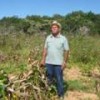
When Brazil's Arid Northeast Turns Green
The green landscape of Irapuá doesn't look like the usual postcard of Brazil's Northeast of dry, twisted bushes and parched grasses.
Geothermal Debate Simmers in El Tatio
El Tatio, the world's third largest geyser field, is in the sights of energy, tourism and conservation interests.Ecobreves – BRAZIL: Agrarian Reform to Pay for Reforestation
Farmers who received land in an Amazonian distribution will receive about 50 dollars a month to reforest their plots, announced the government's national settlement and agrarian reform agency, INCRA.Ecobreves – ARGENTINA: Restrictions on Sábalo Fishing
Given the national government's delay in setting a quota for exports of the sábalo fish (Prochilodus lineatus), an overexploited river species, the eastern province of Santa Fe established the maximum for catches until year end.Ecobreves – HONDURAS: A Law to Fight Natural Disasters
The Honduran parliament last week passed its first law to prevent and mitigate risks related to natural disasters and to establish greater institutional coordination for confronting such events.Ecobreves – MEXICO: A Factory of Green Ideas
Mexico's University of the Environment (UMA) will begin in September a program in environmental law and public policy.THE RISK OF ANOTHER DEBT CRISIS
The attention of policymakers is being drawn to addressing fiscal policy and financial issues in an effort to close the credit crunch and release financial flows, especially investment.Ecobreves – CHILE: Mapuches Unite for Rights
Leaders of the Mapuche, the largest indigenous group in Chile, announced a new offensive against the Michelle Bachelet government to demand greater land, political and cultural rights.Ecobreves – VENEZUELA: Weed Problem Worsens in Lake Maracaibo
The lemna sp, or duckweed, extends like a skein about 30 centimeters thick over Lake Maracaibo in western Venezuela. The weed covers 13 percent of the lake's 12,000 square kilometer surface.Ecobreves – BRAZIL: Creating a Market for Industrial Waste
Brazil's National Waste Exchange will help set up trade in industrial waste among companies through an Internet site.Ecobreves – HONDURAS: A Boost to Food Security
The Special Program for Food Security (PESA for its Spanish name) in two years has improved the living conditions of more than 14,000 families in rural Honduras, an official source reported to Tierramérica.
Red Card for Porto Alegre?
The 2014 soccer World Cup has created a dilemma for the southern Brazilian city of Porto Alegre: real estate and tourism development or environmental preservation?
Unstoppable Devastation of Guatemalan Mangroves
Guatemala's priceless mangroves are disappearing because efforts to slow the pace of deforestation have failed, warn environmentalists.G8, THE GAME IS OVER
A powerful new global player has emerged on the world stage: the Group of 192. The G7, the G8 and the G20 must now move over.WHAT WE NEED IS A CLIMATE BAILOUT
A recent study by the Global Humanitarian Forum, headed by former United Nations Secretary General Kofi Annan, postulates that the economic and human costs of climate change could now amount to some 125 billion dollars per year and the loss of 300,000 lives. Many more are being increasingly affected, mainly the poor.
Gold Conflict in Colombia's Central Mountains
The Colombian authorities could determine this month whether they will move forward on a giant gold mining project in a nature preserve in the central mountain range.« Previous Page — Next Page »





The Week with IPS

NEXT STOP - SDGs
Tracking global progress towards a sustainable world
Tracking global progress towards a sustainable world
