Languages
Tuesday, November 10, 2026



News and Views from the Global South
Active Citizens
CORRUPTION-UGANDA: Leaders’ Integrity Questioned
Seated at a u-shaped table is an assembly of middle-aged men and women clad in business suits, faces stern and expressionless. Refreshments - bottled water, sodas and giant flasks of tea - clutter the long table, competing for space with piles of documents.SOUTH SUDAN: Media Give Us a Fair Deal – Women
The guns have gone silent – except for sporadic conflict in parts of the vast South Sudan region, such as the Eastern Equatoria State. It may not be the absolute end of the conflict in the region, but it is a reason for renewed hope.
CORRUPTION-SIERRA LEONE: Song Sparks Governance Debate
Nothing has ever sparked a debate on the state of governance in the country like the song released by one of Sierra Leone’s most popular artists, Emerson Bockarie.POLITICS: Malawians Demand Local Councils
In Malawi, local government elections are as rare and endangered as the country’s black rhinoceros.SIERRA LEONE: Claims Presidency Interferes with Judiciary
It may be seven years after the country’s civil war, but Sierra Leone is still battling to obtain an independent judiciary.
ZAMBIA: Media Face Beatings and Attacks
When journalists were beaten by political supporters for covering the president’s return trip from abroad, and cabinet ministers and police officers looked on without stopping it, it seemed to be the last straw in the victimisation of the media. But it was not.
RIGHTS-UGANDA: “You Cannot Tell Me You Will Kill Me Because I’m Gay”
The Ugandan government will put to death gay citizens repeatedly caught having sex and throw into jail those who touch each other in a "gay" way, if a new proposed Bill becomes law.
AFRICA: We Are the Government
As if they were going to the races, Emma Musako and Monica Mhango showed up in their finest outfits to attend a meeting on the health, social and environmental impacts of uranium mining. They came because they, like the other attendees, no longer want to remain uninformed citizens.RIGHTS-MALAWI: Blame Game While Children Suffer
Every morning 12-year-old Thomson Genti and his seven-year-old brother, Chifundo, emerge dirty and wretched from the squalor of their hideout behind the crowded shops in the commercial town of Limbe. It is the start of a day of begging, beatings from the older street boys and insults from passers-by.
RIGHTS-UGANDA: Baganda Fight for Their Heritage
Specioza Nakabugo (63) sits on a mat under a mango tree on a well-mowed grass patch, her expression a blend of boredom and gloom.ZAMBIA: Give Us Our Constitution
Pressure is mounting for a new constitution that is inclusive of all citizens' views as the ongoing delays by the body granted to draft it still continues.RIGHTS-UGANDA: Colliding with the Fourth Estate
Charles Odobo Bichachi, editor of the Independent Newspaper has in a span of a year, been summoned to the police several times accused of publishing seditious statements. And just last month, Bichachi fell into trouble again: this time over a cartoon.
AFRICA: Lost in the Tracking of Budgets
As Susan Muonanji and other vendors scrambled around one of the many transport busses to sell cabbages and tomatoes at a market along one of Malawi’s key roads, a national budget session had just started in parliament some 100 kilometres away in the capital city, Lilongwe.
AFRICA: Counting on Media for Good Governance
While campaigning in the last election, Margaret Roka Mauwa, Member of the Malawian Parliament, did not promise her voters that when she won she would buy them coffins.ZAMBIA: Holding Government Responsible for Spending
The recent change of the budget cycle to allow government to effectively spend money to develop the country is not good enough unless those in charge of the money are made accountable, say civil society.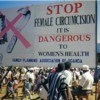
RIGHTS-UGANDA: Female Circumcision Still a Vote Winner
Over three decades ago a 14-year-old girl, her sister and a group of young teenagers from Bukwo headed to the River Amana for a ceremony that would change their lives forever.AFRICA: Government on Collision Course with Civil Society
The acquittal of former President Frederick Chiluba on charges of theft after a seven-year long landmark case, and the refusal by the Zambian government to appeal, has put government and civil society on a collision course.UGANDA: The Media is Not Free
Every Saturday afternoon at a public house in the capital city, Lynne Anite, a journalism student at Makerere University, would join senior government officials, academics, and even business people to debate about current affairs.
RIGHTS: Police Force HIV Tests for Sex Workers
It was, Malawian police say, a routine sweep for criminals at one of the country’s busiest border posts. They were looking for criminals.SIERRA LEONE: Journalists at War with Highest Court
Umaru Fofana looks dishevelled. His hair is overgrown and people who do not know him could be mistaken for thinking he just joined an Afro band. And his hanging beard will surely solicit suspicious glances.AFRICA: Youth Wars Cause Turmoil in Jonglei
There was no moon the night the armed men from the Murle tribe attacked the fishing village: it took place in complete darkness. Nyakong Both grabbed her two youngest boys and fled across the nearby river, as the men from the Murle tribe burnt down huts.« Previous Page — Next Page »





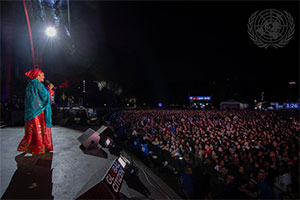 Global Citizen Festival in New York. Credit: UN Photo/Eskinder Debebe
Active citizens are committed to social change because they know that it is achievable. However, major political challenges face active citizens across the world. For example, in authoritarian regimes in Latin America where the hegemonic party has been in power for decades on end, protestors and human rights activists face enormous repression and struggle to materialize their advocacy into concrete results. The same can be said for Africans, where a shift towards elected government in recent decades has yet to translate into an effective voice in decision-making. Now, the Strengthening Citizen Demand for Good Governance, which uses evidence-based approaches – funded by DFID's Governance and Transparency Fund – seeks to raise their voices.
In 2025, the CIVICUS Monitor’s People Power Under Attack report revealed that civic freedoms are severely limited in 122 of 198 countries and territories, and only 7.2% of the global population now lives in countries where civic space is open. Through partnership with the Overseas Development Institute (ODI) and CIVICUS, IPS reporters across the continent will seek to define the extent and limits of state capability, government accountability and the responsiveness of leaders to the needs of citizens.

The Week with IPS

NEXT STOP - SDGs
Tracking global progress towards a sustainable world
Tracking global progress towards a sustainable world
