Languages
Tuesday, October 13, 2026



News and Views from the Global South
Civil Society
UN Report Details Grave Abuses Against those Trafficked into Scam Centres
A report published today by the UN Human Rights Office graphically details the lived experiences of some of the hundreds of thousands of people trafficked from dozens of countries around the world into working in entrenched scam operations mostly in Southeast Asia, as well as far beyond.
As Biodiversity Loss Grows, Rome Talks Urge Nations to Step Up Action
Governments meeting in Rome last week acknowledged that global efforts to protect nature are still not moving fast enough, even as biodiversity loss continues to affect ecosystems, livelihoods, and economies worldwide.
Ode to U.S. Civil Rights Icon Rev. Jesse Jackson Sr: A Life That Carried the Rainbow
When the Rev. Jesse Jackson Sr. declared, “Keep hope alive,” it was not a slogan. It was a discipline. It was a moral posture. It was a promise to those America had locked out of its prosperity and pushed to the margins of its democracy. And for more than five decades, Jackson kept that promise – organizing, marching, preaching, negotiating, and standing in solidarity with oppressed peoples at home and abroad.
Why Ending Child Marriage is Key to Advancing Africa’s Economic Development
Africa is home to approximately 160 million adolescent girls aged 10 to 19 (according to 2022 data by the United Nations Population Division). They embody the energy, creativity, and potential of the continent. It is undeniable that The Africa We Want, as envisioned in the African Union’s Agenda 2063, will not be realized without the full participation of this group which represents a key component of the continent’s current and future workforce.
‘Worrying’ War on Drugs Rhetoric Comes with Human, Financial Costs
Drug reform campaigners have called for an overhaul of global drug controls amid an increasingly complex and deadly drug situation in the world and as hardline anti-drug approaches are increasingly being used as cover for repression of civil society and human rights defenders.
International Humanitarian Law is at Breaking Point – but not Beyond Repair
International humanitarian law is at a breaking point, as rampant impunity for serious violations is enabling even greater abuses against civilians and detainees.
The Veto May be the Weapon of Elimination in the Election of Next UN Chief
As the campaign for the next Secretary-General gathers momentum – at a relatively slow pace – there is widespread speculation that any candidate running for the post of UN chief will have to abide by the dictates of a politically hostile White House or face a veto in the Security Council.
From Pledges to Proof: UN Biodiversity Meeting Begins First Global Review of Nature Action
Governments convened in Rome on Monday (February 16) for a critical round of UN biodiversity negotiations, launching the world’s first global review of how countries are acting to protect nature.
IRAN: ‘Sustainable Change Will Depend on Domestic Organisational Capacity, Not External Force’
CIVICUS discusses the recent protests in Iran with Sohrab Razaghi, executive director of Volunteer Activists, a Netherlands-based diaspora organisation empowering Iranian civil society.

Extreme Heat Undermines Decent Work in North Eastern Kenya
By 9 a.m. on a Wednesday, Hawa Hussein Farah is already watching the temperature climb. Awake since 6 a.m., she has prepared her three children for school before walking them to class and heading to Suuq Mugdi, an open-air market in Garissa town, to buy the fruit she will sell.
Multilateralism Reaching Breaking Point
The latest World Economic Forum made clear the current crisis of multilateralism. Over 60 heads of state and 800 corporate executives assembled in Davos under a ‘Spirit of Dialogue’ theme aimed at strengthening global cooperation, but it was preceded by a series of events pointing to a further unravelling of the international system.
Africa at the Epicenter of Child Labour Crisis as Migration Fuels Exploitation
Although global rates of child labour have declined since 2020, the practice remains a serious and persistent violation of children’s rights, undermining their safety, social development, and long-term economic stability. These risks are intensified by structural pressures— poverty, climate shocks, protracted conflict, and unsafe migration— that continue to push vulnerable children into crisis, and in some cases, trafficking and exploitation. The United Nations Children’s Fund (UNICEF) warns that African countries remain among the most affected regions, underscoring the urgent need for coordinated policy action, cross-border cooperation, and sustained investment to protect children on the move and those at risk of labour exploitation.
Local Resilience Can Mitigate Climate Conflicts in the Pacific
The Pacific Island countries are at the frontline of climate change. Their territories mostly consist of small, low-lying islands, with long coastlines and vast ocean spaces between them. Many livelihoods are based on agriculture or fishing, and importing water or food is often infeasible or expensive. This makes those large ocean nations highly vulnerable to the impacts of climate change, such as storms, droughts, and rising sea levels. Analysts have expressed concerns that this can result in various forms of socio-political conflict.

‘After Decades of Denial and Silence, the Suffering of Rohingya People Is Being Heard at the World’s Highest Court’
CIVICUS discusses the genocide case against Myanmar at the International Court of Justice (ICJ) with Mohammed Nowkhim of the Arakan Rohingya Society for Peace & Human Rights (ARSPHR), a civil society organisation led by Rohingya people born out of refugee camps in Bangladesh to document atrocities, preserve survivor testimony and advocate for accountability and justice.
‘When Rains Come, Our Hearts Beat Faster’
When the rain begins in Kashmir's capital Srinagar, Ghulam Nabi Bhat does not watch the clouds with relief anymore. He watches them with calculation. How much can the gutters take? How fast will the river rise? Which corner of the house will leak first? Where should the children sleep if the floor turns damp?
UN Human Rights Office Launches USD 400 million Appeal to Address Global Human Rights Needs
The UN High Commissioner for Human Rights Volker Türk has launched a USD 400 million funding appeal for 2026 to address global human rights needs, warning that with mounting crises, the world cannot afford a human rights system in crisis.
UN Security Council: Reform or Irrelevance
In early January, an emergency UN Security Council meeting on Venezuela followed a familiar path of paralysis. Members clashed over the US government’s abduction of Nicolás Maduro, with many warning it set a dangerous precedent, but no resolution came.
‘We Are Seeing an Economic Transition, but No Democratic Transition’
CIVICUS discusses the situation following the US intervention in Venezuela with Guillermo Miguelena Palacios, director of the Venezuelan Progressive Institute, a think tank that promotes spaces for dialogue and democratic leadership.
Myanmar: Five Years Since the Coup and No End in Sight To War
Five years of conflict since the military seized power have reduced Myanmar to a failed state and taken a huge toll of lives lost and destroyed. But with all sides seeking total victory, there is no end in sight.
Support Science in Halting Global Biodiversity Crisis—King Charles
British Monarch King Charles says science is the solution to protecting nature and halting global biodiversity loss, which is threatening humanity’s survival.
Is it the Budgetary Crisis – Or Leadership Crisis – Facing the United Nations – Or Both?
In the month of February 2025, one year ago, United Nations Secretary-General Antonio Guterres commenced his briefing of the media by announcing that “I want to start by expressing my deep concern about information received in the last 48 hours by UN agencies — as well as many humanitarian and development NGOs — regarding severe cuts in funding by the United States.” He went on to warn that ““The consequences will be especially devastating for vulnerable people around the world.”« Previous Page — Next Page »





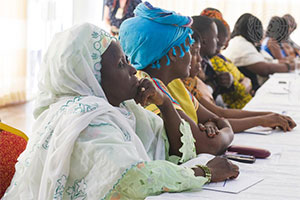 Representatives of Civil Society, Sierra Leone. Credit: UN Photo/Eskinder Debebe
Civil society faces mounting threats worldwide, even as it remains essential for democratic accountability, especially in countries struggling with economic instability and social inequality. However, at the same time, nations with weak democratic governance structures also systemically suppress the power of civil society. Human rights activists across the Global South frequently challenge issues such as political persecution and gender oppression, but in return face state-sanctioned punishment for their advocacy. Imprisonment and exile are common mechanisms of punishment that seek to erode the strength of civil society. The 2026 World Press Freedom Index has reached its lowest level in 25 years, with more than half of the world’s countries now falling into the "difficult" or “very serious” category for press freedom. IPS seeks to highlight the work of civil society across the Global South as well as the challenges that they face.
Updated by Yilan Batista and Shuli Wong August 2026

The Week with IPS

NEXT STOP - SDGs
Tracking global progress towards a sustainable world
Tracking global progress towards a sustainable world
