Languages
Saturday, November 28, 2026



News and Views from the Global South
Civil Society
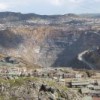
PERU: My Mining Deposits Are Under Your House
"Just imagine you’re told you have to leave your house, your livestock, the graves of your loved ones, and then they take you to an unfamiliar place without even asking you what you think about it. How would you feel?" asks Eduardo Sueldo, the local environment delegate in a highlands village in southern Peru.POLITICS-CHINA: Tibetan Movement May Dump ‘Middle Way’
Eight months after Tibet’s capital of Lhasa was rocked by violent anti-Chinese protests positions have hardened, casting gloom on prospects for progress on the Tibetan stalemate.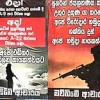
SRI LANKA: Gov't Celebrates Battle Gains in Tamil Areas
Sri Lankan national flags hoisted at important locations and posters depicting army offensives against the Tamil rebels are part of week-long celebrations ordered by the government of President Mahinda Rajapakse to mark its latest battlefield victories in the north of the island.POLITICS-BANGLADESH: Uncertainty Grips Scheduled Elections
Parliamentary elections in Bangladesh, scheduled for Dec.18, are now slipping into uncertainty with former prime minister Begum Khaleda Zia demanding that a state of emergency imposed by the military-backed, interim government be completely lifted first.DEVELOPMENT-AFRICA: Governance Still Failing
How can governance be improved to give development a chance in Africa? Political theorist Patrick Chabal believes a role has to be found for traditional methods of accountability to be used alongside formal systems recognised in the West.
POLITICS-ANGOLA: A Tradition of Strong Women
She was orphaned by Angola's liberation struggle against Portugal, but through it she found a new family and a life-long inspiration.
ECONOMY: Scepticism Greets G20 Attempt to Make History
Leaders of the world's 20 biggest economies emerged from weekend crisis talks with an apparent sense of historical accomplishment but key audiences seemed sceptical.FINANCE-BRAZIL: Payback Time?
This is a good time for all those who resisted the "neoliberal" free market economic model of the past few decades, often as lone voices preaching in the wilderness. Politicians, experts and social activists want to take advantage of the current financial crisis to bury this model once and for all, together with all forms of speculation.
DEVELOPMENT-AFRICA: Gender Budgeting Still Finding Its Feet
With the world slightly past the halfway mark to the Millennium Development Goal deadline of 2015, pressure is mounting to promote gender equality. Goal Three is to promote gender equality and empower women - but in fact, every goal relates directly to women's rights.ENVIRONMENT-BURMA: Conflict Threatens Karen Biodiversity
On top of 60 years of military occupation, the Karen people of Burma are now facing severe impairment of their environmental and cultural foundations, say activists.CULTURE-SINGAPORE: Long Way to Go as Asia’s Arts Hub
Shubigi Rao was not too happy when her husband, a pilot, was asked by his company to relocate to Singapore. Rao did not think that Singapore could offer opportunities for a budding artist like her.
RIGHTS-ZIMBABWE: Activists Demand Justice for Politically-Motivated Rapes
"I was raped by four Zanu PF militias at night, just outside their base, during the elections. They took turns to rape me, accusing me of supporting the opposition, MDC [Movement for Democratic Change]", said Pauline Moyana* from Mutasa, a community in Zimbabwe’s eastern Manicaland province.
AGRICULTURE: Swazi Input Trade Fairs Falling Short
Mary Ntshangase sits under a big umbrella - a packet of beans in one hand and a packet of peanuts in the other - wooing customers to her stall.DEVELOPMENT: Building a Stronger Women's Movement
For four days, Cape Town's convention centre will be filled with a profusion of languages, colours, and ideas as some 2,200 delegates from 144 countries take part in the 11th International Forum on Women's Rights and Development, organised by the Association of Women in Development (AWID).MEXICO: Kidnapped Migrant Women – Out of Sight, Out of Mind
"I don't see any investigation, only grief and despair," said Heyman Vázquez, a Catholic priest who runs a shelter for migrants on the border between the southern Mexican states of Chiapas and Oaxaca, referring to the recent kidnappings of 20 Central American women by groups of armed men.RIGHTS-EL SALVADOR: Ex-President Cristiani Faces Charges in Spain
Charges filed by two human rights groups in Spain’s National Court Thursday against former Salvadoran president Alfredo Cristiani and 14 members of the army in connection with the 1989 slaughter of six Jesuit priests, their housekeeper and her teenage daughter represent "a ray of hope" for victims of human rights abuses, say lawyers and Jesuit authorities.LABOUR-ARGENTINA: Major Blow to Union Monopoly
A Supreme Court ruling has thrown a spanner in the works of the monopolistic model of union representation in Argentina that has prevailed for over 60 years, by upholding the right of a workers' union that lacks legal recognition to elect its own delegates.ECONOMY: Crisis Talks to Confront Dueling Demands
Leaders of the world's 20 biggest economies will confront dueling demands for action when they gather here Saturday in the highest-level acknowledgement so far that the global economy is in crisis.
DEVELOPMENT: A Global Health Model, Village by Village
Working for sustainable development in Kenya, which ranks 148th out of 177 countries on the United Nations development index, is a daunting task. The country not only has a 6.1 percent rate of HIV/AIDS infection among its 37 million people, but nearly 60 percent of Kenyans live on less than two dollars a day.
TRADE-CAMEROON: Borders – Where Two Economies Meet
No one pays full price for petrol in northern Cameroon, not when there's cheaper Nigerian contraband available. In Garoua town for example, there are about 4,000 commercial motorcycles which all depend on "zoa zoa" or "federale" as this highly cherished liquid is generally referred to.BURMA: Polls in View Junta Stifles All Dissent
Burma’s military rulers have renewed efforts to eliminate all opposition to their authority in the lead up to planned elections in 2010.« Previous Page — Next Page »


 Representatives of Civil Society, Sierra Leone. Credit: UN Photo/Eskinder Debebe
Civil society faces mounting threats worldwide, even as it remains essential for democratic accountability, especially in countries struggling with economic instability and social inequality. However, at the same time, nations with weak democratic governance structures also systemically suppress the power of civil society. Human rights activists across the Global South frequently challenge issues such as political persecution and gender oppression, but in return face state-sanctioned punishment for their advocacy. Imprisonment and exile are common mechanisms of punishment that seek to erode the strength of civil society. The 2026 World Press Freedom Index has reached its lowest level in 25 years, with more than half of the world’s countries now falling into the "difficult" or “very serious” category for press freedom. IPS seeks to highlight the work of civil society across the Global South as well as the challenges that they face.
Updated by Yilan Batista and Shuli Wong August 2026

The Week with IPS

NEXT STOP - SDGs
Tracking global progress towards a sustainable world
