Languages
Saturday, November 28, 2026



News and Views from the Global South
Civil Society
CUBA: Churches Reject US Report on Religious Freedom
Pastors and representatives of Protestant churches expressed their disagreement with a report from the United States that describes Cuba as one of the countries that restrict the practice of religion and said that, on the contrary, they have absolute freedom to practise their faith.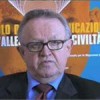
DEVELOPMENT: Overdue Award Goes to the Right Man
The Finns had almost waited for the Nobel Peace Prize for Martti Ahtisaari too long. It finally came as a happy surprise, amidst speculation it would go this year to Asia.POLITICS-US: Voter Fraud Charges Echo Past Partisan Fights
The Nevada voter registration operation of a low-income advocacy organisation had its offices raided on Tuesday as part of an ongoing investigation by state authorities into whether the group is involved in systematic voter fraud.DEATH PENALTY: Activists Reveal Japan's Death Row to the World
Japan’s death row inmates revealed to the world on Friday their personal stories of isolation and suffering, uninformed until the last minute when they will be taken to the gallows.POLITICS-MALAYSIA: Mahathir May Return to Centre Stage
Prime Minister Abdullah Badawi’s planned stepping down in March 2009 may well see a return to the authoritarian rule familiar to Malaysians during the 22-year iron rule of his predecessor Dr. Mahathir Mohamad.CHINA: Nothing Confucian About Toxic Milk
For a country with an enduring tradition of Confucian ethics, the poisoned milk scandal - possibly the worst crisis of its type in Chinese modern history - has had a devastating blow on the public's trust in its government's benevolence.RIGHTS-SPAIN: Digging Up Past Atrocities
When it seemed that the atrocities committed during the 1936-1939 Spanish civil war and the 1939-1975 dictatorship of General Francisco Franco were buried once and for all, the debate has been reopened.RIGHTS-CHILE: Ten Years of the ‘Pinochet Effect’
The arrest of Chilean dictator General Augusto Pinochet (1973-1990) a decade ago in London set the justice system in motion in Chile and in other countries in the world, stimulated the attempt to get at the truth about atrocities, and sent out a strong message to a number of notorious human rights violators.
ECONOMY-US: Shelters and Soup Kitchens Hold Crisis Front Lines
Wall Street may be in the throes of agony, but business is booming at the Holy Apostles Soup Kitchen a bit farther north in the Manhattan neighbourhood of Chelsea.FINANCE-US: Helping People One Paycheque From Disaster
A decade ago, few could envision that making a charitable donation would be as simple as a mouse click.POLITICS-MALAYSIA: Regime Change May Hit Reforms
It took exactly seven months after a severe general electoral setback for Prime Minister Abdullah Badawi to announce that he would not be defending the presidency of the dominant party in the ruling coalition in party polls next year.
SRI LANKA: ‘Rice Paddies More Valuable Than Int’l Airport’
Sri Lankan rice farmers who fought against President Mahinda Rajapakse and his powerful brothers, trying to construct an international airport on their paddies, say they won because their cause was just and enjoyed popular support.POLITICS-BOLIVIA: Back to the Trenches
After failing to reach an agreement in talks with the rightwing opposition governors, Bolivian President Evo Morales is redoubling his efforts to secure a call for a referendum on the new constitution, which would introduce far-reaching social and economic changes to empower indigenous people and would make it possible for presidents to run for a second consecutive term.THAILAND: Another Bout of Military Rule?
The battle for Bangkok has entered a new and violent phase, the logical end of which can only be another bout of military rule.POLITICS-THAILAND: Tired of Instability – But More Ahead
In the wake of Tuesday’s violent clashes with anti-government protesters that saw the Thai prime minister clambering over Parliament’s walls to safety, Noi, a Thai employee, says: "This is like a horror movie with no ending."MEXICO: Police Arrested for Killing Indigenous Protesters
The recent killings of six indigenous people and the injuries suffered by 17 others in a clash with police in the southern Mexican state of Chiapas were the result of a strategy of "criminalising social protest" adopted by the state’s "supposedly leftist government," according to a prominent local human rights group.EL SALVADOR: Increase in Poverty Driven by Soaring Food Prices
In the village of Talchiga in northeastern El Salvador, 20 families live in wooden shacks with earth floors, have no piped water, electricity or sewer services, and suffer from high levels of malnutrition.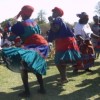
POLITICS-NAMIBIA: Gender Equality – Making The Numbers Count
Namibian gender activists applaud the goal of a 50/50 split of women and men in government by 2015, but warn that the real work is only just beginning.SRI LANKA: Cornered Tamil Rebels Resort to Suicide Bombing
Cornered by the Sri Lankan army in their northern stronghold of Kilinochchi, the Liberation Tigers of Tamil Eelam (LTTE) struck back on Monday with the deadliest weapon in their arsenal, the suicide bomber, killing a former army chief and 24 other people.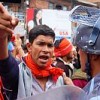
NEPAL: Civil War Victims Await Compensation
Kamala Limbu’s husband, a Maoist activist, was allegedly abducted by security personnel in 2001. She has no clue about his whereabouts, nor can she avail of promised relief for want of proof. "It is discrimination. From where will I get all the facts?" asks Limbu.EAST TIMOR: Int'l Peacekeepers Not Key to Stability
East Timor’s political elite cannot leave the country’s stability up to the International Stabilisation Forces (ISF). They must unite and stop bickering for power, according to experts, academics and observers.« Previous Page — Next Page »


 Representatives of Civil Society, Sierra Leone. Credit: UN Photo/Eskinder Debebe
Civil society faces mounting threats worldwide, even as it remains essential for democratic accountability, especially in countries struggling with economic instability and social inequality. However, at the same time, nations with weak democratic governance structures also systemically suppress the power of civil society. Human rights activists across the Global South frequently challenge issues such as political persecution and gender oppression, but in return face state-sanctioned punishment for their advocacy. Imprisonment and exile are common mechanisms of punishment that seek to erode the strength of civil society. The 2026 World Press Freedom Index has reached its lowest level in 25 years, with more than half of the world’s countries now falling into the "difficult" or “very serious” category for press freedom. IPS seeks to highlight the work of civil society across the Global South as well as the challenges that they face.
Updated by Yilan Batista and Shuli Wong August 2026

The Week with IPS

NEXT STOP - SDGs
Tracking global progress towards a sustainable world
