Languages
Sunday, November 29, 2026



News and Views from the Global South
Civil Society
COMMUNICATIONS: Internet – Ruled by the Many, or by Special Interests?
The Internet Governance Forum (IGF) being held in Rio de Janeiro Monday through Thursday, with more than 1,500 people attending, is discussing issues that are not yet a concern for the majority of users, but are already having a major impact on their lives.LATIN AMERICA: Journey to Bring Big Screen to Small Towns
A young Argentine couple will set out from this capital city in December on an overland journey through 12 Latin American countries, as far as Mexico, taking their country’s films to small towns in rural areas, with backing from the state and civil society organisations.POLITICS-INDIA: Communists Turn Unpopular Over SEZ Plans
When acclaimed filmmaker Aparna Sen refused to participate in a state-run film festival, that began on the weekend, it was a sign of how alienated Bengali intellectuals have become from a programme of economic reforms undertaken by Marxists who have ruled West Bengal state for 30 years.PHILIPPINES: Water Privatisation – Boon or MNC Conspiracy?
Supporters call it a model for the future. But critics say it is a conspiracy by multilateral financial institutions to privatise water supplies and open the floodgates for multinational corporations (MNCs) to reap profits from Asia's poor.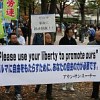
RIGHTS-JAPAN: Cut Aid to Burma Say Demonstrators
About 1,300 Burmese expatriates rallied in the capital’s Yoyogi Park on Sunday afternoon, appealing to the international community to put pressure on the Japanese government to cut aid to their military-ruled country.DEATH PENALTY-JAPAN: Dissenting Judge Breaks 40-Year Silence
Norimichi Kumamoto says he still feels "tremendous anger" and cannot maintain his silence any longer. In 1968, he was one of three judges who sentenced a boxer to death on charges of murdering a family of four, although at the time he was convinced the man was innocent.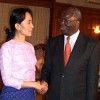
POLITICS-BURMA: Aung San Suu Kyi’s Release Fits Junta’s Agenda
Tentative talks between Burma’s pro-democracy leader Aung San Suu Kyi and the country’s military rulers have begun, raising hopes of a political breakthrough. "If the talks go well, she may be released soon," a spokesman for her party, the National League for Democracy (NLD), told journalists on the weekend.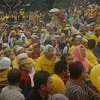
RIGHTS-MALAYSIA: Rally Defies Police Ban to Demand Poll Reforms
Tens of thousands of people defied riot police, water cannon and pouring rain to march through the capital city, on Saturday, to demand electoral and other reforms and deliver a strong rebuff to Prime Minister Abdullah Badawi.URUGUAY-ARGENTINA: Smoke from Pulp Mill Clouds Relations
Everything was in place for the beginning of the end of the long-running conflict: a friendlier face about to be sworn in as president in Argentina, a tiny bit of flexibility on the part of Uruguay, a few points of agreement, and a Spanish mediator appointed by the King.IBERO-AMERICA: Summit on Track to Protect Migrants’ Social Rights
The Multilateral Convention on Social Security, to be signed at the 17th Ibero-American Summit in Chile, is an important step toward improving the quality of life of poor people in this community of nations, according to its governments.SPAIN: Biofuels – Good for Business, Bad for the Poor, Say Activists
Making fuels from plants is strongly supported by the business community in Spain, but equally strongly criticised by environmental organisations because of its negative impact on food production.LABOUR-IRAN: Sugar Industry Strikes Bespeak Bitter Conditions
Labour protests and strikes, though firmly suppressed in Iran, are gaining momentum as failure to manage the frail economic structure pushes more and more state-owned factories and private enterprises into bankruptcy.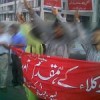
POLITICS-PAKISTAN: Intelligentsia Finds Ways to Beat Emergency Rule
Faced with a continuing news blackout and with street protests being met with police beatings and imprisonment, members of Pakistan’s civil society who oppose the ‘emergency’, imposed by President Gen. Pervez Musharraf a week ago, are finding alternative ways to express dissent.RIGHTS-ARGENTINA: Identifying the Remains of the “Disappeared”
With backing from the state, a non-profit scientific organisation in Argentina has launched a mass campaign to collect blood samples from the families of people who fell victims to forced disappearance during the 1976-1983 dictatorship, in order to identify the remains of some 600 people and create a database.CZECH REPUBLIC: Corruption Catches Anti-Roma Minister
Two corruption scandals were too much for Jiri Cunek, the conservative minister who gained fame and power for his uncompromising views on the Roma.EUROPE: Diamonds from Cote d’Ivoire Need Cleaning
A new initiative for preventing diamonds from financing conflict in the Cote d'Ivoire has been agreed at an international conference in Brussels.MEXICO: Politicians Make Hay With Flood Aid
In the southeastern Mexican state of Tabasco, hundreds of thousands of people made homeless by unprecedented flooding are queuing for up to six hours to collect food and water, a large part of which has been donated by ordinary Mexicans, but which is being used by some authorities and politicians to their own advantage.MEDIA-BURMA: Keeping the Flame Alive Over Radio, Internet
International media interest in Burma seems to have cooled down after images of the violent dispersal of pro-democracy demonstrators were splashed on TV screens and newspapers late September. But exiled Burmese journalists are determined to keep the flame going over radio and the Internet.
PARAGUAY: The Dark Side of the Soy Boom
A sea of green stretches as far as the eye can see on both sides of the dirt road leading to the communities of Lima, Capiibary and Guayaibí, 250 km from the capital, in the northern Paraguayan department (province) of San Pedro, one of the country’s poorest.POLITICS-FIJI: Talking About an Assassination
After a period of relative lull Fiji was back on the edge this week following a series of arrests over an alleged assassination plot against interim Prime Minister Frank Bainimarama, members of his government and senior military officers.PAKISTAN: Media Muffled Under Musharraf’s Emergency
"I have the habit of saying what I have to and will continue to do so," Syed Talat Hussain, anchor of a popular current affairs programme on Aaj TV, says in an interview from Islamabad.« Previous Page — Next Page »


 Representatives of Civil Society, Sierra Leone. Credit: UN Photo/Eskinder Debebe
Civil society faces mounting threats worldwide, even as it remains essential for democratic accountability, especially in countries struggling with economic instability and social inequality. However, at the same time, nations with weak democratic governance structures also systemically suppress the power of civil society. Human rights activists across the Global South frequently challenge issues such as political persecution and gender oppression, but in return face state-sanctioned punishment for their advocacy. Imprisonment and exile are common mechanisms of punishment that seek to erode the strength of civil society. The 2026 World Press Freedom Index has reached its lowest level in 25 years, with more than half of the world’s countries now falling into the "difficult" or “very serious” category for press freedom. IPS seeks to highlight the work of civil society across the Global South as well as the challenges that they face.
Updated by Yilan Batista and Shuli Wong August 2026

The Week with IPS

NEXT STOP - SDGs
Tracking global progress towards a sustainable world
