Languages
Friday, September 25, 2026



News and Views from the Global South
Aid

Children under Lockdown get a ‘Learning Passport’
Soon schools in Timor-Leste, Ukraine, and Kosovo, where some 6.5 million children are currently at home, will hopefully start teaching their children once again -- albeit online.
What Does Covid-19 Crisis Mean for Rural Development?
The implications and consequences of the Covid-19 pandemic are playing out before us. Much of the news coverage of the to date in both the Global North and the Global South has understandably focused on the horrifying impact of the disease on urban communities, where it is clearly hitting people, and economies, hardest.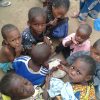
Q&A: Continued Social Distancing and Hundreds of Millions More in Poverty – A New Normal for the World?
With much of the global economy stalled amid an unprecedented lockdown of nations grappling to contain the COVID-19 pandemic, the author of a new United Nations report on the disease’s impact on poverty told IPS that hundreds of millions more could be pushed into poverty and we can expect to see social unrest.
On Watching Contagion: What Do We Learn?
Contagion is a 2011 film by US director Steven Soderbergh (Erin Brockovich, Traffic, Che) that has proved very popular viewing during the first few weeks of the Coronavirus crisis. Set in a fictional global pandemic – modelled on the outbreak of a bat-borne Nipah virus identified in 1999 that killed around 100 people in Malaysia - the film is a tightly-written topical drama with a great castthat includes Matt Damon, Gwyneth Paltrow, Jude Law, Laurence Fishburne, Kate Winslet, Marion Cotillard and Jennifer Ehle.
No Space for Social Distancing in Rohingya Refugee Camps
Nine-year-old Mohammad Rafique used to collect vegetables from Kutupalong Bazaar and sell them at a market inside Kutupalong camp, a camp of some 600,000 Rohingyas, in Bangladesh’s Cox’s Bazar.
The Cost of Coronavirus in Africa: What Measures can Leaders Take?
With the novel coronavirus COVID-19 having reached the African continent, countries are getting ready to manage the spread of the virus and ensure that their fragile health systems can cope. Images from China and Europe give many reasons for concern.
Helping the homeless of Rome combat COVID-19
Behind the Tiburtina Station, in the East of Rome, with just a small covered area protecting from the inclemency of the weather, sleeping close to each other is the only way to stay warm. A boy of Ivorian origin is alone, far from everyone, in the centre of the sidewalk, exposed to a freezing wind.
Green Counter-Revolution in Africa?
In 2006, the Bill and Melinda Gates Foundation and the Rockefeller Foundation jointly launched the Alliance for a Green Revolution in Africa (AGRA). The African Green Revolution Forum claims AGRA is the “world’s most important and impactful forum for African agriculture”.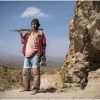
Growing Youth Activism for Environmental Protection in Africa
The mining sector in Africa is facing radical change as youth activists take action against the environmental degradation caused by mining industries. Tensions between activists and the mining industry have raised, however, concerns over human rights abuses.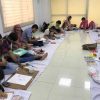
A Story of Triumphs and Tribulations: Implementing Services for Autism in Bangladesh
A few days ago, a friend said to me that my focus on autism, although rather successful, had “sucked out all energy from other critical areas of social need in Bangladesh.” My friend wanted to know if I would be interested in expanding my visibility and successful approach to autism, to other issues that have apparently been left by the wayside due to everyone’s eagerness to work on an issue popular with the Prime Minister’s daughter!
Slums, Camps, Terrorism: Experts Worry about Coronavirus Hitting South Asia
As coronavirus makes its way through different continents, countries, and communities around the world having claimed more than 23,000 lives, experts are ringing alarm bells about the implications of the disease as it hits South Asia, which hosts almost 2 billion of the world’s population.
Can Eswatini’s Traditional Healers Encourage HIV Testing Among People Not Accessible via Routine Healthcare Systems?
Doctor Khalishwayo is a traditional healer based in Nhlangano, a town in the Shiselweni Region, in southern Eswatini. His clients are people who consult him when they are suffering from different ailments. And he in turn diagnoses them using divine methods.
Why Rich Countries must Protect Developing Nations from Coronavirus Pandemic
Governments in wealthy, first world countries must not ignore the plight of poorer nations battling the coronavirus or the disease will not be brought under control, global development experts have said.
Inequalities in Human Development in the 21st Century
Inequalities. The evidence is everywhere. And although they may be hard to measure and summarize, there is a sense in many countries that many are approaching a precipice beyond which it will be difficult to recover.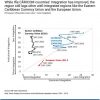
Strengthening Caribbean Regional Integration
The Caribbean economies have long recognized the value of working together. Improving regional integration—for instance, through more intraregional trade and policy coordination—can help the region’s small-size economies build greater resilience and scale, as well as enhance bargaining power on the global stage.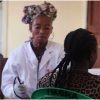
Women & Girls Up Front — the Humanitarian Response in Democratic Republic of Congo
Eleven-year-old “Anne” went to a health facility with her mother in the conflict-affected province of Ituri, in northeastern Democratic Republic of the Congo. At first, she could barely tell her story.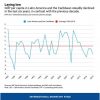
New Challenges to Growth in Latin America & the Caribbean
Economic activity in Latin America and the Caribbean stagnated in 2019, continuing with the weak growth momentum of the previous five years and adding more urgency and new challenges to reignite growth.
Bridging Africa’s Great Gender-Financing Divide
What stands between Soi Cate Chelang and her dream of turning her small pallet-making business into a major enterprise is capital.
Genuine Reform Culture Lacking in Zimbabwe
Zimbabwe needs urgent economic and political reforms to transform its economy amidst a growing national crisis, researchers say in a new study that urges swift policy changes and a sound financial framework to attract investment.
A tribute to a champion of the deprived
(The Daily Star) - I can think of few people who have done more for the world's deprived population than Fazle Hasan Abed. His contribution spans Bangladesh where BRAC, the organisation he founded in 1972, services close to 10 million of the country's underprivileged households. Through Abed's commitment to serve the world's deprived, BRAC has now extended its reach across the globe. It has invested its experience in rehabilitating the tsunami victims in Sri Lanka and the war-ravaged population in Afghanistan where two of its officials, working in high risk areas, were held hostage by the Taliban. BRAC is now reaching out on a large scale to serve the underprivileged populations in various regions of Africa. It has been actively engaged in Pakistan, Philippines, Tanzania, Uganda, South Sudan, Liberia and Sierra Leone. BRAC has even extended its reach across the Atlantic to Haiti.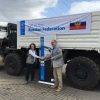
Food Security Is Priority of Russian Sustainable Development Assistance
Food security holds a special place among Russia’s priorities in its efforts to achieve sustainable development globally. We believe that this task, which is reflected in Sustainable Development Goal 1, requires a comprehensive and multidimensional approach.« Previous Page — Next Page »


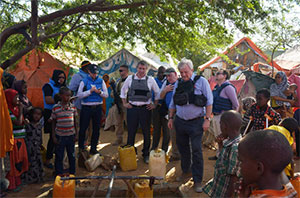 UN Emergency Relief Coordinator Visits Somalia. Credit: UN Photo/Tobin Jones
In recent years, conflicts have broken out across the world with no sign of slowing down or stopping. In times like this, millions of people globally are in dire need of humanitarian aid. Famine, warfare, natural disasters, and economic decline plague a host of nations, including Palestine, Sudan, Chad, Lebanon, and Haiti, to name a few. Humanitarian aid provides millions of people with critical services including healthcare, food, clean drinking water, psychosocial support, housing, and access to education. UN agencies such as the UNDP, UNICEF, the World Food Programme (WFP), UNHCR, UNRWA, and UNEP work with the UN Office for the Coordination of Humanitarian Aid (OCHA) and local organizations to come up with the best possible strategies to support affected communities. At the same time, humanitarian aid and those working on the frontlines are consistently threatened by both actors directly involved in conflict as well as those who are meant to contribute to the international humanitarian regime at large. The near-collapse of United States international aid structures in 2025, including the termination of 83% of USAID’s 6,300 global initiatives, has left millions of people without access to vital humanitarian assistance. 98 million people in 2025, only 65% of people targeted for humanitarian assistance, received the help they needed. In contrast, 123 million people received some form of humanitarian assistance in 2024, and OCHA’s 2026 Global Humanitarian Overview estimates that 239 million people are in need of assistance in 2026. IPS is well-positioned to discuss current initiatives to provide aid and relief through in-depth reporting and opinion content.

The Week with IPS

NEXT STOP - SDGs
Tracking global progress towards a sustainable world
Tracking global progress towards a sustainable world
