Languages
Saturday, September 26, 2026



News and Views from the Global South
Aid

The Struggle for Land and Food in the Locked-down Philippines
Landless farmers who produce rice for the landlords of big “haciendas” can’t get more than a little pocket money from their harsh work—not enough to provide diverse and healthy food for their families. Seasonal workers on sugar-cane plantations know that they can count on only six months of earnings. When summer arrives, those whose irrigation facilities have been destroyed by typhoons, or those who never had any, struggle while waiting for the rain.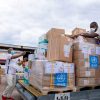
Beyond the COVID-19 Pandemic: What Now?
In the midst of the COVID 19 pandemic, the much-anticipated 73rd World Health Assembly (WHA) of the WHO concluded without any major controversies or disagreements.
Lifelines in Danger
The COVID-19 pandemic is crippling the economies of rich and poor countries alike. Yet for many low-income and fragile states, the economic shock will be magnified by the loss of remittances—money sent home by migrant and guest workers employed in foreign countries.
The Curious Case of Covid-19 in Africa
With very weak health systems and overall capacity constraints to effectively respond to the deadly coronavirus disease, Africa’s fate against the invisible enemy, was going to be nothing short of catastrophic according to early predictions. Although Africa is yet to reach its peak, many countries are not seeing the exponential growth in case numbers, or in mortality rates as seen in other regions of the world. So far, the continent has the lowest mortality rates with higher recovery rates globally.
World Comes Together with $1.35 billion for Yemen
World leaders gathered on Tuesday to pledge $1.35 billion in aid for Yemen, which currently undergoing what many is the world’s “worst humanitarian crisis”, with Saudi Arabia announcing a contribution of $500 million.
How to Transform UN’s Environmental Goals into a People’s Agenda for Africa
The COVID-19 insurgence has highlighted the need for multilateral cooperation among sustainability stakeholders. As the journey towards achieving Agenda 2030 and the Sustainable Development Goals (SDGs) is fraught with imminent global challenges, global environmental leaders agree that now is the time to act collectively for nature, leaving no one behind.
Beyond the Crisis
Looking back to the start of 2020, the world has changed almost beyond recognition. To protect public health, the global economy was put into stasis. Shops closed, factories were mothballed, and people’s freedom of movement was severely curtailed. No country has escaped the health, economic, and social impacts of the COVID-19 crisis. Tragically, more than 260,000 people have died and millions have been infected. The IMF is projecting global economic activity to decline on a scale not seen since the Great Depression. It is truly a crisis like no other.
COVID-19 – UN Urges World Leaders to Act Now to Avert ‘Unimaginable Devastation’
Unless global leaders act now, the COVID-19 pandemic will cause unimaginable suffering and devastation around the world, the Secretary-General of the United Nations António Guterres said yesterday, May 28. He painted a picture of hunger and famine at historic proportions, with some 60 million people pushed into extreme poverty and half the global workforce -- 1.6 billion people -- left without work, and $8.5 trillion in global output lost.
Innovation Is an Imperative – for Sustainable Food Systems
Hunger and food insecurity continue to rise. The official 2019 statistics refer to 821 million people suffering from hunger all over the world. According the recently launched Global Report on Food Crises, there are further 135 million people facing crisis levels of hunger or worse. WFP estimates that due to the impacts of COVID19, additional 130 million people could be pushed to the brink of starvation by the end of 2020. This means a total increase of 265 million people. If there will be no appropriate and urgent actions, “we could be facing multiple famines of biblical proportions within a short few months”, said David Beasley, WFP Executive Director, addressing the UN Security Council on 21st April.
Women are Often an After-Thought in a Humanitarian Crisis
In an interview*, Bina Pradhan, an independent researcher, focuses on gender, macroeconomics and emerging issues of inequality. She is affiliated with the Federation of Business and Professional Women, Nepal (FBPWN), and has been working on the promotion and advancement of women in enterprise development and trade, post-earthquake community reconstruction, and rebuilding people’s lives and livelihoods with a focus on sustainability.
Politics, Profits Undermine Public Interest in Covid-19 Vaccine Race
With well over five million Covid-19 infections worldwide, and deaths exceeding 340,000, the race for an effective vaccine has accelerated since the SARS-Cov-2 virus was first identified as the culprit.
COVID-19 Pandemic and the Pacific Islands
As of 11 AM (AEST) on 20th May 2020 the incidence of COVID-19 virus (henceforth virus) on the Pacific Islands was limited. Active cases (deaths) in some of the Pacific Islands were Australia 7,072 (100), New Zealand 1,503 (21), PNG 8(0), Guam 154 (5), Fiji 18 (0), Timor-Leste 24 (0), French Polynesia 60(0), and New Caledonia 18(0).1 Standards of comparison are not uniform across the region since testing capacities of the various countries differ widely. The low number of cases in the smaller Pacific Islands compared to their larger neighbours, i.e., Australia and New Zealand, reflect both variations in testing standards as well as their smaller population size. The smaller Pacific Islands were also not subject to some of the aberrations experienced by the larger countries, e.g., large number of arrivals from foreign countries in planes and cruise ships.
Logistics: The Backbone of Humanitarian Efforts Fighting COVID-19 in Asia and the Pacific
While most of the world self-isolates at home and skies are emptier than they have been for decades, humanitarian flights transporting life-saving aid are revving up around Asia and the Pacific.
Food Markets in the Caribbean Take Stock of Vulnerability during COVID-19
 The COVID-19 pandemic has raised the spectre of food insecurity as countries and citizens fear a return to the conditions that roiled the international food markets during the 2008 economic crisis.
COVID-19 – China Tells World Health Assembly They Did their Best
This week’s 73rd World Health Assembly had member states adopt a resolution to review the global response to the coronavirus pandemic. The World Health Organisation (WHO) will also undergo an evaluation for its response to the outbreak.
HIV Services Take a Backseat to COVID-19 in Russia
In Russia, which has one of the world’s worst HIV/AIDS epidemics, an already fragile healthcare system is buckling under the pressure of dealing with COVID-19.
Curbing Land Degradation & Protecting the Environment in Mongolia
Mongolia is one of the most sparsely populated countries in the world. Yet, more than 70 percent of its surface is affected by land degradation. Mining activities in several parts of the country have been a source of humanitarian and environmental concern. However, different stakeholders are coming together to work towards restoration and rehabilitation.
Africa’s Health Dilemma: Protecting People from COVID-19 While Four Times as Many Could Die of Malaria
Experts across Africa are warning that as hospitals and health facilities focus on COVID-19, less attention is being given to the management of other deadly diseases like HIV/AIDS, tuberculosis and malaria, which affect millions more people.
Women Taking Charge during COVID-19
As the COVID-19 mayhem carries on in most countries, the role of mothers, daughters, and female caregivers have been affected the most. Besides looking after the household and home schooling children, they are also working on the front lines, actively or passively caring for their respective communities.Time for the World Bank and IMF to Be the Solution, Not the Problem
The World Bank and the International Monetary Fund (IMF) have a historic opportunity to help stabilize a world reeling from COVID-19. Doing so will require the institutions to change course and aggressively support poor countries’ ability to invest broadly in the government services their populations need.
Why the International Day of Multilateralism Must Start a New World Order
In our current COVID 19 context of suffering and fear, that may sound like a strange and spooky quote. But let’s be clear: what we have achieved so far in the present is not - and shouldn’t be - indicative of what we can achieve in the future.« Previous Page — Next Page »


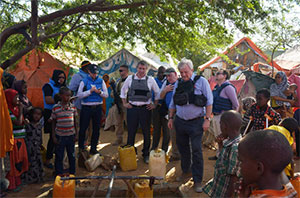 UN Emergency Relief Coordinator Visits Somalia. Credit: UN Photo/Tobin Jones
In recent years, conflicts have broken out across the world with no sign of slowing down or stopping. In times like this, millions of people globally are in dire need of humanitarian aid. Famine, warfare, natural disasters, and economic decline plague a host of nations, including Palestine, Sudan, Chad, Lebanon, and Haiti, to name a few. Humanitarian aid provides millions of people with critical services including healthcare, food, clean drinking water, psychosocial support, housing, and access to education. UN agencies such as the UNDP, UNICEF, the World Food Programme (WFP), UNHCR, UNRWA, and UNEP work with the UN Office for the Coordination of Humanitarian Aid (OCHA) and local organizations to come up with the best possible strategies to support affected communities. At the same time, humanitarian aid and those working on the frontlines are consistently threatened by both actors directly involved in conflict as well as those who are meant to contribute to the international humanitarian regime at large. The near-collapse of United States international aid structures in 2025, including the termination of 83% of USAID’s 6,300 global initiatives, has left millions of people without access to vital humanitarian assistance. 98 million people in 2025, only 65% of people targeted for humanitarian assistance, received the help they needed. In contrast, 123 million people received some form of humanitarian assistance in 2024, and OCHA’s 2026 Global Humanitarian Overview estimates that 239 million people are in need of assistance in 2026. IPS is well-positioned to discuss current initiatives to provide aid and relief through in-depth reporting and opinion content.

The Week with IPS

NEXT STOP - SDGs
Tracking global progress towards a sustainable world
Tracking global progress towards a sustainable world
