Languages
Sunday, October 11, 2026



News and Views from the Global South
Education

Bold Donor Action Urgently Needed to Give Ethiopia’s Crisis-Impacted Children a Lifeline
Ethiopia’s education system is buckling under the weight of complex, competing challenges. The aftermath of a deadly war in the north, ongoing violence, climate-induced disasters, and widespread forced displacements have converged to push as many as 9 million children out of school. With close to 18 percent of schools in the country destroyed or damaged and persisting intercommunal conflicts in various regions, there are fears that many might never find their way back to school.
Heightened Insecurity in Sudan Threatens Nationwide Collapse
As the Sudanese Civil War continues to ravage the people of Sudan, conditions for internally displaced persons grow more dire every day. The situation in Sudan is currently the biggest displacement crisis in the world. Famine, violence, and gender-based violence are rampant. Described as “an invisible crisis” by the United Nations (UN) new emergency relief chief, Tom Fletcher, many believe that the humanitarian response has been largely ineffective in tackling the urgent and growing scale of needs.
‘Quilombola Communities Live in Fear Because the Laws That Are Supposed to Protect Them Are Ignored’
CIVICUS discusses threats to the security, rights and ancestral lands of Brazil’s quilombola communities with Wellington Gabriel de Jesus dos Santos, leader and activist of the Pitanga dos Palmares Quilombola community in Bahia state.
UN ECOSOC Special Meeting Highlights the Urgent Scale of Needs in Haiti
As a result of the ongoing hostilities from gang violence in Haiti, children continue to bear the brunt of the humanitarian crisis. Armed gangs have committed various human rights violations, many of which compound issues surrounding food insecurity, displacement, and social instability for millions of children in Haiti. Children have also lost their access to education and continue to be recruited into gangs. It is crucial for the international community to prioritize the multifaceted crisis facing Haitian children in order to avoid losing an entire generation to violence.
Born Innocent, Raised Violent: The Fate of a Billion Children
Did you know that hundreds of millions of children around the world are currently suffering from physical, sexual, and psychological violence, including child labour, child marriage, female genital mutilation, gender-based violence, war, trafficking, bullying, and cyberbullying?
Future of Children in 2050 Will Be Shaped Through Global Trends
The future of childhood will be fundamentally shaped by the interventions taken in the present that can determine how children’s rights are protected amid compounding issues. As a new report from UNICEF shows, global trends that are already influencing children’s welfare and development will continue to shape them and be a further reflection of overall global development.
Embedding Education into Climate Finance Will Deliver Desired Learning, Climate Action Outcomes
Education is under threat as multiple crises push children out of school and into harms way. COP29 Baku could break historical barriers that hold back education from playing a unique, critical role to accelerate the ambition of nationally determined contributions (NDCs) to the Paris Agreement, protecting people and planet from life-threatening risks of climate change.
Governments Must Ease Pressure on Families to Stop Children Slipping Through the Cracks
From the cost-of-living crisis to the impacts of war, cuts to social protection and even climate change, families worldwide are facing a combination of pressures that test their capacity to cope and care for children.
Women, Indigenous Communities Must Lead Climate Finance Allocations at COP29—Plan International Global Director
Plan International, a global leader in advocating for children’s rights and gender equality, sees the need for women and Indigenous people to be at the forefront of climate negotiations.
COP29 Negotiators Urged to Define Financial Path to Education for Climate-Affected Children
Directly destroying schools and learning materials, climate shocks are increasingly taking away the right to education. A staggering 400 million students globally experienced school closures from extreme weather since 2022. As COP29 negotiations deepen, defining a sustainable financial path to learning for vulnerable children, particularly those caught up in crises and conflict, is critical and urgent.
Haiti’s Transition of Power Predicted to Worsen Gang Violence
Gang violence has ravaged Haiti, causing thousands of civilian deaths, displacements, and violations of international humanitarian law. Turmoil is expected to escalate following the removal of Haitian Prime Minister Garry Conille from office on November 11.
Sic Transit Gloria Mundi: Preserving the Cultural Heritage
pyramids is the monument I have made,
a shape that angry wind or hungry rain
cannot demolish, nor the innumerable ranks
of the years that march in centuries.
I shall not wholly die:
some part of me will cheat the goddess of death.
Armed Violence and Floods Aggravate Humanitarian Crisis in Chad
Chad is currently in the midst of a dire humanitarian crisis due to persisting armed conflict, mass displacement, widespread hunger, natural disasters, and an overall lack of essential services. Due to security challenges from the Boko Haram militant group, millions of Chadians have faced decreased mobility as well as human rights violations including imprisonment, beatings, kidnappings, and killings.
Education Cannot Wait Interviews Matthias Schmale, UN Resident and Humanitarian Coordinator in Ukraine
Matthias Schmale is the Assistant Secretary-General, UN Resident and Humanitarian Coordinator in Ukraine. Schmale brings more than 30 years of experience in humanitarian and development work. He previously served as Senior Adviser to the UN Development Coordination Office’s regional team for Africa, as Resident and Humanitarian Coordinator (a.i) in Nigeria, and in several high-level positions with the United Nations Relief and Works Agency for Palestine Refugees in the Near East (UNWRA), including Director for UNRWA Affairs in Lebanon, Gaza and New York, acting Chief of Staff and acting Deputy Commissioner General.
Conditions Deteriorate from Persisting Gang Violence in Haiti
Due to worsening political instability, escalating gang violence, and a lack of basic services, Haiti is in the midst of one of the most severe humanitarian crises in the world. According to a 2024 ACAPS report, gangs have seized 85 percent of the nation’s capital, Port-Au-Prince, resulting in over 700,000 displaced persons.
Transforming Africa with the Power of Education
Africa has the youngest population in the world today. Around 40% of the population is 15 or younger. They have a non-negotiable right to an inclusive and continued quality education, just like young people everywhere across the globe.
Lead for Learning: Decisive Leadership Urgently Needed To Improve Education Globally
Global education is facing a critical moment amid severe setbacks. Millions of children are out of school, learning levels are falling, and millions are leaving school without the skills they need. New out-of-school figures reveal that global progress in reducing the number of out-of-school children has been just 1 percent since 2015, leaving 251 million behind.
Israel’s Ban on UNRWA Threatens the Stability of Palestine
On October 28, the Israeli parliament voted to ban activity from the United Nations Relief and Works Agency for Palestinian Refugees in the Near East (UNRWA) in Israel. Two bills were passed by the Knesset, Israel’s house of representatives, one that barred all UNRWA efforts, and another that prevents interactions between Israeli authorities and UNRWA personnel. The implications of this amendment are expected to exacerbate dire conditions for millions of Palestinians who were already in the midst of a severe humanitarian crisis.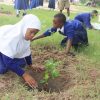
Tanzanian Students Drive Climate Action Through Tree Planting
At Gabimori primary school, located at Nyamagaro ward in Tanzania’s northern Rorya district, a 15-year-old Florence Sadiki kneels among polyethylene bags, carefully examining the seedlings she and her classmates have nurtured from tiny sprouts “We’ve planted many trees to make our school look better and to help fight climate change,” she says.
The July Revolution in Bangladesh Is Rooted in Meta-Modernist Philosophy
The students and the common people of Bangladesh dared to do something in 36 days of July-August that was considered simply impossible by most people just days before August 5, 2024. They said ‘enough is enough’ to an old order that outraged their humanity, robbed their dignity and the rulers imagined that their citadel of power was simply impenetrable. The revolutionists refused to bow down to the murderous regime that knew no bounds to its cruelty and plundering. They were ready to sacrifice their lives for the freedom of the besieged nation.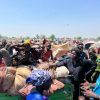
Sudanese Civil War Exacerbates Economies in Neighbouring Countries
Critical levels of nationwide hunger in Sudan has only increased to critical levels since the start of the Sudanese civil war in April 2023. Escalated hostilities between the Sudanese Armed Forces (SAF) and the Rapid Support Forces (RSF) have led to limited mobility and repeated blockages of humanitarian aid. This, coupled with the volatile floods and droughts, have decimated crop fields which has only exacerbated famine levels greatly. All of these factors have left nearly 25 million people in Sudan in need of humanitarian assistance in 2024.« Previous Page — Next Page »





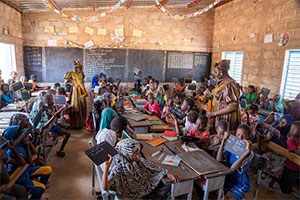 Two teachers work in a classroom in Forces Vives School in Dori, Burkina Faso. Credit: UNICEF/UNI978361
Safe and uninterrupted education is a fundamental right for all children. Education is paramount to global development, as it has been proven that investing in education – especially for girls and children – contributes significantly to economic growth and prosperity. Although more than 1 billion children go to school, many are subjected to conditions that are not conducive to a proper learning environment, including makeshift facilities, a lack of supplies, violence in classrooms, inadequate sanitation, untrained instructors, and widespread school closures. Since 2015, there have been immense gains in education with an increase of 109 million children in school. However, as of 2023, 272 million children are still out of school.
High poverty levels in developing countries also impede children’s access to a proper education. For example, from the early to mid 2000s, Sub-Saharan African nations witnessed a dramatic decline in trained teachers due to inadequate funding in the education sector. Furthermore, major cuts to United States international aid threaten an estimated 23 million additional children's access to education, as USAID‑funded school programmes across Africa and Asia face closure.
Various other factors contribute to the decline of education, notably hunger, which has increased as conflict and climate change interfere with global food production and dissemination. Meanwhile, certain social and cultural practices also impede children’s access to education, with gender inequality, discrimination, child labour, and child marriages preventing millions of children from attending school. Economic conditions such as the inaccessibility of higher education also affect disenfranchised communities across the world. In extreme situations, such as warfare where educational facilities are destroyed in their totality, notably in Gaza and Sudan, entire generations of children might grow up without access to education. Rebuilding educational infrastructure is a long and arduous process, especially when violence persists across generations, and this significantly stunts the development of societal prosperity and stability.
IPS is dedicated to telling the shocking truths about worldwide education through impassioned opinion pieces and comprehensive articles, highlighting global issues that impede worldwide education and the courses of action being taken by organizations such as UNICEF and Education Cannot Wait.

The Week with IPS

NEXT STOP - SDGs
Tracking global progress towards a sustainable world
Tracking global progress towards a sustainable world
