Languages
Friday, October 23, 2026



News and Views from the Global South
Education

FFD4 Must Deliver for the World’s Most Vulnerable Nations
Five years from the 2030 deadline for the Sustainable Development Goals (SDGs), we face a development emergency. The promise to eradicate poverty, combat climate change, and build a sustainable future for all is slipping away. The SDG financing gap has ballooned to over $4 trillion annually—a crisis compounded by declining aid, rising trade barriers, and a fragile global economy.
Science Is Useless if No One Understands It
Despite delivering life-saving medicines, more nutritious crops, and transformative technologies like artificial intelligence (AI), science remains widely misunderstood, polarizing, and underappreciated. Much of this, experts say, comes down to one persistent issue: poor communication.
The Young Nigerian Innovator Lighting Up Communities With Recycled Solar Innovation
When Stanley Anigbogu heard his name announced as the 2025 Commonwealth Young Person of the Year in London earlier in March, he could hardly believe it. He had not expected to win, especially among a pool of brilliant nominees from across the globe.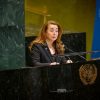
UN Drug Office Warns that Global Drug Crisis Will Intensify
Since 1989, the United Nations (UN) has recognized June 26 as the International Day Against Drug Abuse and Illicit Trafficking in an effort to raise awareness around the global drug problem and foster a more compassionate world, free of drug abuse. Through this year’s campaign, “Break the Cycle. #StopOrganizedCrime”, the UN underscores the importance of addressing the root causes of global drug abuse and illegal drug trading, and investing in reliable systems that prioritize prevention, education, and health.
A New Solar Power Plant Powers Progress in Zimbabwe’s Renewable Energy Sector
When load shedding was introduced over the past two years, Jose Tenete Domingos Lumboa had to deal with learning disruptions worsened by the backup generators in the eastern part of Zimbabwe.
‘In the Face of Funding Cuts, Civil Society Has Taken a Leading Role in the Humanitarian Response’
CIVICUS discusses the closure of offices of the United Nations Refugee Agency (UNHCR) in Mexico with members of Integral Human Rights In Action (DHIA), a Mexican civil society organisation (CSO) that promotes and defends human rights in contexts of mobility.

Time to Redesign Global Development Finance
Can the Fourth International Conference on Financing for Development (FFD4) be a turning point? The stakes are high. The international financial system—so important to each and every one of us—feels out of reach and resistant to change, because it is deeply entrenched in unjust power imbalances that keep it in place. We deserve better.
Women in Afghanistan Face a Total Lack of Autonomy
Nearly four years ago, the Taliban took control of Afghanistan and issued a series of edicts that significantly restricted women’s rights nationwide. This has resulted in a multifaceted humanitarian crisis, one marked by a notable decline in civic freedoms, stunted national development, and a widespread lack of basic services.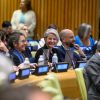
The Global Mental Health Crisis Surges Amid $200 Billion Funding Gap
Although access to mental health and psychosocial support services is considered a fundamental human right by the United Nations (UN), hundreds of millions of people experience limited or inadequate access to mental health and psychosocial support services.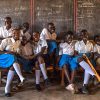
Education Cannot Wait for the Children of Africa
As we commemorate International Day of the African Child, we honor the courage, resilience and dreams of millions of children and youth across Africa. Their potential is limitless, their right to a quality education is non-negotiable.
End Child Labour Forever through Education for All Children
As we mark today’s World Day Against Child Labour, we must confront an urgent global truth: over 160 million children around the world are engaged in child labour – many of them in the most dangerous, degrading and life-limiting conditions imaginable. These are children forced to work in fields, factories and conflict zones – deprived of their right to safety, to dignity and, above all, to an education.
‘The Regime Seeks to Consolidate Absolute Control by Eliminating All External Oversight’
CIVICUS discusses Nicaragua’s withdrawal from the United Nations Educational, Scientific and Cultural Organization (UNESCO) and other international organisations with Wisthon Noguera, an activist, student and deputy coordinator of the National Youth Platform of Nicaragua.

Rethinking Digital Platform Design: A Systems Approach
A better internet that supports democracy rather than undermines it is possible. In 2025, we stand at a crossroads in the digital era. Our platforms have become the new public squares, but rather than fostering democracy and dignity, many are optimized for manipulation, division, and profit. The Council on Technology and Social Cohesion's "Blueprint on Prosocial Tech Design Governance" offers a systems-level response to this crisis.

‘Despite Deep-rooted Prejudice Against Dalits, Encouraging Shifts Are Emerging among Young Urban People’
CIVICUS discusses the challenges facing Nepal’s Dalit community with Rup Sunar, chairperson of the Dignity Initiative, a Kathmandu-based research and advocacy organisation working to dismantle caste-based discrimination.
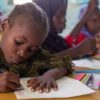
The World Must Respond to Africa’s Forgotten Crises
The challenges facing many parts of the African continent today are vast and immense. From the surge in violence in eastern Democratic Republic of the Congo to all-out-war in Sudan, years of progress are being obliterated by bombs, killings and other grave violations of international law.
The Children of Gaza Deserve Their Humanity – Their Education Cannot Wait
22 May 2025, New York – In the past two months alone, more than 950 children have reportedly been killed in strikes across the Gaza Strip. That’s 15 children every day who lose their lives in this horrific conflict. Those who survive face the risk of famine, illness, and the collapse of essential services, including education.
The #ChurchToo Movement: A Wake-Up Call for the Modern Church
I was researching the role of the church in addressing contemporary issues such as gender-based violence, climate change, and social justice when I came across the #ChurchToo movement—and I got really excited. Not because the stories were easy to read (they weren’t), but because this movement was a bold, necessary conversation that faith communities could no longer ignore.
‘Our Legal Challenge of the Funding Freeze Is Testing the Judiciary’s Ability to Check Executive Power’
CIVICUS speaks with Eric Bjornlund, President and CEO of Democracy International, about the impacts of the US foreign aid freeze and the resulting legal challenges the Trump administration is facing. Democracy International is a global civil society organisation (CSO) that works for a more peaceful and democratic world.

Following COVID-19 Pandemic, Child Wellbeing Rates in Decline
Due to the lingering effects of the COVID-19 pandemic, millions of children, particularly in some of the world’s wealthiest countries, experienced declines in their overall health and academic performances.
Education Cannot Wait Interviews Tom Fletcher, Under-Secretary-General for Humanitarian Affairs and Emergency Relief Coordinator
Tom Fletcher is the United Nations Under-Secretary-General for Humanitarian Affairs and Emergency Relief Coordinator, OCHA. He started his official duties on 18 November 2024.

Lawyer-Turned-Activist Bhuwan Ribhu Honored for Leading a Campaign to End Child Marriage
Bhuwan Ribhu didn’t plan to become a child rights activist. But when he saw how many children in India were being trafficked, abused, and forced into marriage, he knew he couldn’t stay silent.« Previous Page — Next Page »





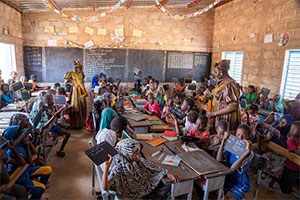 Two teachers work in a classroom in Forces Vives School in Dori, Burkina Faso. Credit: UNICEF/UNI978361
Safe and uninterrupted education is a fundamental right for all children. Education is paramount to global development, as it has been proven that investing in education – especially for girls and children – contributes significantly to economic growth and prosperity. Although more than 1 billion children go to school, many are subjected to conditions that are not conducive to a proper learning environment, including makeshift facilities, a lack of supplies, violence in classrooms, inadequate sanitation, untrained instructors, and widespread school closures. Since 2015, there have been immense gains in education with an increase of 109 million children in school. However, as of 2023, 272 million children are still out of school.
High poverty levels in developing countries also impede children’s access to a proper education. For example, from the early to mid 2000s, Sub-Saharan African nations witnessed a dramatic decline in trained teachers due to inadequate funding in the education sector. Furthermore, major cuts to United States international aid threaten an estimated 23 million additional children's access to education, as USAID‑funded school programmes across Africa and Asia face closure.
Various other factors contribute to the decline of education, notably hunger, which has increased as conflict and climate change interfere with global food production and dissemination. Meanwhile, certain social and cultural practices also impede children’s access to education, with gender inequality, discrimination, child labour, and child marriages preventing millions of children from attending school. Economic conditions such as the inaccessibility of higher education also affect disenfranchised communities across the world. In extreme situations, such as warfare where educational facilities are destroyed in their totality, notably in Gaza and Sudan, entire generations of children might grow up without access to education. Rebuilding educational infrastructure is a long and arduous process, especially when violence persists across generations, and this significantly stunts the development of societal prosperity and stability.
IPS is dedicated to telling the shocking truths about worldwide education through impassioned opinion pieces and comprehensive articles, highlighting global issues that impede worldwide education and the courses of action being taken by organizations such as UNICEF and Education Cannot Wait.

The Week with IPS

NEXT STOP - SDGs
Tracking global progress towards a sustainable world
Tracking global progress towards a sustainable world
