Languages
Tuesday, October 20, 2026



News and Views from the Global South
Energy
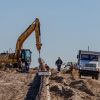
Argentina is Experiencing an Oil Boom, with Bright Spots and Shadows
For about three years now, Argentines have been hearing almost every month that oil production is breaking new records. Looking ahead, the country is projected to become a major global supplier of what remains the most sought-after energy source.
Pioneering Sustainable Energy Solutions in Africa
The 12th Sankalp Africa Summit, held on Feb 26-27 in Nairobi, brought together a pivotal cohort of start-up innovators, investors, entrepreneurs and policymakers to accelerate the innovation needed to enhance Africa’s energy transition.
Energy is a Catalyst for Peace Between Israel and Gaza
Israel’s decision to suspend electricity supplies to Gaza has far-reaching consequences for daily life of Palestinians as well as Gaza’s reconstruction. Managing Gaza’s energy crisis will require the development of alternative supplies, which are found in off-shore natural gas fields that can be developed off the coast of Israel and Gaza in the Eastern Mediterranean (EastMed).
Western Climate Hypocrisy Exposed by NATO Energy Policy
NATO geopolitical strategy has now joined the ‘coalition’ of Western geoeconomic forces accelerating planetary heating, now led again by re-elected US President Donald Trump.
Solar Energy Sustains the Development of Amazonian Communities in Brazil – VIDEO
 Electricity is essential for the well-being and prosperity of traditional riverside communities in the Amazon, as demonstrated by the experience of the Santa Helena do Inglês community, located on the right bank of the Negro River in northern Brazil.
COP 16 Conference made Key Steps Towards a More Just Transition for Indigenous Peoples & Peasant Communities
With global temperatures continuing to break records and every global indicator of the health of the natural world showing decline, the need to quickly move away from fossil fuels and environmentally destructive practices has never been more apparent. But as has often been pointed out, how this ‘green transition’ is achieved matters.
U.S. Passes on UN Ukraine Resolution amid the Humanitarian Crisis
From late 2024 to early 2025, the humanitarian situation in Ukraine has taken a turn for the worst, with poverty, violence, displacement, and damage to critical infrastructures having grown in intensity. Following the 2022 invasion of Ukraine by Russia, tensions have grown among member states of the United Nations (UN) on how to resolve the Russo-Ukrainian War.
Hortolandia Emerges as an Energy and Environmental City in Brazil
Almost everything seems new or under construction in the southern Brazilian city of Hortolandia, from its wide avenues and cable-stayed bridge to its large buildings and riverside parks.
Mexican Electric Vehicles Struggle to Accelerate
Mexico has seen several attempts at assembling electric vehicles (EVs), powered by rechargeable batteries, which have faced challenges related to industrial scale, supply chains, and competitiveness
Civil Society at the Finance in Common Summit Calls for Community-led, Equitable, and Human Rights-based Development
As public development banks gather for the Finance in Common Summit (FiCS) in Cape Town, South Africa, civil society and community activists from across the world are demanding a shift to a community-led, equitable, and human rights-based development approach, that prioritise people and planet over profit, and a reform of the global financial architecture.
WFP, FAO Warn of the Severity of the Climate Crisis and Food Insecurity
Over the past few years, climate shocks have become more frequent and have devastated economies and agriculture systems, exacerbating widespread malnutrition and hunger. It has become increasingly apparent that the utilization of sustainable agriculture practices and disaster risk management systems are crucial to fulfill growing needs as natural resources continue to dwindle.
Mexico’s New Economic Plan Lacks Energy
This January, Mexico has embarked on a new industrial path for the next six years, where the viability of its energy component faces fundamental challenges that put it at risk.
‘Areas Essential to the Global Climate Are Being Threatened by Economic Projects’
CIVICUS discusses activism against oil auctions in the Democratic Republic of the Congo (DRC) with François Kamate, founder and coordinator of the young environmental volunteer movement Extinction Rebellion Rutshuru.

Japanese Bank Criticized for Financing Mozambique LNG Project Blamed for Displacement
Climate and environmental activists from Japan have criticized the Japan Bank for International Cooperation (JBIC) for financing the controversial Mozambique Liquefied Natural Gas (LNG) project to the tune of USD 3 billion in a loan signed in July.
2024 Is The Hottest Year Ever Recorded
The World Meteorological Organization (WMO) warns that 2024 is on track to be the hottest year in recorded history, surpassing 2023. This can be attributed to heightened reliance on fossil fuels and the reluctance of industries worldwide to pivot to green energy practices. The rapid acceleration of global temperatures has alarmed scientists, with many expressing concern over the environmental, economic, and social implications of the worsening climate crisis.
Power Arrives but the River Dries Up for Brazil’s Amazonian Dwellers
The flow of the igarapé always dropped for three months every year, but now it has been dry for two years in a row, complains Maria Aparecida dos Anjos, looking at the trickle of water that when flooded reaches the stilts of her wooden house, 50 metres away and on a slope of more than 10 metres high.
New Law in Cuba Makes Investing in Renewable Energy Sources Mandatory
With Decree 110, published on 26 November, Cuba made it mandatory for major consumers, whether they are state or private entities, to invest in the use of renewable energy sources, while the energy crisis facing the country worsens.
Solar Project Causes Social and Environmental Conflict in Rural El Salvador
With machete in hand, Salvadoran farmer Damián Córdoba weeds the undergrowth covering the trunk of what was once a leafy tree to show the deforestation taking place on the Santa Adelaida farm, where a company seeks to install a solar park in western El Salvador.
Guyana’s Dream to Be a Green Oil Producer
Long before the transformative discovery of its offshore oil in 2015, Guyana had made a strong pledge to decarbonization and climate action as set forth in its Low Carbon Development Strategy (LCDS) 2030. The development of its oil industry has led to remarkable economic growth in Guyana, including a 62.3% growth rate in 2022.
Blockages of Aid in Gaza Threatens Survival for 2.2 Million
Following the International Criminal Court’s (ICC) indictment of Israeli Prime Minister Benjamin Netanyahu for deliberate war crimes committed on the people of Gaza, there has been a considerable surge in hostilities, mostly concentrated in the enclave’s northern regions. The humanitarian crisis is expected to deteriorate as the availability of essential resources, such as water, food, fuel, and electricity has significantly dwindled over the past few weeks due to sustained blockages by Israeli authorities. Additionally, levels of civilian casualties and displacements have reached new peaks.
Brazil Vows to Make COP30 a Catalyst for Climate Action and Biodiversity Celebration
As Brazil gears up to host COP30 in Belém next year, Moisés Savian, the country's Secretary of Land Governance, Territorial and Socio Environmental Development, outlined the event's significance in showcasing Brazil's environmental policies and fostering global collaboration.
« Previous Page — Next Page »





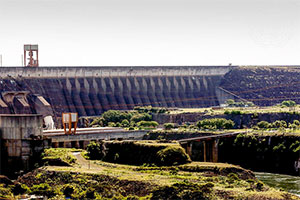 UN Power Plant, Paraguay. Credit: UN Photo/Evan Schneider
Energy has posed a great challenge for economies around the world. As global energy consumption skyrockets throughout the years, so does the need for sustainable solutions. The Sustainable Development Goals are essential in providing people with access to safe, affordable, and sustainable energy sources that minimize harm on the planet. Progress towards these goals opens the door for an advancement in modernization for communities on a global level and allows for a potential mitigation of tensions between nations.
The UN’s Summit of the Future in 2024 offered new initiatives that are being taken to achieve these goals, including a decreased reliance on fossil fuels, a switch to renewable energy sources, and improved climate financing.
IPS is well positioned to provide relevant, insightful, and compelling analysis of recent updates and measures being taken around the world to achieve a cleaner future.

The Week with IPS

NEXT STOP - SDGs
Tracking global progress towards a sustainable world
Tracking global progress towards a sustainable world
