Languages
Monday, October 26, 2026



News and Views from the Global South
Energy

Blockages of Aid in Gaza Threatens Survival for 2.2 Million
Following the International Criminal Court’s (ICC) indictment of Israeli Prime Minister Benjamin Netanyahu for deliberate war crimes committed on the people of Gaza, there has been a considerable surge in hostilities, mostly concentrated in the enclave’s northern regions. The humanitarian crisis is expected to deteriorate as the availability of essential resources, such as water, food, fuel, and electricity has significantly dwindled over the past few weeks due to sustained blockages by Israeli authorities. Additionally, levels of civilian casualties and displacements have reached new peaks.
Brazil Vows to Make COP30 a Catalyst for Climate Action and Biodiversity Celebration
As Brazil gears up to host COP30 in Belém next year, Moisés Savian, the country's Secretary of Land Governance, Territorial and Socio Environmental Development, outlined the event's significance in showcasing Brazil's environmental policies and fostering global collaboration.

It’s a Deal—Wealthy Nations Pledge Not to Build New Unabated Coal-Power Plants
Of all fossil fuels, coal has had the most serious and long-term effects on global warming. When burnt, coal releases more carbon dioxide than oil and gas, producing an estimated 39 percent of the global carbon dioxide emissions. Yet, coal is still the number one energy source, providing nearly 40 percent of the world’s electricity.

Solar and Wind Power Wealth Does Not Reach Consumers in Chile
Chile, a country rich in solar and wind energy and with huge photovoltaic power stations and wind turbines in its elongated territory, managed to change its grid by incorporating renewable energies, which account for an installed capacity equivalent to 43.8 % of its electricity production.
Western Finance Ruining Economies of the Rest
Western financial policies have been squeezing economies worldwide. After being urged to borrow commercial finance heavily, developing countries now struggle with contractionary Western monetary policies.
Latin America: Pass on Renewables, Fail on Efficiency
The Latin American and Caribbean region is a student with good grades in renewable energy, but not in energy efficiency, and has a long way to go in contributing to global climate action and overcoming the vulnerability of its population and economies.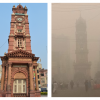
Lahore’s Dangerous Smog: Where Disease and Death Stalk
"It's been horrible; I've been sick on and off for the last 10 days," said 29-year-old asthmatic Natasha Sohail, who teaches A-Level students at three private schools in Lahore. Last week, her condition worsened with a vertigo attack and fever. “It’s criminal what is happening here,” said an incensed Sohail, referring to the “band-aid measures” taken by the Punjab government.
Leather Cooperative Stops Unemployment in Northeast Brazil
The small community of Ribeira stands out in the Northeast, the poorest region of Brazil. There is no unemployment here. One in five inhabitants make a living directly or indirectly from the Arteza Cooperative of Tanners and Leather Artisans.
Brazil Promotes a Freer Global Biofuels Market
Holding this year's presidency of the Group of 20 (G20) large industrial and emerging economies is allowing Brazil to push forward the dream of creating a global biofuels market without the current trade barriers.
Mexican Cooperative Promotes Energy Transition on Indigenous Lands
What began as a search for fair prices for indigenous handicrafts in 1985 has evolved into a women's organisation in Mexico that promotes climate justice while advocating for land and environmental rights.
Solar Energy Saves Dairy Cooperative in Brazil’s Semi-Arid Region
“Ixe! If it wasn't for solar energy, we would have closed down, you can be sure. We had to stop due to the pandemic on 15 March 2020, but the energy costs were fixed,” said Erika Cazuza, administrative and financial manager of the Brazilian Cooperative of Rural Producers of Monteiro (Capribom).
Knife-Edge November: Teetering on the Climate Abyss
Standing high on the vertiginous edge of the future and looking down into a volcanic seething of approaching doom, it is a totally understandable desire to want to close your eyes, walk away and turn on the sports channel. If you have one.
Hurricane Oscar Threatens Humanitarian Crisis in Cuba
Although classified as a compact tropical cyclone and considered one of the smallest in the North Atlantic, Hurricane Oscar has caused considerable damage in eastern Cuba since it made landfall on October 20, 2024. Cuban authorities have confirmed that the death toll has risen to seven, in additional to the damage in infrastructure. Communications and relief efforts were greatly impeded by a nationwide power grid blackout, which continues on in much of Cuba at the time of publication.
Small Farmers Reap Growing Benefits From Solar Energy in Chile
The production of solar energy by means of panels installed on small farmers' properties or on the roofs of community organisations is starting to directly benefit more and more farmers in Chile.
Without Accelerated Action, We Will Miss the Chance to Limit Warming to 1.5°C, Says UNEP Chief Climate Advisor
Anne Olhoff, Chief Climate Advisor at UNEP, underlined the urgent need for accelerated climate action ahead of COP29 in an exclusive interview with IPS. “The next six years are crucial—without accelerated action, we will miss the chance to limit warming to 1.5°C,” she warned.
Another Nobel for Anglocentric Neoliberal Institutional Economics
New institutional economics (NIE) has received another so-called Nobel prize, ostensibly for again claiming that good institutions and democratic governance ensure growth, development, equity and democracy.
Biogas, a Circular Energy, Advances in Brazil Thanks to Local Arrangements
“I don't know of a more sustainable technology for the transformation of society than biogas,” said Professor Alex Enrich-Prast, an activist for this energy alternative with a highly diversified and decentralised expansion in Brazil.
‘Australia Must Turn Its Climate Rhetoric into Action’
CIVICUS discusses the recent Pacific Islands Forum (PIF) meeting in Tonga with Jacynta Fa’amau, Pacific Campaigner at 350.org, a global civil society organisation campaigning for climate action.

Solar Panels Aim to Protect Mexican Family Farming
Verónica Molina, an indigenous Comcaac woman, first came into contact with solar energy in 2016, when she travelled to India for training on communal photovoltaic facilities. This later enabled her to take part in the installation of the first solar systems and family vegetable gardens in her community, Desemboque del Seri, in northern Mexico.
Tripling Renewables Powered by State-Owned Power Companies and Utilities
The climate community, meeting this week once again on the margins of the UN General Assembly, is continuing to explore ways to triple the world’s installed renewable generation capacity by 2030, a target agreed at last year’s COP 28 international climate negotiations. Much of this discussion has been about mobilizing finance and otherwise getting the private sector, with its massive resources and competence, to step up to the challenge … and what government policies and incentives are needed to spur more investment.
Carbon Emissions from AI and Crypto are Surging– and Tax Policy Can Help
What do crypto assets and artificial intelligence have in common? Both are power hungry. Because of the electricity used by high-powered equipment to “mine” crypto assets, one Bitcoin transaction requires roughly the same amount of electricity as the average person in Ghana or Pakistan consumes in three years. ChatGPT queries require 10 times more electricity than a Google search, due to the electricity consumed by AI data centers.« Previous Page — Next Page »





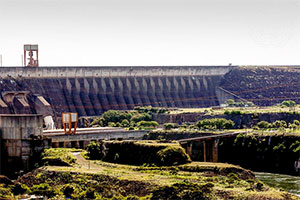 UN Power Plant, Paraguay. Credit: UN Photo/Evan Schneider
Energy has posed a great challenge for economies around the world. As global energy consumption skyrockets throughout the years, so does the need for sustainable solutions. The Sustainable Development Goals are essential in providing people with access to safe, affordable, and sustainable energy sources that minimize harm on the planet. Progress towards these goals opens the door for an advancement in modernization for communities on a global level and allows for a potential mitigation of tensions between nations.
The UN’s Summit of the Future in 2024 offered new initiatives that are being taken to achieve these goals, including a decreased reliance on fossil fuels, a switch to renewable energy sources, and improved climate financing.
IPS is well positioned to provide relevant, insightful, and compelling analysis of recent updates and measures being taken around the world to achieve a cleaner future.

The Week with IPS

NEXT STOP - SDGs
Tracking global progress towards a sustainable world
Tracking global progress towards a sustainable world
