Languages
Tuesday, October 27, 2026



News and Views from the Global South
Energy

Net Zero by 2050 Delays Needed Urgent Climate Action
Net zero emissions by 2050 prioritise mitigation for climate stabilisation. Pledges to achieve this still distant target have grown but inadvertently delay urgently needed climate action in the near term.
Governments Using Billions of Public Funds to Subsidize Climate-Destructive Industries—Report
A report examining corporate capture of public finance is accusing industries fueling the climate crisis, including fossil fuel ones, of draining public funds in the Global South, singling them out for squeezing out of governments USD 700 billion in public subsidies each year.
Explainer: Why Venezuela Needs To Reduce Its Gas Flaring
The most visible part of gas flaring in Venezuela is the so-called “Monagas illuminated nights.” These are red and orange skies, which are visible from the homes of the locals at night and which show the gas flaring in the oil fields of Monagas, a state located in the east of the Caribbean country and key in its oil production.
Climate Activists Target Culture Greenwashing
Civil society is working on all fronts to tackle the climate crisis. Activists are protesting in numbers to pressure governments and corporations to cut greenhouse gas emissions. They’re using non-violent direct action and high-profile stunts, paying a heavy price as numerous states criminalise climate protest.
Clean Energy Boosts Autonomy for Brazilian Women Farmers – VIDEO
 A community bakery, family production of fruit pulp, and the recovery of water springs are some of the initiatives of the Energy of Women of the Earth, organised since 2017 in the state of Goiás, in central-western Brazil.
UK: ‘Many in the Climate Justice Movement Are Finding Creative and Imaginative Ways to Protest’
CIVICUS speaks with Chris Garrard, co-founder and co-director of Culture Unstained, about the campaign to end fossil fuel sponsorship of cultural institutions, which oil companies use to try to present a positive public image.

Hydrogen from Renewables or Fossil Fuels? The Panamanian Question
In 2021, the Panama Canal welcomed a French experimental ship on a world tour, the Energy Observer, the first electric vessel powered by a combination of renewable energies and a hydrogen production system based on seawater.
Sportwashing Allegations at Africa’s Top Football Tournament
Following the recent Africa Cup of Nations (AFCON) tournament in Ivory Coast, a continent-wide campaign has emerged on social media challenging the tournament's main sponsor, TotalEnergies, over its involvement in the East African Crude Oil Pipeline (EACOP).
Life or Energy: The Hydroelectric Dilemma in Amazonian Brazil
The decade-and-a-half-long battle for life in the so-called Volta Grande (Big Bend) of the Xingu river, a stretch of the river dewatered by the Belo Monte hydroelectric power plant in the Brazilian Amazon, has a possible solution, albeit a partial one.
More Poverty for the Poor
Many low-income countries (LICs) continue to slip further behind the rest of the world. Meanwhile, people in extreme poverty have been increasing again after decades of decline.
Kenya’s Protests: More than a Question of Tax
Kenya’s President William Ruto has withdrawn the tax-increasing Finance Bill that sparked mass protests. He has sacked his cabinet and the head of the police has resigned. But the anger many feel hasn’t gone away, and protests continue. The protests have brought Kenya’s Gen Z onto the political stage, with young people – over 65 per cent of the population – at the forefront. Since the protests began, they’ve made full use of social media to share views, explain the impact of proposed changes, organise protests and raise funds to help those injured or arrested.
Are Sustainable Cities a Pipe Dream?
Cities, once thought to be modern utopias that foster innovation, inclusivity, and commerce, actually ended up being hubs for environmental degradation. Although the concept of urban living is inextricable from humanity, there are proposed ways to make them less environmentally taxing. One such solution is the idea of a sustainable city, otherwise known as a metropolis that effectively consumes fossil fuels and disposes of emissions with regards to the longevity of the planet as well as the economic wellbeing of its citizens. Cities can also be considered sustainable so long as they curb the consequences of consumption through means such as recycling or using healthier energy sources. Although this sounds like a simple path forward in Earth’s journey of decarbonizing, we must take a plethora of issues into consideration, such as transportation, housing, manufacturing, trade, and comfort.
Is Artificial Intelligence The Way Forward or Backward?
Contrary to popular belief, artificial intelligence has been a cornerstone of technological progress for much longer than the past few years. Computer scientist Alan Turing brought forth the concept of computers solving complex human problems with his invention of the Turing Machine in 1936. This machine provided solutions to a seemingly infinite number of problems, yet the technological limitations of the early 1900s proved that this number was indeed very finite. Flash forward to the 2020s, artificial intelligence has become a widespread practice, impacting different fields such as music, art, science, forensics, finance, agriculture, and many others. Although artificial intelligence has been hailed as the future of human progress, it also poses a risk to this future due to its significant carbon footprint.
Megaport in Brazil Makes No Contribution to Local Development
With barely 10 years in operation, the port of Açu is now the second in Brazil in cargo transport and seeks to become an industrial and energy transition hub. But so far it has contributed little to local development, causing environmental and social damage.
Mexico Struggles to Cut Emissions from its Ports
The port of Pichilingue, in northwestern Mexico, faces challenges in decarbonising its activities, as do other maritime infrastructures in the country, while its polluting emissions are increasing.
Solar Energy, Vetoed as a Source of Income for the Poor in Brazil
“I feel like a mother who lost her son to drugs, to vice, destroying himself,” says Lucineide da Silva, 56, mother of eight children and grandmother of 11.
Explainer: Understanding Carbon Trading and its Rationale
Carbon trading has gained growing popularity on the African continent and is considered by many governments as a viable way to achieve their climate targets while building communities. IPS takes a look at what's behind the carbon market.
Rainy Chiloé, in Southern Chile, Faces Drinking Water Crisis
The drinking water supply in the southern island of Chiloé, one of Chile's rainiest areas, is threatened by damage to its peatlands, affected by sales of peat and by a series of electricity projects, especially wind farms.
Using Industrial Waste to Fight Pollution in Brazil
Biogas sounds like redemption, the conversion of the sinner. Its production involves extracting energy from filth, from the most disgusting environmental pollution, and at the same time avoiding the worsening of the global climate crisis.
Cuban Family Harnesses Biogas and Promotes its Benefits
Just to obtain a good fertilizer it was worth building a biodigester, says Cuban farmer Alexis García, who proudly shows the vegetables in his family's garden, as well as the wide variety of fruit trees that have benefited from biol, the end product of biogas technology.
AI Policy Can’t Ignore Climate Change: We Need Net Zero AI Emissions
Artificial intelligence provides amazing potential for advancement across fields, from medicine to agriculture to industry to the entertainment business, even as it generates significant concerns. AI can also improve the efficiency of energy production and use in ways that can reduce greenhouse gas emissions.« Previous Page — Next Page »





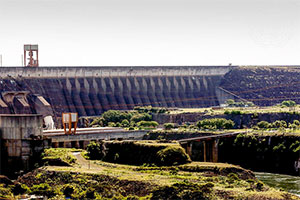 UN Power Plant, Paraguay. Credit: UN Photo/Evan Schneider
Energy has posed a great challenge for economies around the world. As global energy consumption skyrockets throughout the years, so does the need for sustainable solutions. The Sustainable Development Goals are essential in providing people with access to safe, affordable, and sustainable energy sources that minimize harm on the planet. Progress towards these goals opens the door for an advancement in modernization for communities on a global level and allows for a potential mitigation of tensions between nations.
The UN’s Summit of the Future in 2024 offered new initiatives that are being taken to achieve these goals, including a decreased reliance on fossil fuels, a switch to renewable energy sources, and improved climate financing.
IPS is well positioned to provide relevant, insightful, and compelling analysis of recent updates and measures being taken around the world to achieve a cleaner future.

The Week with IPS

NEXT STOP - SDGs
Tracking global progress towards a sustainable world
Tracking global progress towards a sustainable world
