Languages
Saturday, November 21, 2026



News and Views from the Global South
Food and Agriculture

Q&A: Tough Talk On Reaching Goals
The director of the Millennium Campaign, Salil Shetty, is an angry man. Last year he was confronted with the climate change issue and now it is the global food crisis.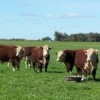
SOUTH AMERICA: How to Atone for Beef’s Sins
The global food crisis and climate change have cast the spotlight on negative aspects of the cattle industry, such as the high consumption of vegetable protein to generate relatively little meat, and the sector’s role in global warming.
Q&A: Ethiopia's Urban Poor Cannot Afford To Eat
Ethiopia, a nation of 80 million people, has been the site of famine and drought throughout its tumultuous history. Arising from a myriad of causes and often shepherded along by political instability, the country's 1984-85 famine, for example, left over a million dead and served as the impetus for the fund-raising concerts of Live Aid in the United States and the United Kingdom.CARIBBEAN: “We Must Produce More and Consume Less”
For the first time in living memory, Caribbean governments invested time and large sums of money to organise an emergency food summit at their trade bloc's headquarters in Guyana aimed specifically at dealing with the global food crisis and the region's spiraling import bill.DEVELOPMENT: Civil Society Warns Food Crisis Can Eat Into MDG Gains
Progress that has already been achieved towards Millennium Development Goals (MDGs) may be reversed due to the current global food crisis, it is emerging at the eighth CIVICUS World Assembly.JAPAN: Huge Rice Stockpiles Could Ease Food Crisis
In a policy shift, Japan has announced that it will release an emergency food aid package of about 100 million dollars in July to help ease the global food shortage. In the near future it will ship out more than 300 thousand tonnes of imported rice stored by the Japanese government.MEXICO: Latest Measures Against Food Crisis Called Ineffective
Observers in Mexico say the price freezes announced by the government for more than 150 food products are deceptive and could even foment unhealthy eating habits.DEVELOPMENT: Food Crisis Mortgages Children's Future
The devastating impact of rising food prices is expected to hit most of the world's 2.2 billion children the hardest - particularly in developing nations.TRADE-GHANA: Non-Traditional Exports Are Booming
Impressive growth in exports from Ghana to the rest of the world has been witnessed over the past few years as more and more Ghanaians explore production in non-traditional sectors.DEVELOPMENT: Gulf Eyes ‘Oil-For-Food’ Deal With Neighbours
Recent attempts by Gulf countries to invest in farmlands abroad to counter soaring inflation and guarantee long-term food security could prove to be a win-win situation in the short-term for both the oil-rich region and its investment-hungry neighbours, but continued high oil prices may neutralise the gains in the long-run, feel experts.DEVELOPMENT: African Agriculture Uprooted by Economic Policies
People across Africa have taken to the streets in recent months to demand that their most basic need be met: access to food. The various states in which these protests have taken place, however, have reacted swiftly and brutally.SOUTH PACIFIC: Poverty Breeds Child Labour and Sex Tourism
Beyond the fabulous palm-fringed beaches and cascading waterfalls of the islands of the Pacific is a sordid reality - child labour and commercial sexual exploitation of children.DEVELOPMENT: Food Crisis an Opportunity to Rethink Policy
Southern governments have stressed the need for developing countries to use the food crisis as an opportunity to rethink development strategies and to put in place policies that support agricultural development.EAST TIMOR: Outsourcing Sugar Cane
The East Timor government’s recent decision to grant vast lands to an Indonesian company to plant sugar cane has been heavily criticised by Timorese society, who are demanding that the government immediately revoke the contract with the foreign company.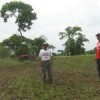
VENEZUELA: Co-operatives Turn Idle Landed Estates Green
"As far as you can see, there was not one litre of milk produced, not even an ear of corn," says José Tapia Coirán, turning with his arms outstretched, pointing to the horizon of the Venezuelan savannah dotted by trees. "Now we produce 500 litres of milk per day and we harvested one million kilos of maize."
DEVELOPMENT: Brazilians Resist Finnish Plantations
Displaced Finnish factory workers and landless peasants in Brazil have become unlikely allies in a struggle for livelihoods. They are both fighting the Finnish-Swedish forestry giant Stora Enso.BRAZIL: Agroenergy Can Boost Food Production – Experts
The web of truth and lies surrounding the controversy over agrofuels has led to the distortion or oversight of certain facts. For instance, making biodiesel from soybeans does not reduce food production, but increases it, according to experts.FINANCE: Inflation to Overshadow Aid at G8 Talks
Inflation is to dominate two-day talks of wealthy nations' finance ministers despite warnings that millions of people face death because of a shortfall in development aid.DEVELOPMENT-AFRICA: High Food Prices Here For Another Five Years
Hundred million people worldwide - mostly from developing countries - may sink deeper into poverty when food prices continue to rise, the World Bank predicts.SOUTH PACIFIC: Food Crisis, An Opportunity For Change?
Pacific Island governments should not view the global food crisis as a threat but as an opportunity to boost their neglected agricultural sectors, says a professor in development economics.
DEVELOPMENT-GHANA: Women Ideal Shea Butter Producers
"Wherever I went, they laughed at me and called me 'Habiba the empty mouth.' I was always embarrassed," says 45-year-old Habiba Alhassan. "I could not afford to smile; I could not open my mouth in public, when I took photographs I had to close my mouth so that I wouldn't look ugly."« Previous Page — Next Page »


 Farming on the Outskirts of Juba. Credit: UN Photo/JC McIlwaine
Promoting human and planetary health is a central focus of the United Nations, as laid out in the 2030 Sustainable Development Goals (SDGs). World hunger and unsustainable farming practices continue to be pressing concerns for the world. According to the 2025 State of Food Security and Nutrition in the World report by the Food and Agriculture Organization (FAO), 673 million people faced hunger in 2024. There are stark regional disparities, with the FAO projecting that 60% of the world population facing hunger will reside in Africa by 2030. Globally, the prevalence of food insecurity has remained consistently higher for women than men.
Sustainable and efficient national food systems are essential in preserving health, education, environmental well-being, peace, economy, and security. However, creating sustainable food systems can be a challenging endeavor, as food production takes a heavy toll on the environment. The agricultural sector accounts for a significant portion of greenhouse gases. Finding safe, sustainable, and ethical strategies to feed the world is crucial in ensuring planetary longevity. A recent initiative from 2023, the EU Regulation on Deforestation-free Products (EUDR), seeks to advocate for sustainable food systems. The main driver of deforestation is the expansion of agricultural land used to produce commodities like cattle, wood, cocoa, coffee, etc. The EUDR is part of the 2020 European Green New Deal and the EU Biodiversity Strategy for 2030 and aims to limit Europe’s consumption of products linked with deforestation by requiring that companies prove that their products are deforestation-free. Despite aiming to achieve major strides in sustainability, policies such as EUDR also raise socioeconomic concerns for targeted countries. Many emerging Latin American economies are impacted by the policy, and have raised the question of how developing countries can grapple with the tensions between economic development and advancing sustainability.
IPS has been at the forefront of providing compelling and insightful stories on communities facing hunger as well as the cost of food production. IPS uses statistics from FAO, the World Food Programme (WFP) and the International Fund for Agricultural Development (IFAD) to bring relevant and hard-hitting facts to readers. This gathering of information and data from such organizations helps bring the best stories from IPS journalists working in the different regions in consultation with experts on the ground.

The Week with IPS

NEXT STOP - SDGs
Tracking global progress towards a sustainable world
Tracking global progress towards a sustainable world

