Languages
Sunday, November 22, 2026



News and Views from the Global South
Food and Agriculture

DEVELOPMENT: NGOs Wary of Doomsday Seed Vault
Agricultural non-governmental organisations (NGOs) working in India and elsewhere are criticising the newly-opened Global Seed Vault (GSV) at Svalbard in Norway as fundamentally unjust in its objectives.
Q&A: ''Plan by TNCs to Control Seeds Bound to Fail''
An attempt by a handful of developed countries and trans-national corporations (TNCs) to monopolise and control the world's seeds is doomed to failure, says Tewolde Berhan Gebre Egziabher, director-general of Ethiopia's Environment Protection Agency, and a formidable negotiator at biodiversity-related fora.IRAQ: Occupation Strangles Farmers
New plant diseases, attacks by occupation forces and escalating fuel prices are strangling farmers in Diyala province.TRADE-AFRICA: Make or Break for WTO Doha Round
The World Trade Organisation’s beleaguered Doha Round could either be wrapped up in the next two to three months or be stalled for an indefinite period of time.TRADE: Proposed Tariff Cuts Will ‘Destroy’ Industrial Development
The Doha Round negotiations on industrial products have once again come under fire at the World Trade Organisation (WTO), with developing countries such as South Africa saying that the proposed tariffs cuts will spell the end of their industrial development.ECONOMY-KENYA: Amid Political Crisis, Food Shortages Loom
Elizabeth Mutai, who farms passion fruit in the Keiyo district in Kenya's Rift Valley, is worried. Sales of the crop has dropped significantly since the eruption of violence after the election held in December 2007.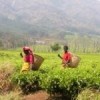
TRADE-MALAWI: Tea Growers Devising Plans to Overcome Low Prices
Low prices continue to haunt Malawian tea on the auction floors, a bitter irony for some producers as the country is regarded as the pioneer of tea-growing in Africa.
TRADE: EPAs Born of EU’s Concern with China in Africa
The European Union (EU) is concerned about competing with China for access to resources and markets in Africa, which partly explains its drive to hook African states into the trade deals called economic partnership agreements (EPAs).ECONOMY-CHINA: Staring At Grain Imports
With global food prices on an upward spiral, China is facing renewed fears that its growing demand for grain to feed the world’s largest population may lead to imports from international markets, driving prices higher and spurring further food inflation.CLIMATE CHANGE: Lula Calls for Flexibility from Rich Countries
Industrialised nations must live up to their Kyoto Protocol commitments and be flexible in trade negotiations in order for the world to make progress towards solutions to climate change and to prevent the poor from being steeped in poverty for a long time to come, Brazilian President Luiz Inácio Lula da Silva said Thursday.TRADE-UGANDA: Privatisation of Seeds Moving Apace
The Ugandan parliament will soon have a hearing on the draft Plant Variety Protection Bill, approved by the cabinet early last year. If passed unmodified, the bill is likely to entrench the rights of breeders and companies while curtailing the rights of small farmers to exchange, save and breed new varieties using hybrid seeds.TRADE-UGANDA: Exposing ''The African Green Revolution''
Uganda’s major trade partners are not only looking for food markets but also for seed markets. This has happened in a push that has been packaged as ‘‘the new green revolution’’ by corporations involved in biotechnology and chemicals. They have been supported by philanthropic organizations, notably the Rockefeller Foundation and the Bill and Melinda Gates Foundation.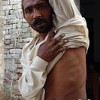
HEALTH-SOUTH ASIA: Hub For Global Organ Trade
The arrest of ‘Doctor Kidney’ Amit Kumar for running a sizeable racket in live kidneys has highlighted the role that South Asia plays as the hub of an international trade in human organs.
DEVELOPMENT: Farmers Mull New Opportunities – And Threats
The sharp increase in the international prices of basic food is hitting the poorest rural communities, according to groups representing millions of small farmers.DEVELOPMENT-CAMBODIA: Urban-Rural Divide Set To Widen
Phnom Penh’s skyline is set for a dramatic change, now that South Korean companies have confirmed plans to build two skyscrapers in the Cambodian capital. The 42-storey Gold Tower is scheduled to be completed by 2011, while a 53-storey structure will be ready the following year.
CLIMATE CHANGE: Biofuels Worse Than Fossil Fuels, Studies Find
Biofuels are making climate change worse, not better, according to two new studies which found that total greenhouse gas emissions from biofuels are far higher than those from burning gasoline because biofuel production is pushing up food prices and resulting in deforestation and loss of grasslands.ENVIRONMENT-INDIA: More Dams Come Up But Irrigated Area Declines
Recent official irrigation statistics have revealed a curious situation in which, after spending 25 billion US dollars on various irrigation projects during 1990-2004, the actual area under irrigation declined from 17.4 million ha to 14.3 million ha in the period.ENVIRONMENT: Record Financing For Biofuels, Not Food
Biofuels have quickly turned from environmental saviour to just another mega-scale get-rich quick scheme. Countries and regions without their own oil reserves to tap now see their farms, peatlands and forests as potential "oil fields" - shallow but renewable lakes of green oil.AFGHANISTAN: Emergency Services Collapse Under Bitter Cold
An unprecedented cold wave sweeping parts of Asia has been especially tragic in Afghanistan where emergency services have failed completely.CLIMATE CHANGE: Africa, South Asia Could Face Famines
Climate change will cause major disruptions in the global food system, and adaptation to those changes needs to begin immediately, experts say.SWAZILAND: Greatest Threat to Reform Is a Short Memory
Did Swaziland learn nothing from last year’s devastating drought? Some relief agencies and agricultural officials are shaking their heads in dismay that 2007’s devastating crop failures did not spark reform in the way land is utilised in this small country of less than one million people.« Previous Page — Next Page »


 Farming on the Outskirts of Juba. Credit: UN Photo/JC McIlwaine
Promoting human and planetary health is a central focus of the United Nations, as laid out in the 2030 Sustainable Development Goals (SDGs). World hunger and unsustainable farming practices continue to be pressing concerns for the world. According to the 2025 State of Food Security and Nutrition in the World report by the Food and Agriculture Organization (FAO), 673 million people faced hunger in 2024. There are stark regional disparities, with the FAO projecting that 60% of the world population facing hunger will reside in Africa by 2030. Globally, the prevalence of food insecurity has remained consistently higher for women than men.
Sustainable and efficient national food systems are essential in preserving health, education, environmental well-being, peace, economy, and security. However, creating sustainable food systems can be a challenging endeavor, as food production takes a heavy toll on the environment. The agricultural sector accounts for a significant portion of greenhouse gases. Finding safe, sustainable, and ethical strategies to feed the world is crucial in ensuring planetary longevity. A recent initiative from 2023, the EU Regulation on Deforestation-free Products (EUDR), seeks to advocate for sustainable food systems. The main driver of deforestation is the expansion of agricultural land used to produce commodities like cattle, wood, cocoa, coffee, etc. The EUDR is part of the 2020 European Green New Deal and the EU Biodiversity Strategy for 2030 and aims to limit Europe’s consumption of products linked with deforestation by requiring that companies prove that their products are deforestation-free. Despite aiming to achieve major strides in sustainability, policies such as EUDR also raise socioeconomic concerns for targeted countries. Many emerging Latin American economies are impacted by the policy, and have raised the question of how developing countries can grapple with the tensions between economic development and advancing sustainability.
IPS has been at the forefront of providing compelling and insightful stories on communities facing hunger as well as the cost of food production. IPS uses statistics from FAO, the World Food Programme (WFP) and the International Fund for Agricultural Development (IFAD) to bring relevant and hard-hitting facts to readers. This gathering of information and data from such organizations helps bring the best stories from IPS journalists working in the different regions in consultation with experts on the ground.

The Week with IPS

NEXT STOP - SDGs
Tracking global progress towards a sustainable world
Tracking global progress towards a sustainable world

