Languages
Sunday, November 22, 2026



News and Views from the Global South
Food and Agriculture
AGRICULTURE: Deep-Freezing Crop Diversity as Safeguard for the Future
Three tons of maize and wheat seeds are on their way to a deep-freeze vault built on an island in Norway, in the Arctic Circle, to be stored with 200,000 crop varieties from Africa, Asia, Latin America and the Middle East.ENERGY-SOUTH AFRICA: Maize Farmers Lobby to Supply Biofuel Industry
South African maize farmers are pushing hard to change a government decision to exclude their crops as feedstock for bioethanol, in view of food security concerns.TRADE-AFRICA: Doha Round Stuck on Issues of Development (Again)
African negotiators are concerned that their development concerns have been sidelined in the much vaunted Doha Development Round of negotiations at the World Trade Organisation (WTO). Whether the round, which has missed previous deadlines, will be concluded this year or not depends on several issues.SWAZILAND: Income Rating Hobbles Aid Effort
Amanda Dube is literally ‘dirt poor’. Fierce bush fires ravaged Swaziland for months in 2007, and repeatedly swept over the hilly area of Mliba where she lives. Fires burned the trees and vegetation on the small sloping plot where the widowed mother of three attempts to scratch out a maize crop.BURMA: Junta Achieves Food Shortages Amidst Plenty
By announcing a new programme to expand its work in military-ruled Burma, a U.N. food agency has shed more light on the dire economic realities faced by that country’s impoverished people.PAKISTAN: Beset By Multiple Crises
Food shortages, cold homes, political instability and internal security problems are haunting Pakistan’s embattled President Pervez Musharraf who appears helpless as multiple crises erode his legitimacy and his capacity to manage affairs of the state.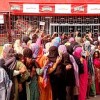
PAKISTAN: Food Shortages Dim Public Enthusiasm For Polls
While the drawing rooms of Pakistan’s rich and powerful are abuzz with speculations on who killed Benazir Bhutto, and whether or not the elections in February are going to be free and fair, the question on the minds of most ordinary people is how to get their daily bread.
Q&A: "We Are Generous but Not Naive"
One of the most persistent criticisms levelled at the European Union's conduct towards poor countries is that it gives with one hand and takes with the other. Despite being the world's largest donor of development aid, the EU pursues trade, agriculture and fisheries policies that many anti-poverty activists blame for perpetuating - and exacerbating - global inequalities.DEVELOPMENT-BRAZIL: Solidarity Economy Combats Exclusion
The Harmony Agricultural Company has become Brazil’s largest worker-managed business in the solidarity economy. It provides employment for 4,300 families who work 26,000 hectares of land, and its main activity is producing sugar at 48 mills.CUBA: Economic Independence for Rural Women
María Valido has stopped thinking of herself as a simple farmer devoted to traditional household chores since becoming involved in an agricultural innovation programme that has changed the lives of hundreds of families in rural regions of Cuba since 2000.ARGENTINA: Dairy Farmers Aggrieved, Despite High Prices
Dairy farmers in Argentina have led the latest in a long series of protests by agricultural associations, despite the record high prices for farm products.
CUBA: Innovation Gives Boost to Small Farmers
Cuban small farmers are strengthening their traditional ties with the land through a farming project that links scientific know-how with ancestral techniques and encourages greater local autonomy in decision-making on food production.AGRICULTURE-BRAZIL: Still Waiting For Promised Land
In their mud and clay tile house in a camp set up by the Brazilian Landless Workers Movement (MST), Eliana and her husband Eleidimar started the new year with a sense of trepidation. They know that at any moment an order can be issued to evict them from the land they have occupied for almost a decade.MEXICO: Is the Freeing Up of Agricultural Trade Really New?
The elimination of all barriers to imported maize under the North American Free Trade Agreement (NAFTA) will ruin Mexico’s rural areas, according to activists and small farmers who are demanding that the measure be revoked. But the free market which opened on Jan. 1 has in fact been in effect for the past nine years.CHALLENGES 2007-2008: Cuban Economy in Need of Nourishment
Increasing food production is the main challenge to be faced by the Cuban economy this year, to improve people’s quality of life. It was one of the recurrent themes raised at the popular debates convened on the government’s initiative in the second half of 2007.MEXICO: Transgenic Maize Knocking at the Door
Mexico’s first experimental trials of genetically modified maize will take place next year, a government official has announced. The news has put environmental and campesino (small farmer) organisations, still hoping that this will not happen, on the alert.LATIN AMERICA: Rural Women Forge Their Own Path in Microenterprise
Rural women from five Andean countries presented their successful microenterprises as part of a regional competition for female crafts and food producers, which also served as an opportunity for sharing the life stories of these leaders in the struggle against poverty.ENERGY-SOUTH AFRICA: Food Security Hobbles Biofuel Strategy
Worried that it may be seen as insensitive to the food needs of Africa, the South African government, which is facing a general election in 2009, has chosen food security in framing a biofuel policy.DEVELOPMENT: 'MNCs Gaining Total Control Over Farming'
Food security campaigners are now more concerned than ever that farmers are turning dependent on large multinational corporations (MNCs) for seeds, fertilisers, pesticides and other inputs while also becoming more vulnerable to pressures to produce genetically engineered crops.
DEVELOPMENT: Food Prices Climbing, With No End in Sight
Globalisation, climate change, and the mass production of biofuels are pushing up food prices worldwide, which could jeopardise the livelihoods of the world's poorest, according to a report released Tuesday by the International Food Policy Research Institute (IFPRI).AGRICULTURE-CUBA: Waiting for Announced Reforms
While saving up for the extra expenses of the year-end holidays, Cubans are hoping that 2008 will bring reforms, at least in agriculture, that will result in a more varied supply of food, at affordable prices.« Previous Page — Next Page »


 Farming on the Outskirts of Juba. Credit: UN Photo/JC McIlwaine
Promoting human and planetary health is a central focus of the United Nations, as laid out in the 2030 Sustainable Development Goals (SDGs). World hunger and unsustainable farming practices continue to be pressing concerns for the world. According to the 2025 State of Food Security and Nutrition in the World report by the Food and Agriculture Organization (FAO), 673 million people faced hunger in 2024. There are stark regional disparities, with the FAO projecting that 60% of the world population facing hunger will reside in Africa by 2030. Globally, the prevalence of food insecurity has remained consistently higher for women than men.
Sustainable and efficient national food systems are essential in preserving health, education, environmental well-being, peace, economy, and security. However, creating sustainable food systems can be a challenging endeavor, as food production takes a heavy toll on the environment. The agricultural sector accounts for a significant portion of greenhouse gases. Finding safe, sustainable, and ethical strategies to feed the world is crucial in ensuring planetary longevity. A recent initiative from 2023, the EU Regulation on Deforestation-free Products (EUDR), seeks to advocate for sustainable food systems. The main driver of deforestation is the expansion of agricultural land used to produce commodities like cattle, wood, cocoa, coffee, etc. The EUDR is part of the 2020 European Green New Deal and the EU Biodiversity Strategy for 2030 and aims to limit Europe’s consumption of products linked with deforestation by requiring that companies prove that their products are deforestation-free. Despite aiming to achieve major strides in sustainability, policies such as EUDR also raise socioeconomic concerns for targeted countries. Many emerging Latin American economies are impacted by the policy, and have raised the question of how developing countries can grapple with the tensions between economic development and advancing sustainability.
IPS has been at the forefront of providing compelling and insightful stories on communities facing hunger as well as the cost of food production. IPS uses statistics from FAO, the World Food Programme (WFP) and the International Fund for Agricultural Development (IFAD) to bring relevant and hard-hitting facts to readers. This gathering of information and data from such organizations helps bring the best stories from IPS journalists working in the different regions in consultation with experts on the ground.

The Week with IPS

NEXT STOP - SDGs
Tracking global progress towards a sustainable world
Tracking global progress towards a sustainable world

