Languages
Sunday, August 30, 2026



News and Views from the Global South
Health
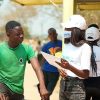
COVID-19 Pandemic Shapes the Future World People Want
The peoples of the world are unanimous - access to basic services such as universal healthcare must become a priority going forward. So too should global solidarity, helping those hardest hit by the COVID-19 pandemic and addressing the climate change emergency.
Recovery: What Are We Talking About?
The new year has arrived, but the situation is worse than in the last months of 2020. The pandemic is still unleashed: the end of the year holidays, the official permissiveness, and the slowness of the distribution of vaccines seem to announce that the disease will continue to wreak havoc for several months in most of the world, particularly in America, Europe, and parts of Asia like India. It has therefore been required to redouble preventive measures: a new lockdown and the disruption of almost all economic and school activities. Therefore, the recovery looks still uncertain and distant.
Tales of the 21st Century: Rohingyas Without home
 Mohammad Rakibul Hasan is a Bangladeshi documentary photographer, photojournalist, filmmaker and visual artist who has been visiting the camps in Cox’s Bazaar to document the Rohingya refugee crisis.

Shifting Conversations in Multifaceted Policymaking
As the people of Kiribati, Samoa and Tonga gear up as the first nations to welcome 2021, communities around the Asia-Pacific region and beyond look forward to bidding farewell to the most tumultuous year in recent decades.
If Covid-19 is Primarily a ‘First World’ Virus, Why is the Global South in Lockdown?
The currently available Covid-19 vaccines have been authorized for ‘emergency use ‘in Europe and North America. This is due to an apparent spike in Covid-19 flu cases in the northern hemisphere as winter advances. Highly advertised vaccines are being produced and rolled out at ‘warped speed’ by powerful pharmaceutical and bio-technology companies headquartered in Euro-America although their efficacy including how long their immunity lasts is not clear.
Is High Tech a Danger to Humanity?
My friends all drive Porsches, I must make amends.
Worked hard all my lifetime, no help from my friends.
So, oh Lord, won't you buy me a Mercedes Benz.
Janis Joplin, 1970
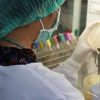
ANTICOV Treatment Clinical Trial Crucial for Africa
The ANTICOV COVID-19 clinical trial, aimed at identifying treatments that prevent mild cases from progressing to severe forms of the disease, is crucial to Africa, researchers say. The trial will investigate home-based treatments to help prevent local health systems from being overwhelmed.
Stand Tall, UN Humanitarians
Most people around the world were glad to see the back of 2020: From the devastating bushfires in Australia to the plagues of locusts through East Africa stretching across Arabia to Pakistan, extreme weather, melting ice sheets at the poles, and Covid-19 that still engulfs the globe.
2021: Year of Living Dangerously?
Goodbye 2020, but unfortunately, not good riddance, as we all have to live with its legacy. It has been a disastrous year for much of the world for various reasons, Elizabeth II’s annus horribilis. The crisis has exposed previously unacknowledged realities, including frailties and vulnerabilities.
This Is Not a Goodbye, Kenya – Asante na Kwaheri ya Kuonana
Happy New Year, Kenya. Several milestones in my personal and professional life have made Kenya a cherished place for me. I started my UNICEF career in Rumbek, South Sudan in June 2000, and my rest and recuperation breaks were in Nairobi. In fact Kenya was the first African country I had ever visited and, frankly, it was love at first sight.

How Women-centred Digital Platforms can Enhance Empowerment
A cherished snapshot of a happy mother and a smiling grandmother is universally associated with a good childhood. In the movies, TV, or media, a broken or depressed mother’s face is hardly seen. But the reality is somewhat different. The measures communities and society take to ensure that women and girls are protected and supported are often questioned.
Mining giant Rio Tinto Face Environmental, Human Rights Complaint in Papua New Guinea
Local communities in the vicinity of the abandoned Panguna copper mine, have taken decisive action to hold the global mining multinational, Rio Tinto, accountable for alleged environmental and human rights violations during the mine’s operations between 1972 and 1989.
Women Need Support and Understanding after Miscarriage
Recently, Meghan Markle, the Duchess of Sussex, wrote a piece sharing about her miscarriage. I knew, as I clutched my firstborn child, that I was losing my second, she wrote. She is part of a growing list of celebrities who have publicly shared their experiences with miscarriages.
Reflecting Back and Imagining Forward
What a challenging year 2020 has been! A year of living dangerously – “Tahun vivere pericoloso”- perhaps these words of late President Soekarno of Indonesia are the best description. Fortunately, I managed to remain sane, reading and writing op-eds (mostly about the pandemic, here, here).
2020: A Yet More Devastating Year Closes With At Least Some Signs Of Hope
Despite its grim record of multiple natural disasters and a deepening climate crisis, one could be forgiven for looking back on 2019 with a degree of nostalgia. There is no disguising the extent of the calamity wrought this year by COVID-19, yet as we approach the end of 2020 we may also draw strength from positive developments emerging.
Hope Thrives on Action
As Mohammed, a Palestine refugee with impaired vision who attends a specialized UNRWA programme for children with disabilities, told us during our mission to Lebanon a week ago: “I was worried. I was worried that I could not continue my education because the programme was going to be cut. Now I have hope that I can continue to study and make my dream come true.” As 2020 comes to a close and we reflect on Education Cannot Wait’s mission this past year, two things stand out: hope and action. Amidst multiple crises around the globe, exacerbated by the COVID-19 global pandemic, hope has been the fuel driving us all forward to take action to deliver to those left furthest behind. Indeed, while hope is life-sustaining for a young girl or boy enduring conflict, forced displacement and disaster, it cannot be sustained without action.
‘We Might Have a Covid-21 or Covid-22 Coming Our Way’
Cristián Samper is working for the Wildlife Conservation Society, an organization that concerns itself with the health of wildlife all over the globe. And he warned --even before the Covid-19 pandemic – about the dangers of a viral pandemic.
The World in 2021
The year 2020 is ending with the world caught up in an unprecedented human and economic crisis. The pandemic has contaminated 75 million people and killed 1.7 million. With the lockdowns, the global economy has suffered the worst recession in 75 years, causing the loss of income for millions of people. In such a bleak environment, what will the new year bring? Whilst uncertainty is the only certainty, eight points are likely to be key in the year ahead:
Empowering Women through Wisdom
During the COVID 19 lockdown in Sri Lanka, seven women from diverse religious and ethnic backgrounds came together to deliver Wisdom and their message that women must be empowered and their voices for national unity must be heard through this movement.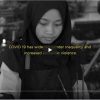
2020: The Year of COVID 19
 At the end of this year, we must pay our respects to the nearly 1.5 million people who have died from the Coronavirus.
COVID 19 has inflicted extensive damage beyond human casualties, exposing the frailties of governments, societies, economies and health systems, particularly in those countries that chose to ignore the warnings and advice of the WHO.
At the end of this year, we must pay our respects to the nearly 1.5 million people who have died from the Coronavirus.
COVID 19 has inflicted extensive damage beyond human casualties, exposing the frailties of governments, societies, economies and health systems, particularly in those countries that chose to ignore the warnings and advice of the WHO.
The Impact of COVID-19 on Child Marriage and Other Gender-Based Violence
I recently visited rural areas of Bangladesh amid the COVID-19 pandemic and returned to Dhaka with a new understanding of the impact that COVID-19 is having on child marriage, a harmful practice that is a global challenge. The fundamental shift that I saw was that child marriage, which has typically been encouraged by struggling parents, is now being encouraged by struggling girls. This worrisome trend underscores a new burden of the pandemic on the poor.« Previous Page — Next Page »


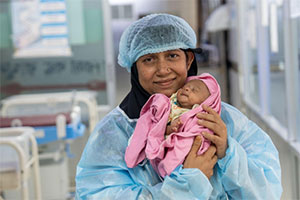 Bangladesh: Sarid, born one month early, receives specialized newborn care and grows stronger every day. Credit: UNICEF/UNI944397/Mojumder
Since the onset of the 2000s, global life expectancy has seen an overall rise, attributed to significant technological and scientific innovations in healthcare. Due to an increased understanding of different conditions as well as a rise in cooperation among healthcare experts around the world, there have been major strides made in ensuring that as few people die from chronic illnesses as possible. Despite the belief that healthcare is a fundamental human right, people from low- or middle-class backgrounds, marginalized groups, and underdeveloped countries have far more limited access to basic healthcare services.
The COVID-19 pandemic showed how marginalized communities are disproportionately affected by health crises, proving that we have much work to do in ensuring that no one dies of terminal conditions. While the global response to the coronavirus saw significant strides in immunization and vaccine development, the global outbreak of mpox in 2022 and its upsurge in parts of Africa in 2024 must remind us to remain vigilant.
Other major disease outbreaks in recent years have been linked to the destruction of infrastructure during warfare. Notably, in 2024, the Gaza Strip witnessed a return of the poliovirus since its eradication in the region 25 years ago. Israel’s blockade on Gaza has resulted in the collapse of the region’s sewage plants and desalination plants, and also destroyed healthcare capacities. The UN stated that this lack of clean water and sanitation would lead to an outbreak of cholera and other deadly infectious diseases. The 2026 OCHA Humanitarian Situation Report confirmed that the over two years of conflict in Gaza has produced a catastrophic health emergency, with millions remaining dependent on relief aid amid tight restrictions and no functioning public health system.
IPS is committed to providing full and comprehensive coverage on healthcare challenges around the world. IPS seeks to address the multifaceted causes of such challenges, including unprecedented pandemics, conflict-driven disease outbreaks, as well as socioeconomic barriers to equal healthcare access. IPS is also dedicated to reporting on innovations in the healthcare industry.

The Week with IPS

NEXT STOP - SDGs
Tracking global progress towards a sustainable world
Tracking global progress towards a sustainable world
