Languages
Thursday, October 15, 2026



News and Views from the Global South
Humanitarian Emergencies

Israeli Airstrikes Inflame Syria’s Humanitarian Crisis
Over the past week, the humanitarian situation in Syria has significantly deteriorated, with tensions between the Druze religious minority and the Syrian military reaching new peaks. On July 16, Israel launched a series of powerful airstrikes on Syria’s capital city, Damascus, in defense of Syria’s Druze population, further spurring regional instability and exacerbating the dire scale of needs.
The Emerging Quad 3.0: Prioritizing a Hard Security Agenda
On 1 July, the foreign ministers of the Quad—Australia, India, Japan and the US—convened for the second time this year in Washington, DC. While the first meeting, held just hours after the inauguration of Donald Trump as the 47th President of the United States, signaled the Quad's significance to the new US administration, the second meeting indicates that the Quad is entering a new phase with a renewed focus on a strategic and hard security agenda, weaning itself away from its non-traditional security priorities. This presents a departure from its previous versions: the first Quad, which collapsed in 2007, centred on humanitarian assistance and disaster relief (HADR), and Quad 2.0, which was reinstated in 2017, gradually developed a broad public goods agenda.
Faith on the Frontlines: New Military Chaplain Programme Reaches Soldiers in Africa
It is a cold morning in eastern Zimbabwe as Lieutenant Colonel Reverend Doctor Samba Mosweu celebrates a glorious moment he has been waiting for all his life.
Sweet Hope to End Bitter Pills for Multidrug-Resistant Tuberculosis
Every day, Yondela Kolweni has to hold down her son, who screams and fights when it is time for his daily life-saving TB tablets—a painful reminder of her battle with the world’s top infectious killer disease. “It is a fight I win feeling awful about what I have to do,” says Kolweni (30), a Cape Town resident and a TB survivor. “The tablets are bitter, and he spits them out most of the time, and that reminds me of the time I had to take the same pills.”
WHO, UNICEF Find the World Is Off Track To Meet Childhood Immunization Goals
The latest data highlights that the world is off track to meet the targets set by the Immunization Agenda 2030 (IA2030) to achieve 90 percent global immunization coverage for essential childhood vaccines and halve the number of unvaccinated children by 2030.
Conflict, Climate Change Push Migrants in Yemen to Return to Their Home Countries
Yemen's humanitarian crisis, driven by conflict, economic collapse and climate shocks, leaves migrants desperate to return to their home countries.
Afghan Refugees Expelled from Iran and Exposed to Horrific Abuse
Since early June, Afghan refugees in Iran have endured increasingly harsh humanitarian conditions, with many being forced to repatriate under conditions that violate the principles of international humanitarian law. In 2025 alone, over one million refugees have returned to Afghanistan, further stretching the limited supply of resources amid a severe and multifaceted humanitarian crisis.
UN Funding Crisis Threatens Work of Human Rights Council
The United Nations Human Rights Council (HRC) has expressed concern at the UN High Commissioner for Human Rights’ announcement that certain activities mandated by the council cannot be delivered due to a lack of funding. The council has sought clarity on why certain activities had been singled out.
Escalating Gang Violence in Haiti Threatens to Override State Control
Over the month of June, the security situation in Haiti has taken a considerable turn for the worse, with armed gangs continuing to coordinate brutal attacks, seizing more territory, and obstructing critical humanitarian aid deliveries. In the past week, new waves of hostilities were reported in the nation’s Centre Department, which has elicited concern from humanitarian organizations that gang influence could soon completely overpower state control.
HIV/AIDS Funding Crisis Risks Reversing Decades of Global Progress
UNAIDS called the funding crisis a ticking time bomb, saying the impact of the US cuts to the President’s Emergency Plan for AIDS Relief (PEPFAR) could result in 4 million unnecessary AIDS-related deaths by 2029.
For the Aged, Their Sunset Years Will Be Bedeviled by Lethal Heatwaves
The global population is aging at a time when heat exposure is rising due to climate change. Extreme heat can be deadly for older populations given their reduced ability to regulate body temperature. Already there has been an 85 percent increase since 1990 in annual heat-related deaths of adults aged above 65, driven by both warming trends and fast-growing older populations.
Preventing Pandemics Needs Every Tool in the Toolbox – Including Animal Vaccines
Just five years on from the Covid-19 pandemic, another animal-borne disease is mutating and spreading across borders and species. Avian influenza has already resulted in the loss of more than 630 million birds in the last 20 years. And new figures from the inaugural State of the World’s Animal Health report find that the number of reported outbreaks in mammals, including cattle, sheep and cats, doubled last year compared to 2023.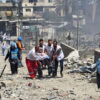
Genocide Made Invisible
Whatever the outcomes of Benjamin Netanyahu’s visit to the White House on Monday and the latest scenario for a ceasefire in Gaza, a bilateral policy of genocide has united the Israeli and U.S. governments in a pact of literally breath-taking cruelty.
Staff Union Dismisses UN Restructuring as “Chaotic, Incoherent, Rushed & Lacking Strategy”
A coalition of UN staff unions, led by the 60,000-strong Coordinating Committee of International Staff Unions and Associations (CCISUA), has written to UN member states criticizing the UN80 reform process as “incoherent and lacking strategy”. The union, one of the largest single coalitions in the world body, is asking the 193 member states to take over the UN reform process which is currently in the hands of a Task Force.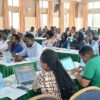
Kenya’s Shirika Plan: A New Dawn for Refugee Rights and Integration
When Jean Baremba arrived in Kenya in 2018, he looked forward to rebuilding a life shattered by war in the Eastern Democratic Republic of Congo.
How Global Fund is Saving Lives from Malaria, TB, & HIV across Africa
In Gabú, Guinea-Bissau, a grandmother named N’beta hesitated. Her six-month-old grandson, Seco, was healthy, so why give him medicine? But community health workers Jamilia and Amadu gently explained that the medicine wasn’t for illness, but for protection. It was part of a seasonal malaria chemoprevention campaign designed to protect children during the worst malaria transmission months — the rainy season.
The Rise of Islamophobia in New York’s Mayoral Elections– with the Statue of Liberty in a Burqa
The prospect of New Yorkers electing their first Muslim Mayor, come November, has ignited a rash of paranoid statements by right-wing US politicians, including Islamophobia-- the irrational fear and hatred against Islam and Muslims. Last week, a Republican politician caricatured America’s iconic Statue of Liberty wearing a burqa-- an outer garment worn by some Muslim women that covers the entire body and face. But that internet meme, spreading across social media, was deleted after protests.
Sudanese Refugees and IDPs Disproportionately Affected By Crisis
Since the wake of the Sudanese Civil War in 2023, Sudan has faced a dire humanitarian crisis that has been marked by extreme violence, widespread civilian displacement, and an overwhelming lack of basic services in relation to the massive scale of needs. The latest reports from a host of United Nations (UN) organizations shed light on the rapid deterioration of living conditions for Sudanese internally displaced persons (IDPs) and refugees.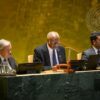
Does the UN Overstep Its Responsibility to Protect Mandate?
The UN has been criticized by some member states for overstepping the mandate of its Responsibility to Protect (R2P) doctrine during a debate in the General Assembly.
Post-Earthquake Myanmar Faces ‘Immense’ Suffering, Cannot Be Forgotten
“Myanmar cannot become a forgotten crisis,” Jorge Moreira da Silva, Executive Director of the United Nations Office for Project Services (UNOPS), has said. “This country has faced cyclones, war, conflict, violence, climate and now immense suffering.”
UN80: Alternative Reform Pathways — Fiscal Prudence, Relocation Realities, & Underutilized Charter Mechanisms
Recent proposals to relocate UN operations to lower-cost duty stations ignore demonstrable economic patterns. Empirical evidence suggests that establishing UN hubs often triggers localized inflation, negating projected savings.« Previous Page — Next Page »





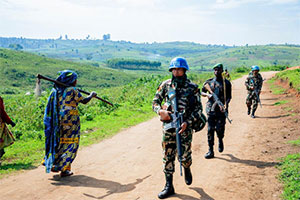 MONUSCO Peacekeepers and FARDC Soldiers Patrol Fataki Area. Credit: UN Photo/Jorkim Jotham Pituwa
Conflict, human rights violations, natural disasters, and famine have been at the forefront of concerns for humanitarian organizations. The escalation of humanitarian crises has led to over 239 million people in need of humanitarian assistance at the start of 2026, as estimated by OCHA’s Global Humanitarian Overview. The 2025 humanitarian appeal received only $12 billion, the lowest funding in over a decade, which has left 24 million fewer people reached in comparison to 2024. Conflict has remained the primary driver of crisis.
Humanitarian emergencies massively impact progress towards the Sustainable Development Goals (SDGs), adversely affecting economic development, inequality, education, planetary well-being, and poverty. Millions of people are faced with reduced access to essential services, including shelter, food, healthcare, and access to clean drinking water. UN Organizations such as UNHCR and the United Nations Children’s Fund (UNICEF) are committed to providing direct relief to affected communities when state governments cannot.
The United Nations 2024 Summit of the Future discussed measures that will be taken to reduce global inequality and promote peacekeeping efforts around the world. The recent UN Climate Change Conference (COP30) in Belém, Brazil, agreed to mobilize $1.3 trillion annually for climate action by 2035, operationalize the loss and damage fund, and triple adaptation finance. However, a fossil fuel transition commitment was not secured, despite climate change and the greenhouse effect being major contributors to humanitarian crises worldwide.
Countries across the world have also rallied to end humanitarian crises, as witnessed in conflicts such as Palestine and Ukraine. IPS is committed to providing relevant and in-depth reports of humanitarian emergencies around the world and their implications.

The Week with IPS

NEXT STOP - SDGs
Tracking global progress towards a sustainable world
Tracking global progress towards a sustainable world