Languages
Sunday, November 8, 2026



News and Views from the Global South
Development & Aid

Absence of Reproductive Care Haunts Syrian Displaced Women
Pregnant women in northern Syria's camps for internally displaced people fear about their health and the health of their unborn children because of a lack of basic medical care and a healthy diet. These conditions exacerbate the illnesses and challenges faced by women, particularly amid the region's widespread poverty, food insecurity, and the remoteness of hospitals and health centers from the camps.
UK: ‘Many in the Climate Justice Movement Are Finding Creative and Imaginative Ways to Protest’
CIVICUS speaks with Chris Garrard, co-founder and co-director of Culture Unstained, about the campaign to end fossil fuel sponsorship of cultural institutions, which oil companies use to try to present a positive public image.
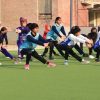
Climate Change Poses Yet Another Stumbling Block for Pakistani Sportswomen
Goalkeeper Rehana Jamali, 17, is jubilant. Her team came in second in the All Sindh Women Hockey Tournament, held last month.
Transforming India’s Villages Through Innovative Water Harvesting Techniques
Brij Mohan, a 37-year-old farmer from Deoria, a modest village in India’s northern state of Uttar Pradesh, has a story of resilience and transformation. Mohan, the lone breadwinner for his family, has two children, the eldest just 10 years old.
Various Uncertainties Block Indigenous Land Rights in Brazil
A never-ending battle threatens the indigenous rights that seemed clear and secure in Brazil, until the extreme right emerged in 2018 with a force challenging the civilisational advances set out in the Constitution.
Neglected for Years, Mpox Now a Public Health Emergency of International Concern
There is a deadly outbreak of a new and graver variant of mpox in the Democratic Republic of Congo (DRC), and at least one case has been confirmed in nearly 12 African countries, including those like Kenya, Burundi, Uganda, and Rwanda that were previously unaffected. Suspected mpox cases across these countries have surpassed 17,000, a significant increase from 7,146 cases in 2022 and 14,957 cases in 2023.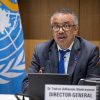
The Troubling Truth of Mpox
On August 15th, the Deputy Spokesperson for the Secretary-General, Farhan Haq, stated at a press briefing at the United Nations Headquarters that the Mpox epidemic continues to surge in the Democratic Republic of Congo and spreads throughout Africa. The alarming frequency of these cases constitutes a global health concern. Mpox, formerly known as monkeypox, is an epidemic that has grown exponentially in severity over the past two years. Originating in Central Africa in 1970, rates of infection have risen significantly since late 2023, with a new variant of the infection, known as clade 1 Mpox, infecting over 17,000 people in the Democratic Republic of Congo. These cases have generated increasing alarm, so much so that the World Health Organization has declared Mpox to be a worldwide public health emergency. Shortly after this declaration, the first case of clade 1 Mpox was reported in Sweden which greatly elevated global concern of a worldwide epidemic.
US Flails in GM Corn Dispute with Mexico
Closing arguments are in in the U.S. trade complaint against Mexico’s restrictions on genetically modified (GM) corn, with the three-arbitrator tribunal set to rule on the matter in November. The legitimacy of the trade agreement itself hangs in the balance.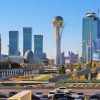
Kazakhstan Takes Lead in Global Push for Nuclear Disarmament Amid Heightened Tensions
In a world increasingly shadowed by the threat of nuclear conflict, Kazakhstan is stepping up its efforts in the global disarmament movement. On August 27-28, 2024, in collaboration with the United Nations Office for Disarmament Affairs (UNODA), Kazakhstan will host a critical workshop in Astana. This gathering, the first of its kind in five years, is set to reinvigorate the five existing Nuclear-Weapon-Free Zones (NWFZs) and enhance cooperation and consultation among them.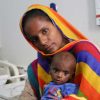
How Extreme Heat Intensifies Health Problems and Hunger
In May, temperatures soared above 52° Celsius (125.6° Fahrenheit) in Pakistan’s southern province of Sindh. To cope, Samina Kanwal, a community health worker with Action Against Hunger, began work at 7:00 am — the earliest time possible given neighborhood security protocols — to travel door-to-door helping vulnerable with the health consequences of extreme heat including heatstroke, difficulties with brain function, and even hunger.
2023 Deadliest Year for Aid Workers– & 2024 Could be Even Worse, Predicts UN
Back in August 2003, the United Nations faced one of its violent tragedies when a terrorist attack on the UN headquarters in the Iraqi capital of Baghdad claimed the lives of 22 people. Among those killed was Sergio Vieira de Mello of Brazil, the UN envoy in Iraq and High Commissioner for Human Rights, who had a long and distinguished UN career stretching over 30 years.
Micro-Dams, a Solution to Water Shortages in Rural Brazil
Water shortage is over, springs have emerged or become perennial, small ponds with fish have formed and pastures have become greener and more permanent, all thanks to the ‘barraginhas’, the Portuguese name given in Brazil to micro-dams that retain rainwater and infiltrate it into the soil.
Gender Equality Has Everything To Do with Climate Change
After years of reporting on the frontlines of climate change, I have witnessed the devastating impact extreme weather events have on women and girls. In Kenya’s pastoralist communities in far-flung areas of Northern Kenya, West Pokot, Samburu and Narok counties, droughts mean a resurgence in harmful cultural practices such as outlawed female genital mutilation (FGM), beading and child marriages.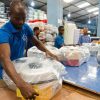
How the Private Sector Can Create Jobs and Drive Development in Western & Central Africa
Every year in Western and Central Africa, 6 million young people enter the labor force, while only about half a million new jobs are created. This enormous jobs deficit means that most entrants into the workforce work in the informal sector, with insecure income, low quality employment, and very little hope of escaping poverty.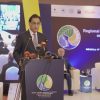
Empowering Women for a Green Future: AFPPD Conference Tackles Climate Change and Gender Equality
Robust data collection, integrated policies, and an accelerated push towards a green economy with a gender focus topped the agenda at a conference in Islamabad, Pakistan, that brought together policymakers, experts, and advocates from across the Asia-Pacific region.
Freedom of Press in Jeopardy With Journalists in Crossfire in Kenyan Protests
In the heart of Nairobi, as tear gas clouded the streets, the line between journalists and protesters blurred in the eyes of Kenyan law enforcement. A wave of anti-government protests, ignited by opposition to a proposed finance bill, has spiraled into violence, with journalists increasingly caught in the crossfire between police and protesters.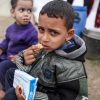
WFP in Gaza: ‘We Need a Long Ceasefire That Leads to Peace so We Can Operate’
Corinne Fleischer, WFP’s regional director for the Middle East, North Africa and Eastern Europe, describes Gaza as “a terrible situation getting worse.” Over the past two weeks, 21 United Nations World Food Programme (WFP) food distribution points have been closed under evacuation orders.
Education Cannot Wait Interviews UNRWA Commissioner-General Philippe Lazzarini
On 18 March 2020, Philippe Lazzarini was appointed Under-Secretary-General of the United Nations and Commissioner-General of the United Nations Relief and Works Agency for Palestine Refugees in the Near East (UNRWA) by United Nations Secretary-General António Guterres. He took up his post with UNRWA on 1 April 2020.
Ensuring a Healthier Future By Sustaining the Fight Against NTDs
Over the last ten years, I have been privileged to witness incredible progress in the fight against neglected tropical diseases (NTDs) – a journey marked by unwavering dedication, resilience, and hope.
Rizwana Hasan Vows to Ensure Justice for Those Killed During Bangladesh’s Quota Reform Movement
Justice for all those who died and suffered injuries during the recent student-led quota reform movement in Bangladesh and reforms to the systems to ensure that this justice takes place are not negotiable, an adviser to the Bangladesh interim government, Syeda Rizwana Hasan, told IPS in an exclusive interview
Handling Financial Crises in the South
When history repeats itself, the first time is a tragedy; the next is a farce. If we fail to learn from past financial crises, we risk making avoidable errors, often with irreversible, even tragic consequences.« Previous Page — Next Page »





 2026 High-level Political Forum on Sustainable Development. Credit: UN Photo/Eskinder Debebe
In 2015, the United Nations and its Member States adopted the Sustainable Development Goals (SDGs) in an effort to make the world a more sustainable and peaceful place for future generations. Progress on the 17 SDGs has been uneven, and inequality persists across the globe. 10 years after adoption, the 2025 UN SDGs Report revealed that only 35% of the SDG targets are on track, with more than half moving too slowly, and 18% moving backwards from the 2015 baseline. Poverty remains one of the world’s most pressing issues, with hunger, violence, and inequality impeding the opportunities for all people to achieve success. In September 2024, the United Nations Summit of the Future introduced a new goal: to eradicate global poverty by 2030, ensure universal rights to basic services, and increase the overall standard of living in terms of industrialization, economic well-being, citizen health, and literacy. Furthermore, recent shifts in United States foreign aid policy – notably, major budget cuts to USAID and the termination of thousands of development programmes– have severely threatened vital lifelines of financial aid to impoverished communities around the world. Additionally, the United States’ withdrawal from the Paris Climate Agreement has undercut international efforts at sustainable development. With the upcoming 2030 deadline, the UN Secretary-General has called for urgent multilateralism across six priority areas: food systems, energy, digital connectivity, education, jobs and social protection, and climate and biodiversity. IPS sheds light on marginalized communities that struggle on a daily basis to survive and have their stories heard and respected.
Updated by Yilan Batista and Shuli Wong August 2026

The Week with IPS

NEXT STOP - SDGs
Tracking global progress towards a sustainable world
Tracking global progress towards a sustainable world
