Languages
Sunday, November 8, 2026



News and Views from the Global South
Development & Aid

Empowering Africa’s Informal Market Traders To Deliver Safe Food
Local informal food markets feed millions of urbanites in bustling African cities, but the consequences of tainted food could be illness and death for unsuspecting consumers.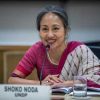
South Sudan: World’s Youngest Nation at a Crossroads
Thirteen years since becoming an independent state, South Sudan faces profound humanitarian challenges. South Sudan’s first Independence Day was imbued with a great sense of hope.
Power to the Youth
We live in a divided world of the haves and the have nots. The rich get richer, the poor get poorer. There is learning poverty, technology poverty, healthcare poverty, and food poverty. When you think about the dynamics of the world today, there is even empathy and humanity poverty.
Digital Trade & the Sustainable Development Goals: A Dynamic Agenda
The rapid growth of digitalization has fundamentally altered commerce, impacting production and facilitating the movement of goods. The 2023 Asia-Pacific Trade and Investment Report (APTIR), has pointed out that although digital trade revenues of Asia and the Pacific account for a significant share of global trade, this growth is uneven, with trade concentrated in a few areas, leading to disparities across the region.
Hydrogen from Renewables or Fossil Fuels? The Panamanian Question
In 2021, the Panama Canal welcomed a French experimental ship on a world tour, the Energy Observer, the first electric vessel powered by a combination of renewable energies and a hydrogen production system based on seawater.
Invest in Research to Protect Crops from Future Flooding
Tropical Storm Debby has resulted in record-setting rain and flooding events across several States, including Florida, South Carolina, North Carolina and parts of Georgia and left a trail of damage including leaving Florida crops flooded.
Small Farmers Feeling Climate Change Heat Find Little Support From the State
The over 20 million residents of Pakistan’s port city of Karachi, in Sindh province in particular, have been experiencing brutal heat since May. But they are not the only ones bearing the brunt of high temperatures and humidity. Up to 15,000 cattle died due to scorching heat mixed with high humidity which Shakir Umar Gujjar, president of the Cattle and Dairy Farmers Association, Pakistan, said was “no joke”.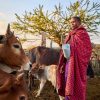
Indigenous Peoples — An Antidote in a World of Crisis
This year’s Equator Prize winners are the antidote we need in a world of crisis. Earlier this year, the World Economic Forum released its annual Risk Report. The key findings highlighted the inescapable trend over the past decade that we are facing a global polycrisis, in which problems of biodiversity loss, climate change, inequality, water scarcity and conflict are increasingly indivisible, simultaneous, and systemic.
Gaza Children’s Education, Mental Health Targeted With Emergency Response Grant
Since October 2023, 625,000 children enrolled in schools across Gaza have had no access to education, and more than 370 schools have sustained damage from attacks, according to the United Nations.
Pacific Community Photographic Winners Bring Impacts of Climate Change to Life
The Pacific Community’s photographic competition winners reflect the devastating climate impacts on beautiful and sensitive environments, documenting the most pressing issues the communities who live on the islands face today.
Should There be a Dedicated Credit Rating Agency for Asia & the Pacific?
Following persistent and determined efforts, Africa has achieved a breakthrough in advancing the establishment of an African credit rating agency (ACRA), with the proposed launch scheduled for December 2024.
Explainer: Why Kenya is Considered a High Climate Risk for Development Banks
Kenya contributes less than 0.1 percent of global greenhouse gas emissions every year, yet development banks have flagged the East African nation as a high climate risk. This is due to extreme weather changes that are increasingly threatening the country’s development agenda, widening socio-economic inequalities, and deepening rural poverty and hunger.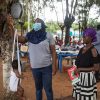
Improving Childhood Health and Development Need Not Be an Olympian Effort
From 11-year-old Chinese skateboarder Zheng Haohao to 16-year-old American gymnast Hezly Rivera, several children have reached the pinnacle of world sport at the Paris 2024 Olympic Games.
Water Stories: The Well Seven Families and 400 Buffaloes Rely On
In the rural village of Khardariya in the Dang district of Nepal, access to clean water is a major issue. Villagers depend on one poorly managed well for drinking water, cleaning, and feeding livestock. Anjana Yadav stood near the well while a neighbor walked toward it to fetch a bucket of water.
Pivotal Shift at Seabed Authority: Nations Rally for Deep-Sea Mining Moratorium
The International Seabed Authority (ISA) Assembly meeting concluded last week with no mining authorized, an unprecedented number of States calling for a moratorium or precautionary pause and a new Secretary-General elected.
What Potential Do Gender Bonds Have For Increasing Financing For Gender Equality?
Iceland’s gender bond last month caused great excitement in the capital markets community. While gender bonds have been increasing in popularity within the private sector, Iceland is the first country to issue a sovereign gender bond. Many in the development community are however asking, are gender bonds the solution to financing for gender equality?
G20 Leaders Must Listen To Their People and Agree To Tax the Ultra-Rich
We are living in a world of multiple crises of inequality, climate breakdown and conflict. Billions of people globally are facing huge hardship. Whole governments, too, are virtually bankrupt, with extremely high debt levels forcing them to implement brutal and deeply unpopular cuts and tax rises for ordinary people. 3.3 billion people live in countries that spend more on debt interest payments than on either education or health.
UN Calls for ‘Peaceful, Orderly and Democratic Transition’ Following Protests in Bangladesh
After weeks of violent clashes against protestors, Bangladesh Prime Minister Sheikh Hasina resigned from her position and fled the country on Monday. Preparations are underway for an interim government to take over with the backing of the military, political parties, student leaders of the protest movement and all other groups involved in the transition. A UN spokesperson has urged that all parties involved in the current transition should work together to ensure a peaceful and democratic transition.
Nigeria: Why #EndBadGovernanceInNigeria Protests Gained Traction
Thousands of Nigerians have taken to the streets to protest against bad governance, corruption, soaring inflation, and the rising cost of living, in what has been termed "10 Days of Rage" and believed to mirror Kenyan protests organized by the youth. Nigeria, Africa's most populous country and a major exporter of crude oil, citizens claim that the benefits of the country's resources do not trickle down to the masses but to a group of corrupt politicians.
ECOWAS at 49: Successes in Regional Integration, Despite Emerging Challenges
The Economic Community of West African States (ECOWAS) was founded in 1975 to promote economic integration in the region. Forty-nine years later, the regional bloc boasts significant successes in integration, peace and security and good governance, but also faces some challenges.
Chilean Fisherwomen Seek Visibility and Escape from Vulnerability
The number of organisations that bring together fisherwomen who seek to be recognised as workers, make their harsh reality visible and escape the vulnerability in which they live is growing in Chile.« Previous Page — Next Page »





 2026 High-level Political Forum on Sustainable Development. Credit: UN Photo/Eskinder Debebe
In 2015, the United Nations and its Member States adopted the Sustainable Development Goals (SDGs) in an effort to make the world a more sustainable and peaceful place for future generations. Progress on the 17 SDGs has been uneven, and inequality persists across the globe. 10 years after adoption, the 2025 UN SDGs Report revealed that only 35% of the SDG targets are on track, with more than half moving too slowly, and 18% moving backwards from the 2015 baseline. Poverty remains one of the world’s most pressing issues, with hunger, violence, and inequality impeding the opportunities for all people to achieve success. In September 2024, the United Nations Summit of the Future introduced a new goal: to eradicate global poverty by 2030, ensure universal rights to basic services, and increase the overall standard of living in terms of industrialization, economic well-being, citizen health, and literacy. Furthermore, recent shifts in United States foreign aid policy – notably, major budget cuts to USAID and the termination of thousands of development programmes– have severely threatened vital lifelines of financial aid to impoverished communities around the world. Additionally, the United States’ withdrawal from the Paris Climate Agreement has undercut international efforts at sustainable development. With the upcoming 2030 deadline, the UN Secretary-General has called for urgent multilateralism across six priority areas: food systems, energy, digital connectivity, education, jobs and social protection, and climate and biodiversity. IPS sheds light on marginalized communities that struggle on a daily basis to survive and have their stories heard and respected.
Updated by Yilan Batista and Shuli Wong August 2026

The Week with IPS

NEXT STOP - SDGs
Tracking global progress towards a sustainable world
Tracking global progress towards a sustainable world
