Languages
Sunday, November 8, 2026



News and Views from the Global South
Development & Aid
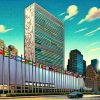
UN’s Summit of the Future
Preparations are ongoing for the upcoming Summit of the Future, probably the most consequential initiative of UN Secretary General Antonio Guterres so far.
How Women Volunteers Are Shaping India’s Water Future
“Daily squabbles at the lone water point in Bhubaneswar’s slums, where hundreds of households depended on this single non-potable water source, have now receded into the past,” says Aparna Khuntia, a member of a large cohort of water volunteers who have played an important enabling role in ensuring households in the eastern India city now have their own on-premises potable running tap water available all 24 hours.
Activists Challenge Pharma Company Gilead Over HIV Medication
Campaigners and experts have demanded a breakthrough HIV intervention hailed as “the closest thing to an HIV vaccine” must be made available as soon and as cheaply as possible to all who need it as its manufacturer faces protests over its pricing. Activists led a massive protest during the 25th International AIDS Conference (AIDS2024) in Munich last week as a study was presented showing lenacapavir—a drug currently sold by pharmaceutical firm Gilead for more than USD 40,000 per year as an HIV treatment—could be sold for USD 40 per year as a form of pre-exposure prophylaxis (PrEP) to help prevent HIV infection.
Partnering for Progress: Maldives’ Sustainable Ocean Initiatives
The ocean is our lifeline, covering 70 percent of the earth’s surface, it is the source of half of the oxygen we breathe, and it absorbs 26 percent of the carbon dioxide we produce. It is home to millions of marine species, contains 97 percent of all of the water on our planet and offers humankind immense resources.
79 Years After Hiroshima & Nagasaki: A Grim Reminder of Nuclear Annihilation
The upcoming 79th anniversary of the atomic bombings of Hiroshima and Nagasaki, which took place on August 6 and 9, 1945, remains a grim reminder of the destructive consequences of nuclear weapons. The US bombings killed an estimated 90,000 to 210,000, with roughly half of the deaths occurring on the first day in Hiroshima.
Economic Prospects in Asia & the Pacific – Celebrate Resilience, Prepare for Headwinds
Economic performance in Asia and the Pacific has proved to be quite resilient to the shocks of the past few years – the COVID-19 pandemic, the ongoing wars in Ukraine and Gaza, and the cost-of-living crisis. In 2023, the region’s economy drove over 60 per cent of the global economic growth.
Femicide and Reproductive Violence Harm African Women, Girls
International African Women’s Day on July 31 recognizes the contribution of African women toward political, social, and economic freedom on the continent. But gender equality is still not a reality for most African women.
At Paris Olympics, Art Runs in Tandem with Sports
As cheers from beach-volleyball fans fill the air at the Eiffel Tower Stadium on a steamy, sunny day, pedestrians just down the road are enjoying another kind of show: an outdoor exhibition of huge photographs gleaming on the metal railings of UNESCO headquarters.
Can Kenya’s Gen Z Lead an African Agriculture Revolution?
Kenyan Gen Z recently led a series of historic protests that resulted in Kenya’s President rejecting the Finance Bill 2023 and dissolving his cabinet. These protests are inspiring a wave of change, revolutions, and optimism in Kenya and the African Continent.
Intl. AIDS Conference: Trans Man Asks Governments to Pressure Uganda to Repeal Punitive Anti LGBT+ Law
Jay Mulucha, Executive Director of FEM Alliance Uganda, gave an impassioned plea to governments around the world to push lawmakers in his home country to reverse punitive new legislation criminalizing the LGBT+ community.
The Price Women Pay for Climate Change
Global warming, widely believed to be a universal crisis, will actually impact girls and women far more than boys and men. It is already known that we live in a patriarchal world, one in which men are afforded far greater opportunities for success while women generally hold less societal power and have access to fewer resources. This especially pertains to developing countries in which agriculture related work, usually delegated to females, depends on a variety of environmental factors and subsequently, significantly hurts their livelihoods.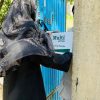
Left with Few Options: Afghan Women Turn to Risky Online Jobs Amid Taliban Ban
The Taliban's total ban on women’s employment in Afghanistan leaves few options for earning a living. Nevertheless, Afghan women are carving out niches in online business with sheer determination and perseverance.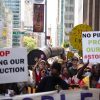
Sportwashing Allegations at Africa’s Top Football Tournament
Following the recent Africa Cup of Nations (AFCON) tournament in Ivory Coast, a continent-wide campaign has emerged on social media challenging the tournament's main sponsor, TotalEnergies, over its involvement in the East African Crude Oil Pipeline (EACOP).
Parliamentarians: Active Aging Enhanced By Using Artificial Intelligence
With projections that by 2060, over 1.2 billion people in Asia will be 65 or older, and by adopting technology, including artificial intelligence technologies, it is possible to plan for active and fulfilled aging, lawmakers attending a regional meeting on Aging Preparedness and Care Economy in Asia heard.
Zimbabwe Needs Awareness, Advanced Tech to Beat Cancer
Earlier this year, then 46-year-old Lydia Musundiwa, based in the Zimbabwean capital Harare, was diagnosed with colon cancer, which, already at an advanced stage, killed her in less than two months. Now, Landeni, her 49-year-old widower, has to contend with the burden of looking after their three children single-handedly.
Life or Energy: The Hydroelectric Dilemma in Amazonian Brazil
The decade-and-a-half-long battle for life in the so-called Volta Grande (Big Bend) of the Xingu river, a stretch of the river dewatered by the Belo Monte hydroelectric power plant in the Brazilian Amazon, has a possible solution, albeit a partial one.
Government Indifferent to Invasion of Drug Traffickers in the Peruvian Amazon
The invasion of lands inhabited by Amazon indigenous communities is growing in Peru, due to drug trafficking mafias that are expanding coca crops to produce and export cocaine, while deforestation and insecurity for the native populations and their advocates are increasing
Emergency Response: Building Resilient Education Systems in Haiti Amid Multiple Crises
Haiti is witnessing unprecedented levels of lawlessness and brutality from armed gangs, which target schools and hospitals. The groups have plunged the country into a crisis and apart from the gun violence accusations, disturbing reports of ruthless sexual violence, including gang rape. Millions of children are in harm's way; many are out of school and it is estimated that between 30 and 50 percent of armed group members are children.
UN: Extreme Heat a Global Issue With an Unequal Impact
“The world must rise to the challenge of rising temperatures," says the UN Secretary-General as he launches a call to action on extreme heat and its impact on society and the environment.
Achieving the 10-10-10 HIV Targets by 2025
Around the world countries are taking powerful steps to protect people’s rights, dignity, and health. Dominica and Namibia became the most recent to decriminalize same-sex relations. South Africa made strides towards decriminalizing sex work.
World Hepatitis Day: Celebrating Progress and Confronting Persistent Challenges
July 28th is World Hepatitis Day, created to celebrate the life and work of Nobel Prize Winner Dr. Baruch Samuel Blumberg. Blumberg’s work contributed to the discovery of hepatitis B, and the development of a vaccine that could prevent infection with this infectious viral disease. These discoveries revolutionized the public health response in preventing the liver cancer that hepatitis B causes.« Previous Page — Next Page »





 2026 High-level Political Forum on Sustainable Development. Credit: UN Photo/Eskinder Debebe
In 2015, the United Nations and its Member States adopted the Sustainable Development Goals (SDGs) in an effort to make the world a more sustainable and peaceful place for future generations. Progress on the 17 SDGs has been uneven, and inequality persists across the globe. 10 years after adoption, the 2025 UN SDGs Report revealed that only 35% of the SDG targets are on track, with more than half moving too slowly, and 18% moving backwards from the 2015 baseline. Poverty remains one of the world’s most pressing issues, with hunger, violence, and inequality impeding the opportunities for all people to achieve success. In September 2024, the United Nations Summit of the Future introduced a new goal: to eradicate global poverty by 2030, ensure universal rights to basic services, and increase the overall standard of living in terms of industrialization, economic well-being, citizen health, and literacy. Furthermore, recent shifts in United States foreign aid policy – notably, major budget cuts to USAID and the termination of thousands of development programmes– have severely threatened vital lifelines of financial aid to impoverished communities around the world. Additionally, the United States’ withdrawal from the Paris Climate Agreement has undercut international efforts at sustainable development. With the upcoming 2030 deadline, the UN Secretary-General has called for urgent multilateralism across six priority areas: food systems, energy, digital connectivity, education, jobs and social protection, and climate and biodiversity. IPS sheds light on marginalized communities that struggle on a daily basis to survive and have their stories heard and respected.
Updated by Yilan Batista and Shuli Wong August 2026

The Week with IPS

NEXT STOP - SDGs
Tracking global progress towards a sustainable world
Tracking global progress towards a sustainable world
