Languages
Sunday, August 9, 2026



News and Views from the Global South
Sustainable Development Goals

It Is Time to Save The Deep Sea
This week’s United Nations General Assembly marks nearly 20 years since the body first resolved to restrict bottom trawling on the world’s seamounts, submarine mountains that rise thousands of feet above the sea floor and comprise some of the most biologically rich marine ecosystems on the planet.
Summit of the Future: On the Need for Civil Society to Make Its Voice Count at the UN
In a context of shrinking civic space that threatens civil society participation in an increasing number of countries and all the way to some UN processes, world leaders will gather to discuss the “multilateralism we want” at the Summit of the Future at the United Nations headquarters in New York.
What does Russia Trade with Africa?
After two symbolic African leaders' summits, Russia's trading is steadily increasing but significantly in exports of military weapons and equipment. According to Kremlin reports, Russian President Vladimir Putin said the trade turnover between Russia and African countries had increased by almost 35% in the first half of 2023 despite international sanctions.
Using Education To Stop the Generational Cycle of Violence Against Women in the Pacific
Parliamentary representation by women in Pacific Island countries remains stubbornly low at 8.4 percent. Yet women leaders across the region have been meeting every year for the past four decades to discuss goals and drive action to address gender inequality and the most pressing development challenges in the Pacific.
Multilateral Systems in Urgent Need of Reform, Says UN Secretary General
As the United Nations gears up to host the international community for the high-level meeting week, the UN chief appeals to world leaders to commit to universal agreements to work towards solutions.
Amid Great Challenges, Hope Reigns As More Children Reached with Education Support
Amid unprecedented global challenges and a growing list of countries in crisis, there is an existential threat to decades of development gains—with the global community marked by intensified armed conflict, forced displacements, and the debilitating effects of climate crises.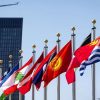
UN’s Summit of the Future to Forge a New Path for Humanity
A major event at UN Headquarters – Summit of the Future scheduled for September 22-23-- is being billed as a once in a generation opportunity for the international community to grapple with important questions, and forge a new path, for the benefit of all.
Mexican chinampas survive surrounded by threats
Mexican Crescencio Hernández orders radishes, herbs and lettuce for shipment to an alternative market in west-central Mexico City.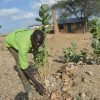
Governments Using Billions of Public Funds to Subsidize Climate-Destructive Industries—Report
A report examining corporate capture of public finance is accusing industries fueling the climate crisis, including fossil fuel ones, of draining public funds in the Global South, singling them out for squeezing out of governments USD 700 billion in public subsidies each year.
Explainer: Why Venezuela Needs To Reduce Its Gas Flaring
The most visible part of gas flaring in Venezuela is the so-called “Monagas illuminated nights.” These are red and orange skies, which are visible from the homes of the locals at night and which show the gas flaring in the oil fields of Monagas, a state located in the east of the Caribbean country and key in its oil production.
Where Has Poverty Gone?
Political polarization, the climate emergency, organized crime, migration, and low economic growth currently dominate the public debate in Latin America and the Caribbean (LAC), and rightly so. However, there is a significant structural challenge to human development and democracy itself that, along with inequalities, lies at the root of these crises: poverty.
ECW Delivers Holistic Education Against All Odds, But More Funding Needed
Education Cannot Wait (ECW) has delivered quality education to children in crisis "against all odds," ECW Executive Director Yasmine Sherif said at the United Nations today. "And you can imagine the odds. We are seeing more armed conflict, a growth of climate-induced disasters and the biggest refugee movement since World War 2."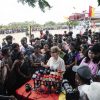
15 Years After the Civil War Ended, Sri Lanka Faces Another Crucial Election
Thousands of Tamils are heading to Mullivaikal on the northeast coast of Sri Lanka, many of whom were here 15 years ago and still live in the region. They are there, May 18, to commemorate the massacre of civilians in a ‘no fire zone’ during the final stages of the civil war.
How Much is Too Much for Mount Everest? Isn’t it Time For Sagarmatha to Rest
"That’s Mt. Everest!" I overheard this from a trekking guide to his trekkers team. I stopped and asked him—which one! He was not our guide, but I approached. He pointed a finger and showed me Mt. Everest and I cried—I don't know why. I was overwhelmed and humbled to finally witness the world's tallest mountain—it was not from the base camp but from Thyangboche while returning.
Global Community Urged to Help Deliver Quality, Holistic Education for Ukrainian Children
In a major escalation of a conflict that started in 2014 and which is the largest in Europe since World War II, Russia invaded Ukraine in February 2022. Since then, thousands of Ukrainian civilians—many of them women and children—have lost their lives. Countless others have been displaced from their homes, clinging to what remains of the education system as their communities disintegrate.
Africa Taking Targeted Preparedness Measures as Mpox Cases Increase
As the mpox virus continues to spread to new countries across Africa, triggering a continental health emergency, health authorities are sparing no effort in taking targeted measures to control the outbreak—and have called on funders to ensure that resources are distributed fairly.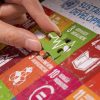
A Better Tomorrow with South-South Cooperation
The annual United Nations Day for South-South Cooperation, commemorated annually on September 12, serves as a powerful reminder of the spirit of solidarity and cooperation that transcends geographic borders — a spirit that is crucial for securing a better and thriving future for all. In a world facing cross-cutting challenges, the importance of this South-South solidarity cannot be overstated.
The Global South in the New Cold War
Marginalised and dominated economically by the Global North, developing countries must urgently cooperate to better strive for their shared interests in achieving world peace and sustainable development.
Mixed Fortunes for Africa’s Rapid Urbanization—Report
A new report says African cities will record rapid urbanization in the next decade, creating a mixed bag of socio-economic opportunities and challenges for the continent. This development is projected to result in wealthier consumer markets, better connected and more sophisticated commercial hubs, and larger bases for industrial production.
Small Glacial Lakes’ Mass Destruction in the Himalayan Community
Small glacial lakes can cause destruction, which may impact the livelihoods of entire communities. Now this is the harsh reality that the community of Thame village in the Mt. Everest region of Nepal now faces as they rebuild after the August 16 disaster.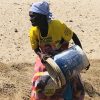
El Niño-Induced Water Crisis Drubbing Villagers in Zimbabwe
Side-by-side with fellow male villagers, Enia Tambo uses a white 25-liter plastic bucket to dig out mounds of sand in the Vhombozi River, in Mudzi district located in Zimbabwe’s Mashonaland East Province. The woman, in her late 50s, is digging to reach the water that is lying deep beneath the soil.« Previous Page — Next Page »


The Week with IPS

NEXT STOP - SDGs
Tracking global progress towards a sustainable world
Tracking global progress towards a sustainable world
