Languages
Thursday, September 24, 2026



News and Views from the Global South
Financial Crisis

Inflation Paranoia Threatens Recovery
Inflation hawks are winning the day. The latest ‘beggar thyself’ race to raise interest rates has begun. This ostensibly responds to the spectre of runaway inflation, supposedly retarding economic growth and progress, and thus threatening central bank ‘credibility’.
Africa Should Bargain Hard for COVID Vaccine Equity: Lessons from Indonesia during Avian Flu
Many countries around the world have punished most of the African continent for the scientific discovery of the Omicron variant through the imposition of travel bans.
Corporate Fear Drives Caribbean Vaccine COVID-19 Mandates
When face-to-face Cabinet meetings resumed in Jamaica following more than a year of virtual meetings due to COVID-19, Ministers lined up to have their immunisation cards inspected.
Hunger, Desperation in Lebanon as Food Prices Rocket
On the streets of Beirut, Hadi Hassoun begs for a few pounds to feed his five children. He has little hope of a job, especially now that the economic crisis in Lebanon has destroyed wealth.
The Squid Game: The Story about Losers in the Shadow of Glory
Immediately after its release, the Squid Game went viral, grabbing the attention of the world's entertainment stage. The grotesque and hyper-violent thriller has reportedly become Netflix's biggest show, the world's most-watched and the most-talked-about streaming entertainment. Is it a case of art imitating life?
Bleak Prospects for Least Developed Countries
“The outlook for LDCs is grim”. The latest United Nations (UN) assessment of prospects for the least developed countries (LDCs) notes recent setbacks without finding any silver lining on the horizon. Promises unkept Half a century ago, LDCs were first officially recognised by a UN General Assembly resolution. It built on research, analysis and advocacy by the UN Conference on Trade and Development (UNCTAD).
For the South, all Roads in Global Economic Governance Lead to Inequality & Vulnerability
Last week’s annual meetings of the International Monetary Fund (IMF), World Bank and G20 finance ministers illustrated that despite a historic debt crisis sweeping across developing countries and their urgent need for external financing for health and economic recovery, global economic institutions governed by rich countries do not possess the political will to deliver meaningful solutions. The inadequacy of the G20’s debt relief framework, which has failed to restructure sovereign debt since its inception, stands without change or any fresh effort to mobilize private sector participation in debt relief.
Inflation Bogey Blocking Recovery
The bogey of inflation has been revived. Dubious pre-pandemic economic progress, fiscal constraints and vaccine apartheid were bad enough. Now, ostensibly anti-inflationary measures also threaten recovery and sustainable development.
Inclusive Education to Break the Cycles of Poverty
In September 2021, children in the northern hemisphere returned to school after the summer break. For some, the end of the holidays signaled a return to normalcy and to the joys of learning after facing months of school closures due to the Covid-19 pandemic. For the majority of children in the Global South, however, the return to reality looked grimmer.
QE, or No QE, That is the Question?
The guardians of the global economy convened in Washington this week to discuss their latest global growth forecasts. The World Bank-IMF Board of Governors meetings have been squarely focused on the global response to COVID-19, with economists warning of slowing momentum in wealthy nations and grossly uneven recoveries across the developing world.
Extreme Weather the New Normal if Global Warming Increases at Current Speed
Rondrotiana Barimalala is a climate researcher at the University of Cape Town in South Africa and a lead author for the IPCC report to the recently released Intergovernmental Panel on Climate Change (IPCC) report titled Climate Change 2021: The Physical Science Basis.
Data Drought in the Global South
In 2020, every human on Earth created an average of at least 1.7 megabytes of data per second, collectively amassing 2.5 quintillion data bytes. Some 90% of the world’s total data was created in the last two years alone.
‘Building Back Better’: Jordan’s Road to Green Economic Recovery
For the first time in decades, Jordan’s economy contracted in 2020. COVID-19 took a heavy toll on the economy, and it was concerning for the country, particularly because Jordan had managed to grow at an average rate of 2%, despite regional and international shocks to its economy amounting to 44% of Gross Domestic Product (GDP) over the past decade.
With the World Bank’s “Doing Business” Out of Business, What Should Come Next?
Last week the World Bank announced it was “discontinuing” its “Doing Business” report, which ranks countries on the ease of opening and operating a company.
Progressive Taxation for Our Times
As developing countries struggle to cope with the pandemic, they risk being set back further by restrictive fiscal policies. These were imposed by rich countries who no longer practice them if they ever did. Instead, the global South urgently needs bold policies to ensure adequate relief, recovery and reform.
The Covid-19 Youth Employment Crisis in Asia & the Pacific
A pre-pandemic report published by the International Labor Organization, ILO, the Global Employment Trends for Youth 2020, offered a sober analysis on the job market prospects for youth.
The ARC Model: Proactive Disaster Risk Financing for a More Resilient Africa
The world faces multiple crises: climate change, extreme weather events, food security and biodiversity. For African nations, these issues are compounded by the COVID-19 pandemic and epidemic outbreaks that include Rift Valley Fever and Malaria. With 35 African Union Member States as signatories to its establishment Treaty, the African Risk Capacity (ARC) Group – comprising of ARC Agency and ARC Limited - works with Governments to help improve their capacities to better plan, prepare, and respond to extreme weather disasters and natural disasters.
Central Banks Must Address Pandemic Challenges
Hopes for an inclusive global economic recovery are fast fading. As rich countries have done little to ensure poor countries’ access to vaccines and fiscal resources, North-South “fault lines” will certainly widen. Enhancing relief, recovery, transformation While the International Monetary Fund (IMF) has revised rich countries’ recovery prospects upward, the United Nations (UN) notes formidable challenges, especially for developing countries, due to the pandemic.
Beware UN Food Systems Summit Trojan Horse
Undoubtedly, the world needs to reform existing food systems to better serve humanity and sustainable development. But the United Nations World Food Systems Summit (UNFSS) must be consistent with UN-led multilateralism. For the first time ever, the World Economic Forum (WEF), a partnership of some of the world’s most powerful corporations, is partnering the UN in launching the Summit, now scheduled for September, with its ‘Pre-Summit’ beginning today.
Myths, Lobbies Block International Tax Cooperation
Too many have swallowed the myth that lowering corporate income tax (CIT) is necessary to attract foreign direct investment (FDI) for growth. Although contradicted by their own research, this lie has long been promoted by influential international economic institutions.
Southeast Asia and Food Price Inflation: Double Whammy
In 2020, Southeast Asian countries were already facing varied challenges that affected the region’s food supplies and prices. The onset of the Covid-19 pandemic later in the year exacerbated the region’s food insecurity and poverty. Southeast Asian countries need to take a hard look at food security, even as the double challenges — climate change and the Covid-19 pandemic — continue to fester.« Previous Page — Next Page »


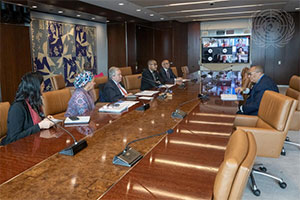 Secretary-General Meets with Members of Debt Expert Group. Credit: UN Photo/Eskinder Debeb
Financial crises are often defined by banking panics, recession, loss of market value, and deflation. Various financial crises at the turn of the 20th century, such as the Asian Crisis of 1997-1998 and the 2007-2008 Global Financial Crisis, have had immense impacts on the world economy. The COVID-19 pandemic also caused a financial crisis when mass lockdowns triggered staggering unemployment rates, a stagnation of economic growth, and led to the 2020 stock market crash. With the Russian invasion of Ukraine, the world has also witnessed a global energy crisis with shortages and increased prices in oil, gas, and electricity markets. According to UNCTAD’s World of Debt 2025, global public debt surpassed $100 trillion in 2024, with developing country debt growing twice as fast as developed economies since 2010. Burdens of debt servicing come with economic slowdowns and demands of austerity from lenders, with some economists arguing that this will lead to a new “lost decade” for the Global South. IPS brings you worldwide coverage of these financial developments and how we should manage these crises.

The Week with IPS

NEXT STOP - SDGs
Tracking global progress towards a sustainable world
Tracking global progress towards a sustainable world
