Languages
Tuesday, September 29, 2026



News and Views from the Global South
Financial Crisis

Reviving the Economy, Creating the ‘new Normal’
The Covid-19 pandemic has significantly impacted most economies in the world. Its full impacts will not be felt, let alone measured, until it runs its course. Many countries are still struggling to contain contagion, while the costs on both lives and livelihoods will undoubtedly have long-term repercussions.
Q&A: Global Poverty Expected to Move to Middle Income Developing Nations in Asia
Global poverty, which is increasing because of the economic impact of the coronavirus crisis and ensuing worldwide lockdowns, is shifting and a dramatic increase in middle-income developing countries in Asia is expected.
Strengthening Economic Institutions for a Resilient Recovery
Exceptional times call for exceptional action. In response to COVID-19, the IMF has moved with unprecedented speed and magnitude of financial assistance to help countries protect lives and livelihoods. Economic stabilization and a sustainable recovery, however, will require more than financial assistance. For recovery to be sustainable, policymakers will need to strengthen economic institutions that enable resilient, inclusive policies.
Economic Ghosts Block Post-Lockdown Recovery
As governments the world over struggle to revive their economies after the debilitating lockdowns they imposed following their failure to undertake adequate precautionary containment measures to curb Covid-19 contagion, neoliberal naysayers are already warning against needed deficit financing for relief and recovery.
The Struggle for Land and Food in the Locked-down Philippines
Landless farmers who produce rice for the landlords of big “haciendas” can’t get more than a little pocket money from their harsh work—not enough to provide diverse and healthy food for their families. Seasonal workers on sugar-cane plantations know that they can count on only six months of earnings. When summer arrives, those whose irrigation facilities have been destroyed by typhoons, or those who never had any, struggle while waiting for the rain.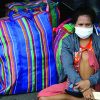
Lifelines in Danger
The COVID-19 pandemic is crippling the economies of rich and poor countries alike. Yet for many low-income and fragile states, the economic shock will be magnified by the loss of remittances—money sent home by migrant and guest workers employed in foreign countries.
Beyond the Crisis
Looking back to the start of 2020, the world has changed almost beyond recognition. To protect public health, the global economy was put into stasis. Shops closed, factories were mothballed, and people’s freedom of movement was severely curtailed. No country has escaped the health, economic, and social impacts of the COVID-19 crisis. Tragically, more than 260,000 people have died and millions have been infected. The IMF is projecting global economic activity to decline on a scale not seen since the Great Depression. It is truly a crisis like no other.
COVID19 and Its Impact on Pacific Island States
 By now, the impact of COVID19 on our daily lives has been well documented, especially in advanced economies. Anxiety about the future continues to grow everywhere. Much of the corporate news coverage we consume has focused on the toll this pandemic will take on mainland countries. Often neglected, however, is the unique position Pacific Island States find themselves in.

Coronavirus Leads to Nosedive in Remittances in Latin America
Remittances that support millions of households in Latin America and the Caribbean have plunged as family members lose jobs and income in their host countries, with entire families sliding back into poverty, as a result of the COVID-19 health crisis and global economic recession.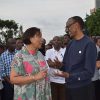
The Commonwealth’s Response to COVID-19
The Coronovirus pandemic has been an unforgiving test of advanced economies. Health systems in the United States, France, Italy, Spain, and the UK have been put under immense pressure, with shortages of doctors, ventilators, personal protective equipment and the capacity to test for the virus. Their economies have been battered and the consequences are spoken of in terms of the Great Depression.
COVID-19: Why We Must Reset Our Thinking
Covid-19 is the most significant event since the Second World War. It changes everything. It brings great sadness to many of us as we lose loved ones, as we see people losing their jobs, and as we see people around the world suffering immensely.Time for the World Bank and IMF to Be the Solution, Not the Problem
The World Bank and the International Monetary Fund (IMF) have a historic opportunity to help stabilize a world reeling from COVID-19. Doing so will require the institutions to change course and aggressively support poor countries’ ability to invest broadly in the government services their populations need.
Argentina Responds Boldly to Coronavirus Crisis
Like much of the West, Argentina did not take many early precautionary actions after the Covid-19 epidemic was confirmed in January, but became the first Latin American country to act decisively with a 12 March public health emergency declaration. The presidential decree came a day after the World Health Organization (WHO) declared a global pandemic, just over a week after the first case was detected in the republic on 3 March.
Argentina’s Debt Restructuring “Groundhog Day”… or Maybe Not? Three Key Points
On April 17, the Alberto Ángel Fernández administration in Argentina officially unveiled its offer for debt restructuring on USD 66 billion foreign currency-denominated bonds. Starting on that date, the offer is valid for 20 days, a period during which difficult negotiations with bondholders are expected to take place. Based on the first reactions from some of creditor groups, one could well get the sense that the offer is “dead on arrival.”
Alive Amidst the Mayhem of COVID-19 – A Sex Worker’s Story
For a Bangladeshi woman, who has worked as a sex worker since childhood, her future post-COVID-19 looks hopeless. Shilpy, who works at Daulatdia, the largest brothel in the country, told IPS how she now also fears for the future of her two daughters.
Asia-Pacific Response to COVID-19 and Climate Emergency Must Build a Resilient and Sustainable Future
The unprecedented public health emergency triggered by the COVID -19 pandemic and its multi-faceted impact on people’s lives around the world is taking a heavy toll on Asia and the Pacific. Countries in our region are striving to mitigate the massive socioeconomic impact of the pandemic, which is also expected to affect the region’s economic health. In its annual Economic and Social Survey of Asia and the Pacific 2020 launched today, the United Nations Economic and Social Commission for Asia and the Pacific (ESCAP)expectsgrowth in Asia-Pacific developing economies to slow down significantly this year.
Pandemic Crisis May Trigger Societal Restructuring
The Chinese word for crisis consists of two characters - “weiji”. Wei means danger and ji means opportunity. Every crisis is pregnant with danger and risks but also with opportunities – for some to make money, for others to learn valuable lessons, and for society to reorient or restructure its priorities, institutions and even the system.
Snapshot of Life under Lockdown in Bangladesh
 The Coronavirus pandemic is changing how we live our daily lives. The scale of the COVID-19 and its impact on our lives is unprecedented. When humanity gets past this, the world will be a very different place than the one we have known.
Dangers and Lessons of Present Multiple Crises
The Covid-19 pandemic, erupting in the background of lethargic global economy, could turn out to be the singular biggest crisis in a century. First reported in Wuhan, China, the corona virus has reached almost all countries. It has infected close to 1 million persons and caused over 40,000 deaths at time of writing; and the figures keep climbing. It is a health catastrophe which if not checked in its track would be the most serious since the Spanish Flu of 1918 that killed over 50 million people.
State Intervention Necessary to Overcome Covid-19 Threats
It is now clear that most East Asian government responses to novel coronavirus or Covid-19 outbreaks have been effective. In Hong Kong, Japan, Singapore and Taiwan, the number infected have remained relatively low despite their proximity and vulnerability, while containment in China and South Korea has been impressive.
Use Stimulus Packages for Longer Term Progress
The coronavirus pandemic seems to have finally forced governments around the world to ditch their obsession (at least for the moment) with delivering budget surplus. As stock markets tumble, stimulus measures, worth billions of dollars, are announced to boost investor confidence and consumer spending to keep economies running.« Previous Page — Next Page »


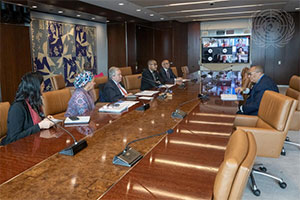 Secretary-General Meets with Members of Debt Expert Group. Credit: UN Photo/Eskinder Debeb
Financial crises are often defined by banking panics, recession, loss of market value, and deflation. Various financial crises at the turn of the 20th century, such as the Asian Crisis of 1997-1998 and the 2007-2008 Global Financial Crisis, have had immense impacts on the world economy. The COVID-19 pandemic also caused a financial crisis when mass lockdowns triggered staggering unemployment rates, a stagnation of economic growth, and led to the 2020 stock market crash. With the Russian invasion of Ukraine, the world has also witnessed a global energy crisis with shortages and increased prices in oil, gas, and electricity markets. According to UNCTAD’s World of Debt 2025, global public debt surpassed $100 trillion in 2024, with developing country debt growing twice as fast as developed economies since 2010. Burdens of debt servicing come with economic slowdowns and demands of austerity from lenders, with some economists arguing that this will lead to a new “lost decade” for the Global South. IPS brings you worldwide coverage of these financial developments and how we should manage these crises.

The Week with IPS

NEXT STOP - SDGs
Tracking global progress towards a sustainable world
Tracking global progress towards a sustainable world
