Languages
Thursday, October 22, 2026



News and Views from the Global South
Financial Crisis

Opinion: The Sad Historical Consequences of the Greek Bailout
In recommendations to German Chancellor Angela Merkel at the end of July, the German Council of Economic Experts outlined how a weak member country could leave the Eurozone and called for strengthening the European monetary union.
Civil Society Sceptical Over “Action Agenda” to Finance Development
Despite high expectations, the third International Conference on Financing for Development (FfD) ended on a predictable note: the United Nations proclaimed it a roaring success while most civil society organisations (CSOs) expressed scepticism over the final outcome.
Opinion: U.N. Can Help Reform the International Financial System
The growth in global interdependence poses greater challenges to policy makers on a wide range of issues and for countries at all levels of development.
Opinion: “Slight Deceleration” in G20 Trade Restrictions but Continued Vigilance Needed
The latest report by the World Trade Organisation (WTO) on G20 trade measures shows a slight deceleration in the application of new trade-restrictive measures by G20 economies, with the average number of such measures applied per month lower than at any time since 2013.
Opinion: Greece – A Sad Story of the European Establishment
Only 50 years of Cold War (and the fact that German Chancellor Angela Merkel grew up in East Germany) can possibly explain the strange political power of the United States over Europe.
Opinion: G20 Turkish Presidency Keen to Benefit the Global Community
Turkey assumed the Presidency of the Group of 20 (G20) on Dec. 1, 2014. It will culminate in the Antalya Summit on Nov. 15-16. Our priorities build upon the G20 multi-year agenda, but also reflect particular themes we see as important for 2015.
Opinion: Finance Like a Cancer Grows
It is astonishing that every week we see action being taken in various part of the world against the financial sector, without any noticeable reaction of public opinion.
Opinion: Pillar of Neoliberal Thinking is Vacillating
This month’s World Economic Outlook released by the International Monetary Fund (IMF) only confirms that consequences of the collapse of the financial system, which started six years ago, are serious. And they are accentuated by the aging of the population, not only in Europe but also in Asia, the slowing of productivity and weak private investment.
Opinion: A Long History of Predatory Practices Against Developing Countries
The world’s attention turned to the practices of vulture funds after the U.S. Supreme Court affirmed a lower court opinion in the NML Capital vs Argentina case, which forbids the country from making payments on its restructured debt.
Opinion: Crisis Resolution and International Debt Workout Mechanisms
Debt restructuring is a component of crisis management and resolution, and needs to be treated in the context of the current economic conjuncture and vulnerabilities.
Opinion: What if Youth Now Fight for Social Change, But From the Right?
The “surprise” re-election of incumbent Israeli Prime Minister Benjamin Netanyahu in the Mar. 17 elections has been met with a flood of media comment on the implications for the region and the rest of the world.
Opinion: The ‘Acapulco Paradox’ – Two Parallel Worlds Each Going Their Own Way
The world is clearly splitting into two parallel worlds, with each going their own way, in what we could call the ‘Acapulco paradox’.
Opinion: Greece and the Germanisation of Europe
At last, on Tuesday Feb. 24, the Eurogroup (of eurozone finance ministers) approved the Greek government’s commitment to a programme of reforms in return for extending the country’s bailout deal.
Youth Unemployment, Income Inequality Keep Rising
Global youth unemployment may be “six or seven times” what the International Labor Organisation’s (ILO) latest figures state, due to what a youth advocacy group calls a flawed system of assessment.
OPINION: Greece Gives EU the Chance to Rediscover Its Social Responsibility
The European Union should not be afraid of the leftist opposition party Syriza winning the Greek election, but see it as a chance to rediscover its founding principle - the social dimension that created it and without which it cannot survive.
OPINION: Banks, Inequality and Citizens
Every day we receive striking data on major issues which should create tumult and action, but life goes on as if those data had nothing to do with people’s lives.
European Citizens Call for Increased Aid to Developing World
An overwhelming majority of citizens in the 28-member European Union (EU) - which has been hamstrung by a spreading economic recession, a fall in oil prices and a decline of its common currency, the Euro - has expressed strong support for development cooperation and increased aid to developing nations.
Falling Oil Prices Threaten Fragile African Economies
The sharp decline in world petroleum prices - hailed as a bonanza to millions of motorists in the United States - is threatening to undermine the fragile economies of several African countries dependent on oil for their sustained growth.
What the U.S. Should Learn from Russia’s Collapse
After months of whispered warnings, Russia’s economic troubles made global headlines when its currency collapsed halfway through December. Amid the tumbling price of oil, the ruble has fallen to record lows, bringing the country to its most serious economic crisis since the late 1990s.
Cuba’s Reforms Fail to Reduce Growing Inequality
One of the major challenges assumed by President Raúl Castro when he launched a series of reforms in Cuba is improving living standards in a country still suffering from a recession that began over 20 years ago and has undermined the aim of achieving economic and social equality.
OPINION: Europe Has Lost Its Compass
The Swedish Social Democrat government, which took office only two months ago, has just resigned. The far-right anti-immigrant Sweden Democrats sided with the four-party centre-right opposition alliance, and new elections will be held in March next year.« Previous Page — Next Page »





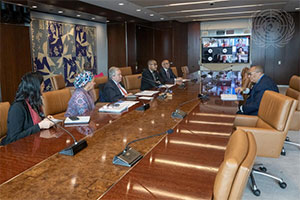 Secretary-General Meets with Members of Debt Expert Group. Credit: UN Photo/Eskinder Debeb
Financial crises are often defined by banking panics, recession, loss of market value, and deflation. Various financial crises at the turn of the 20th century, such as the Asian Crisis of 1997-1998 and the 2007-2008 Global Financial Crisis, have had immense impacts on the world economy. The COVID-19 pandemic also caused a financial crisis when mass lockdowns triggered staggering unemployment rates, a stagnation of economic growth, and led to the 2020 stock market crash. With the Russian invasion of Ukraine, the world has also witnessed a global energy crisis with shortages and increased prices in oil, gas, and electricity markets. According to UNCTAD’s World of Debt 2025, global public debt surpassed $100 trillion in 2024, with developing country debt growing twice as fast as developed economies since 2010. Burdens of debt servicing come with economic slowdowns and demands of austerity from lenders, with some economists arguing that this will lead to a new “lost decade” for the Global South. IPS brings you worldwide coverage of these financial developments and how we should manage these crises.

The Week with IPS

NEXT STOP - SDGs
Tracking global progress towards a sustainable world
Tracking global progress towards a sustainable world
