Languages
Friday, October 23, 2026



News and Views from the Global South
Financial Crisis

OPINION: Europe Has Lost Its Compass
The Swedish Social Democrat government, which took office only two months ago, has just resigned. The far-right anti-immigrant Sweden Democrats sided with the four-party centre-right opposition alliance, and new elections will be held in March next year.
OPINION: The Decline of Social Europe is Part of a World Trend
After the Italian sea search-and-rescue operation Mare Nostrum at a cost of nine million euros a month, through which the Italian Navy has rescued nearly 100,000 migrants – although perhaps up to 3,000 have died – from the Mediterranean since October 2013, Europe is now presenting its new face in the Mediterranean.
Child Poverty in Spain Seen Through the Eyes of Encarni
“I would like to have a big house, and I wish my family didn’t have to go out and ask for food or clothes,” Encarni, who just turned 12, tells IPS in the small apartment she shares with five other family members in a poor neighbourhood in the southern Spanish city of Málaga.
Crisis Fuelled Resurgence of Horse-Drawn Carriages in Cuba
Up and down the streets of towns and cities in Cuba go horse-drawn carriages with black leather tops and large back wheels, alongside more simple carts, operating as public transportation.
OPINION: Rousseff Re-elected President – What Lies Ahead for Brazil?
The tight race between incumbent President Dilma Rousseff of Brazil’s Workers’ Party and her opponent, Aecio Neves from the centre-right Brazilian Social Democracy Party (PSDB) party, ended on Sunday, Oct. 26 with the re-election of Rousseff.
The Invisible Reality of Spain’s Homeless
“It’s easy to end up on the street. It’s not because you led a bad life; you lose your job and you can’t afford to pay rent,” says David Cerezo while he waits for lunch to be served by a humanitarian organisation in this city in southern Spain.
Zimbabwe’s Rich Fuel Inequality Through Illicit Financial Flows
Zimbabwe has lost 12 billion dollars in illicit financial flows over the last three decades and experts say this illegal practice is perpetuating social inequalities and poverty in this southern African nation.Put People Not ‘Empire of Capital’ at Heart of Development
President Rafael Correa Delgado of Ecuador does not mince words when it comes to development. ”Neoliberal policies based on so-called competitiveness, efficiency and the labour flexibility framework have helped the empire of capital to prosper at the cost of human labour,” he told a crowded auditorium at the 15th Raul Prebitsch Lecture.Central Asia Hurting as Russia’s Ruble Sinks
Pensioner Jyparkul Karaseyitova says she cannot afford meat anymore. At her local bazaar in Kyrgyzstan’s capital, Bishkek, the price for beef has jumped nine percent in the last six weeks. And she is not alone feeling the pain of rising inflation.
OPINION: Europe is Positioning Itself Outside the International Race
The new European Commission looks more like an experiment in balancing opposite forces than an institution that is run by some kind of governance. It will probably end up being paralysed by internal conflicts, which is the last thing it needs.
Mass Deportations Don’t Squelch Migration Dreams of Hondurans
The clock marks 9 AM when a bus coming from the Mexican city of Tapachula reaches Corinto, on the border between Honduras and Guatemala. It is the first bus of the day, carrying children and their families sent back from a failed attempt at making it across the border into the United States.
Criminalisation of Homelessness in U.S. Criticised by United Nations
A United Nations panel reviewing the U.S. record on racial discrimination has expressed unusually pointed concern over a new pattern of laws it warns is criminalising homelessness.
Will Climate Change Denialism Help the Russian Economy?
The recent call from Russian Prime Minister Dmitry Medvedev for “tightening belts” has convinced even optimists that something is deeply wrong with the Russian economy.
Amid Crisis, Puerto Rico’s Retirees Face Uncertain Future
A feeling of insecurity has overtaken broad sectors of Puerto Rican society as the economy worsens, public sector debt spirals out of control, and the island's creditworthiness is put in doubt.Cry for Argentina: Fiscal Mismanagement, Odious Debt or Pillage?
Argentina has now taken the U.S. to The Hague for blocking the country’s 2005 settlement with the bulk of its creditors. The issue underscores the need for an international mechanism for nations to go bankrupt.
Going Back to the Farm in Cuba
Scattered houses amidst small fields of vegetables and other crops line the road to the La China farm on the outskirts of the Cuban capital. This is where Hortensia Martínez works – a mechanical engineer who has been called crazy by many for deciding to become a small farmer.
Child Malnutrition Doesn’t Take Vacation in Spain
It’s two in the afternoon, and María stirs tomato sauce into a huge pot of pasta. School is out for the summer in Spain, but the lunchroom in this public school in the southern city of Málaga is still open, serving meals to more than 100 children from poor families.
Cuba’s Balsero Crisis Still an Open Wound, 20 Years On
Tears, silence and evasive responses are the reactions from Cubans when they are asked about the “balseros” or rafters crisis; two decades after an exodus without parallel in Latin America, it remains a taboo subject in this Caribbean island nation.
Did Argentina Default or Not? It’s More Than Semantics
Argentina’s supposed “default”, an unprecedented case in the history of world capitalism, sets a legal, political and financial precedent that indicates the need for concrete measures regarding the fine line between legal, ethical business activities and criminal usury.
Food – Thou Shall Not Waste
“Only two years ago, the soup kitchen was serving 50 meals a day. Today the number has almost doubled and, what is even more worrying, we have started receiving families with children,” says Donatella Turri, director of the Caritas Diocese of Lucca.
Human Development Report Finds South Asia’s Poor on a Knife’s Edge
Millions still live in poverty and even those who have gained the security of the middle-income bracket could relapse into poverty due to sudden changes to their economic fortunes in South Asia, the latest annual Human Development Report by the United Nations Development Programme (UNDP) revealed.« Previous Page — Next Page »





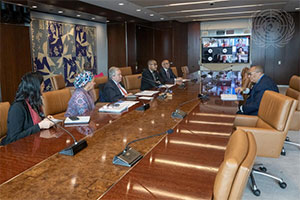 Secretary-General Meets with Members of Debt Expert Group. Credit: UN Photo/Eskinder Debeb
Financial crises are often defined by banking panics, recession, loss of market value, and deflation. Various financial crises at the turn of the 20th century, such as the Asian Crisis of 1997-1998 and the 2007-2008 Global Financial Crisis, have had immense impacts on the world economy. The COVID-19 pandemic also caused a financial crisis when mass lockdowns triggered staggering unemployment rates, a stagnation of economic growth, and led to the 2020 stock market crash. With the Russian invasion of Ukraine, the world has also witnessed a global energy crisis with shortages and increased prices in oil, gas, and electricity markets. According to UNCTAD’s World of Debt 2025, global public debt surpassed $100 trillion in 2024, with developing country debt growing twice as fast as developed economies since 2010. Burdens of debt servicing come with economic slowdowns and demands of austerity from lenders, with some economists arguing that this will lead to a new “lost decade” for the Global South. IPS brings you worldwide coverage of these financial developments and how we should manage these crises.

The Week with IPS

NEXT STOP - SDGs
Tracking global progress towards a sustainable world
Tracking global progress towards a sustainable world
