Languages
Saturday, October 24, 2026



News and Views from the Global South
Financial Crisis

BRICS – The End of Western Dominance of the Global Financial and Economic Order
The sixth BRICS Summit which has just ended in Brazil marks the transition of a grouping based hitherto on shared concerns to one based on shared interests.Food Insecurity a New Threat for Lebanon’s Syrian Refugees
A declining economy and a severe drought have raised concerns in Lebanon over food security as the country faces one of its worst refugee crises, resulting from the nearby Syria war, and it is these refugees and impoverished Lebanese border populations that are most vulnerable to this new threat.BRICS Forges Ahead With Two New Power Drivers – India and China
The Sixth BRICS Summit which ended Wednesday in Fortaleza, Brazil, attracted more attention than any other such gathering in the alliance’s short history, and not just from its own members – Brazil, Russia, India, China and South Africa.
North’s Policies Affecting South’s Economies
Since the onset of the crisis, the South Centre has argued that policy responses to the crisis by the European Union and the United States has suffered from serious shortcomings that would delay recovery and entail unnecessary losses of income and jobs, and also endanger future growth and stability.
Europe and the United States, Allies in Crisis
A few decades ago, even before the end of the Cold War and before and after Ronald Reagan’s election to the White House, analyses regularly referred to U.S. decadence. At other times, it was Europe’s turn for pessimistic descriptions, especially when it could not overcome its ambivalence over deepening integration, and above all because of the failure of its constitutional project.
Greek Privatisation of Key Sectors Meets Strong Opposition
Plans by the Greek government to sell companies that handle the key resources of energy and water face serious obstacles and its policy to offer investors exceptional privileges in an effort to boost interest in privatisation is coming under strong pressure.
Shoemaking Saves Zimbabwe’s Jobless Youth
For many young Zimbabweans like 19-year-old Shelton Mbariro, running an unlicensed, backyard handmade shoe business has become a way to escape unemployment in this southern African nation.
Argentina Once More on the Map, Invited by BRICS
As Argentina starts to mend fences with the international financial markets, the emerging powers that make up the BRICS bloc invited it to their next summit. This could be a step towards this country’s reinsertion in the global map, after its ostracism from the credit markets since the late 2001 debt default.
Argentina Seeks to Ward Off “Paradoxical” Default
Argentina finds itself in a strange position since the U.S. Supreme Court rejected its appeal Monday to take a case in which a small group of creditors is suing this country for full repayment: it is on the brink of default even though it is one of the countries in the world that has done the most to dig itself out of debt.U.S. Economy Will Grow But Not Trickle Down, OECD Warns on Inequality
Even though the U.S. economy is now expected to grow – albeit sluggishly – over the coming two years, inequality will not improve without policy reforms, a major grouping of rich countries is warning.
Despite Crisis, Europe Continues to Protect Its Banksters
More than six years after the global financial crisis broke out, European Union (EU) countries continue to protect banks and investments funds from tougher rules, despite abundant evidence of recurrent criminal or reckless activities in the sector, and new accumulation of enormous financial risks.
Small Farmers’ Loss of Land Increases World Hunger
The world is increasingly hungry because small farmers are losing access to farmland. Small farmers produce most of the world’s food but are now squeezed onto less than 25 percent of the world’s farmland, a new report reveals. Corporate and commercial farms, big biofuel operations and land speculators are pushing millions off their land.
Tracking the Democratic “Alternative from the South”
Democratic governance offers a viable option for developing countries to achieve economic growth and inclusion, yet this doesn’t need to follow the Western model, new research released here this week suggests.
Culture Increasingly Unaffordable for Cubans
Standing in line for a concert at the Centro Cultural Fábrica de Arte, a cultural centre in the Cuban capital, Alexis Cruz anxiously checks his billfold, where he has the price of the ticket – 50 Cuban pesos (two dollars) - and three CUCs (equivalent to one dollar each) to buy something to drink.
Cuba’s Burgeoning Private Sector Hungry for Flora and Fauna
The lack of markets to supply raw materials for Cuba’s new private sector, along with the poverty in isolated rural communities, is fuelling the poaching of endangered species of flora and fauna.
Q&A: Agriculture Needs a ‘New Revolution’
The Millennium Development Goals deadline of 2015 is fast approaching, but according to the International Fund for Agricultural Development (IFAD), poverty still afflicts one in seven people — and one in eight still goes to bed hungry.
Is Puerto Rico Going the Way of Greece and Detroit?
Puerto Rican society has been shaken to its foundations by the announcement in February by Standard & Poor's and Moody's credit rating agencies that they had downgraded the island's creditworthiness to junk status.
Soaring Child Poverty – a Blemish on Spain
“I don’t want them to grow up with the notion that they’re poor,” says Catalina González, referring to her two young sons. The family has been living in an apartment rent-free since December in exchange for fixing it up, in the southern Spanish city of Málaga.
Colombia’s Breadbasket Feels the Pinch of Free Trade
“Things are getting worse and worse,” Enrique Muñoz, a 67-year-old farmer from the municipality of Cajamarca in the central Colombian department of Tolima, once known as the country’s breadbasket, said sadly.
Wanted: Foreign Investment in Cuba
A new law opening Cuba up to foreign investment and a shift in the country’s relations with the European Union are aimed at seeking outside support to overcome the chronic crisis plaguing the country since the early 1990s.U.S. Ukraine Aid Frustrated by IMF Reform Debate
Despite pressure from the Barack Obama administration, Ukraine’s new prime minister, and a veritable who’s who in Washington’s foreign policy and financial establishment, Congress adjourned Friday for a 10-day recess without approving emergency assistance for an increasingly beleaguered and economically bereft Ukraine.« Previous Page — Next Page »





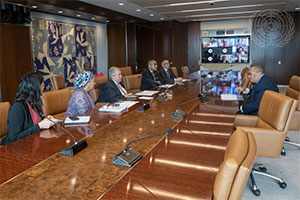 Secretary-General Meets with Members of Debt Expert Group. Credit: UN Photo/Eskinder Debeb
Financial crises are often defined by banking panics, recession, loss of market value, and deflation. Various financial crises at the turn of the 20th century, such as the Asian Crisis of 1997-1998 and the 2007-2008 Global Financial Crisis, have had immense impacts on the world economy. The COVID-19 pandemic also caused a financial crisis when mass lockdowns triggered staggering unemployment rates, a stagnation of economic growth, and led to the 2020 stock market crash. With the Russian invasion of Ukraine, the world has also witnessed a global energy crisis with shortages and increased prices in oil, gas, and electricity markets. According to UNCTAD’s World of Debt 2025, global public debt surpassed $100 trillion in 2024, with developing country debt growing twice as fast as developed economies since 2010. Burdens of debt servicing come with economic slowdowns and demands of austerity from lenders, with some economists arguing that this will lead to a new “lost decade” for the Global South. IPS brings you worldwide coverage of these financial developments and how we should manage these crises.

The Week with IPS

NEXT STOP - SDGs
Tracking global progress towards a sustainable world
Tracking global progress towards a sustainable world
