Languages
Saturday, September 26, 2026



News and Views from the Global South
Financial Crisis
U.N. Chief Proposes Budget-Cutting Austerity Drive
Armed with a sharp knife, U.N. Secretary-General Ban Ki-moon is on an austerity drive seeking deep cuts, amounting to about 155 million dollars, in the U.N.'s 2012-2013 budget, which comes into effect next January.
Sky-High Oil Prices Here to Stay
As the Arab world continues to pitch and heave with flashes of popular uprisings here and sparks of brutal crackdowns there, analysts are painting a grim picture of the regional unrest's economic consequences, predicting the persistence of high oil prices in the coming years.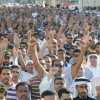
BAHRAIN: Slashing Levies to Help Businesses Cope With Unrest
Bahrain is considering slashing or putting on hold levies on businesses to help them cope with the deteriorating economy, with losses topping an estimated 500 million dollars since the beginning of unrest here in February.
A Creative Boost for South-South Cooperation
In a rare and timely collaboration, the U.N. Development Programme (UNDP) teamed up with the U.N. Conference on Trade and Development (UNCTAD) to produce a report on the urgent need for developing nations to pour effort and resources into their so-called creative economies.JAPAN: Disaster Highlights Economic Vulnerability
As authorities struggle to control dangerous radioactive material spilling from the quake ravaged Fukushima nuclear power reactors, a more difficult question has begun to unsettle Japan: is the country’s post-war prosperity as invincible as was believed till now?U.S.: Budget Cuts Threaten Handful of Beds for Homeless Youth
When Malika, 21, fled her parents' house in the U.S. state of Virginia three years ago to escape a forced marriage in Iran, she did not expect to end up homeless and living in shelters.
Least Developed Countries Stagnate Under Ailing Strategies
A report released Tuesday by the International Labour Organization (ILO) for the Fourth Conference on the Least Developed Countries (LDCs) slated to take place in Istanbul, Turkey in early May expressed a strong critique of the snail's pace of development, but stopped just short of calling for radical new policies to be implemented.New Yorkers Rage Against the Cuts
In the shadow of towering colonial-style office buildings of the world's most powerful financial district, a crowd over 5,000-strong amassed outside Manhattan's City Hall Thursday, chanting "The people united will never be defeated!"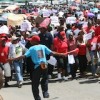
Swazi Government Challenged
Swaziland's autocratic government is facing a growing challenge as a sharp decline in customs revenue forces budget cuts. Thousands of protesters brought the Swazi capital of Mbabane to a standstill Friday as they took to the streets to oppose imminent salary cuts to civil service wages - and demand changes to the country's government.EUROPE: Greek Tragedy, Act II
Fears are growing that in the coming months Greece will face increasing difficulty in responding to its debt obligations, despite the ambitious structural adjustment package that was introduced last year.
AFRICA: World Bank Identifies Five Poor States as “Growth Poles”
Africa faces an unprecedented opportunity to transform itself, says the World Bank. Its new strategy for the continent aims to leverage growing South-South investment to ensure more inclusive development, while identifying five poor states as "Growth Poles".EU: Family Ties with Rich Cousin Germany Turn Bittersweet
In terms of economics, the European Union (EU) includes one country - Germany - that is both friend and foe to the 27-member community, and their relationship has turned markedly bittersweet on the road to recovery after the global economic crisis.BALKANS: Rising Anti-EU Sentiment
Anti-European Union (EU) sentiment is growing across the Balkan countries that have proclaimed membership in the European family of nations as their highest political goal during the past decade. It is caused by prolonged economic hardships that still bite hard, failure of authorities to fight widespread corruption and political deadlock in creating stable governments.
KENYA: Flower Industry Still Not Back in Full Bloom
Kenya’s flower exporters are cautiously optimistic that the prospects for their industry will improve during 2011 after disaster struck in the form of volcanic ash and adverse winter weather conditions in 2010. But prices will be lower as the global economic recession still weighs heavily on their primary market, the European Union.Axe Descends on U.S. Overseas Aid
With U.S. President Barack Obama's release of his Fiscal Year (FY) 2012 foreign affairs budget Monday and a proposal currently in the U.S. House of Representatives for massive cuts in FY 2011 international spending, the fight to sustain U.S. aid abroad is intensifying.US: Prisoners Have No Choice But to Drink Arsenic-Laced Water
When Kern Valley State Prison opened in 2005, the 379 million dollar facility in Central California was hailed as "state of the art". But within weeks of opening, a major problem was discovered: its water was poisoned - containing roughly twice the federally permitted level of arsenic, a known carcinogen.TRADE: “Poor Countries Have Already Given Enough in Doha Round”
South Africa has expressed sharp concern over concerted attempts by leading industrialised countries, particularly the U.S. and the European Union (EU), to extract onerous commitments from developing countries as a condition to concluding the stalled Doha Round trade negotiations.
Q&A: Political Support Needs Financial Backing
"The agenda for women's rights and empowerment in each country must be supported by the political leadership," says Norah Matovu-Winyi, Executive Director, African Women's Development and Communication Network (FEMNET).ECONOMY-LATIN AMERICA: The Downside of Strong Currencies
Latin America returned in 2010 to the strong economic growth it enjoyed over the past decade, after only a minimal slowdown during the global crisis that broke out in 2008. But the weakness of the dollar relative to local currencies is a cause for concern among governments and sectors that produce goods for export.
WORLD SOCIAL FORUM: ‘Signs of Change’ Says Bolivia’s Morales as World Social Forum Opens
Tens of thousands of people marched through the streets of Dakar on Sunday to mark the start of the annual World Social Forum. Activists carried colorful banners denouncing land grabs, restrictive immigration laws, agricultural subsidies in Europe and the U.S. and many other issues.
Q&A: Looking to a World Without LDCs
Maximising time, energy and resources toward improving living conditions for millions of people in the poorest countries of the world - the so-called Least Developed Countries (LDCs) - means that the "business-as-usual" approach must yield to a holistic strategy, says Arjun Karki, a longtime expert on grassroots, democratic peace-building and development.« Previous Page — Next Page »


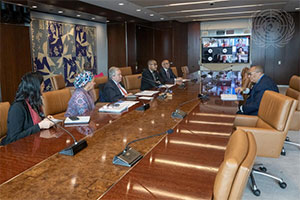 Secretary-General Meets with Members of Debt Expert Group. Credit: UN Photo/Eskinder Debeb
Financial crises are often defined by banking panics, recession, loss of market value, and deflation. Various financial crises at the turn of the 20th century, such as the Asian Crisis of 1997-1998 and the 2007-2008 Global Financial Crisis, have had immense impacts on the world economy. The COVID-19 pandemic also caused a financial crisis when mass lockdowns triggered staggering unemployment rates, a stagnation of economic growth, and led to the 2020 stock market crash. With the Russian invasion of Ukraine, the world has also witnessed a global energy crisis with shortages and increased prices in oil, gas, and electricity markets. According to UNCTAD’s World of Debt 2025, global public debt surpassed $100 trillion in 2024, with developing country debt growing twice as fast as developed economies since 2010. Burdens of debt servicing come with economic slowdowns and demands of austerity from lenders, with some economists arguing that this will lead to a new “lost decade” for the Global South. IPS brings you worldwide coverage of these financial developments and how we should manage these crises.

The Week with IPS

NEXT STOP - SDGs
Tracking global progress towards a sustainable world
Tracking global progress towards a sustainable world
