Languages
Sunday, September 27, 2026



News and Views from the Global South
Financial Crisis
DEVELOPMENT: New Action Programme, and New Name for the Poorest
A new 10-year blueprint for assisting the poorest countries on the planet to join the league of the more fortunate ones was approved Friday at the closing of the Fourth U.N. Conference on the Least Developed Countries (LDC-IV) held May 9- 13 here.
DEVELOPMENT: South-South Axis Strengthens
The glass isn’t exactly half-full, but it certainly is not entirely empty either. Within the broad failure of the weeklong Fourth U.N. Conference on the Least Developed Countries (LDC-IV) in Istanbul that concluded Friday, many delegates are taking heart in a strengthening South-South front that has emerged.
DEVELOPMENT: Market Forces Rise Above Declarations
Upstairs in halls where the conference of the Least Developed Countries (LDCs) is being held, all the right things were being said about the misery of poverty and the virtue of opportunity and development. Several floors below, what are called ‘market forces’ were at work.
LDCs Seek Mini Trade Deal
Leaders from the Least Developed Countries are making a strong push in Istanbul for a mini trade deal for their 48 impoverished nations - ahead of any worldwide agreement under the Doha Round.POPULATION: Promise Rises With a Problem
On the face of it, a rapidly rising population among the Least Developed Countries (LDCs) spells the usual doom about adequate resource distribution. But the least developed are also among the youngest in the world - and well channelled, they can be a valuable asset, United Nations Population Fund (UNFPA) head Babatunde Osotimehin told IPS.ECONOMY: Looking for Development Leverage
Given a few incentives, private companies can be attracted to invest in poor countries that before were not on their radar. Donor countries are betting on this new avenue of public-private-partnerships (PPPs) to channel funds, technology and business knowledge to the 48 Least Developed Countries (LDCs) - the impact can be huge, but many challenges remain.
DEVELOPMENT: Plotting a World Without LDCs
Malawi's gross domestic product has grown by more than six percent in each year since 2005. The country's most recent Welfare Monitoring Survey finds unemployment stands at just one percent. At a glance, Malawi makes being a landlocked, least developed country almost desirable.
AFRICA: Investment Growth Benefiting Only Some Poor States
While foreign direct investment in least developed countries (LDCs) in Africa has risen sharply over the past decade, most of it went to resource-rich economies and had little impact on employment creation.
Q&A: Translating Southern Successes Into LDC Solutions
"In South-South cooperation we are all partners," Josephine Ojiambo, ambassador of Kenya to the U.N. and president of the U.N. General Assembly High-Level Committee on South-South Cooperation, told IPS. "SSC specifically shies away from the donor-client relationship."CUBA: Month-Long Offensive Against Homophobia
LGBT social networks and experts with Cuba's National Sex Education Centre (CENESEX) announced Tuesday that events surrounding the Day Against Homophobia will last a month this year in this Caribbean island nation.ECONOMY: Portugal Negotiates Draconian Bailout Plan
The strangling of the Portuguese economy by the international capital markets has led to what was expected: a bailout with tough conditions that will bring the country to its knees.SPAIN: Madrid Mayor Wants to Sweep Homeless Out of Sight
The mayor of Madrid, Alberto Ruiz-Gallardón, has called for a law for compulsory removals of homeless people off the streets, but this has met with resistance from civil society organisations and has split Ruiz-Gallardo's own People's Party (PP).DEVELOPMENT: Libyan Investments in Caribbean Under Threat
Although located over 9,500 kilometres from the North African country of Libya, the turmoil there has not left the leaders of some small Caribbean nations unscathed.
Developing Nations Protest Move to Slash U.N. Budget
The Group of 77 (G77), the largest single coalition of developing countries, has issued a strong letter of protest against a proposal to cut some 155 million dollars from the U.N.'s 2012-2013 biennium budget beginning next January.Financiers Lock Horns over Macro Policies While Millions Go Hungry
As weeks of what the International Monetary Fund's managing director Dominique Strauss-Kahn called "painful" negotiations over a host of macroeconomic policies drew to a close here Saturday, confusion over coherent strategies for sustainable economic recovery hangs thick in the air.Emerging Markets Clash with Anachronistic Institutions
The first weeks of April have witnessed a maelstrom of multilateralism – from the chambers of the annual Spring Meetings of the World Bank and the International Monetary Fund (IMF) here to the round tables of the BRICS summit in the resort island of the Hainan province in China – leaving in its wake a tome of unanswered questions regarding the contours and configurations of the new world order.WORLD: Finding Funding for LDCs Amidst Global Financial Crisis
Representatives of the world’s poorest nations are preparing to assemble a new "programme of action" to reduce grinding poverty. Among proposals that could emerge from the U.N. Least Developed Countries Conference in Istanbul next month is a global tax on financial transactions that would generate billions of dollars a year for development assistance.
Uganda Latest Govt to Face Down Protests
The Ugandan opposition has announced it will continue protests against rising prices for fuel, food and other essential commodities, undeterred by violent police repression of the previous two days of action.G24 Says Rich Nations’ Policies Hurting Developing World
Finance ministers of the G24 group of developing and emerging countries met on the sidelines the World Bank and International Monetary Fund spring meetings here on Thursday, warning against continued risks to their economies, despite largely "strong" growth as the world climbs out of the global financial crisis.World Bank Chief Calls for Economic Reforms in Mideast
World Bank President Robert Zoellick on Wednesday pressed a Middle East and North Africa in the midst of the "Arab Spring" to promote vibrant civil societies and urged international financial and development institutions to hold its client governments in the region more accountable, if sustainable growth rates and more integrated economies are to take hold.Broken Promises Loom Large in 2012 Election Run-Up
Just days after United States President Barack Obama announced his reelection campaign for the 2012 run-off via a Youtube video, the White House is poised on the brink of its first shutdown in 15 years, with budget wars, an immigration maelstrom and determined opposition to the administration's seeming tolerance for union-busting barricading the path to a second term for the Democrat incumbent.« Previous Page — Next Page »


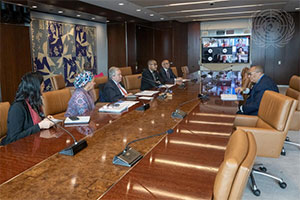 Secretary-General Meets with Members of Debt Expert Group. Credit: UN Photo/Eskinder Debeb
Financial crises are often defined by banking panics, recession, loss of market value, and deflation. Various financial crises at the turn of the 20th century, such as the Asian Crisis of 1997-1998 and the 2007-2008 Global Financial Crisis, have had immense impacts on the world economy. The COVID-19 pandemic also caused a financial crisis when mass lockdowns triggered staggering unemployment rates, a stagnation of economic growth, and led to the 2020 stock market crash. With the Russian invasion of Ukraine, the world has also witnessed a global energy crisis with shortages and increased prices in oil, gas, and electricity markets. According to UNCTAD’s World of Debt 2025, global public debt surpassed $100 trillion in 2024, with developing country debt growing twice as fast as developed economies since 2010. Burdens of debt servicing come with economic slowdowns and demands of austerity from lenders, with some economists arguing that this will lead to a new “lost decade” for the Global South. IPS brings you worldwide coverage of these financial developments and how we should manage these crises.

The Week with IPS

NEXT STOP - SDGs
Tracking global progress towards a sustainable world
Tracking global progress towards a sustainable world
