Languages
Tuesday, November 17, 2026



News and Views from the Global South
Natural Resources
Anti-Castro Cuban Americans Fret Over Drilling Rig
With a giant deep-water oil rig steaming slowly toward the Gulf of Mexico and the waters just off Cuba, the administration of President Barack Obama is being pushed and pulled by different interests over what, if anything, to do about it.MEXICO: Wixaritari Indians Fight Mining in Sacred Desert Site
Some 200 Wixáritari or Huichol men, women and children travelled 20 hours from western Mexico to the capital to defend their sacred ceremonial sites from silver mining.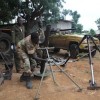
SUDAN: Bombing the Homeless
Hawa Jundi sat on the ground outside a makeshift shelter where she and her family now live. A violent storm was moving in and lightning streaked toward the earth as the wind began blowing hard against the tarpaulin tied to a frame of sticks.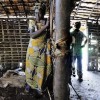
DR CONGO: No End to Mass Rapes: “It’s a Miserable Life”
Angeline Mwarusena, 61, sits on a small wooden bench in front of her hut, head bent, shoulders slumped. Her voice is barely audible. Four years ago, three soldiers from the Democratic Forces for the Liberation of Rwanda (FDLR) entered her home, hit her and raped her repeatedly. One after the other.
PAPUA NEW GUINEA: Women Call the Shots on Mega Copper Mine
Whether the world’s largest open-cut mine on this island territory of Papua New Guinea (PNG) will resume copper and gold production, after being mothballed for 22 years, will depend on how satisfied matrilineal landowners are with the proposals.
Q&A: Sudan and South Sudan Will Resolve Oil Issues
Sudan and South Sudan will eventually agree on a reasonable oil-sharing agreement between the two nations as there has been political will from both sides to find a resolution.
U.S.: Solar Homes Offer New Hope for Renewable Energy
As a light drizzle fell Saturday, U.S. Energy Secretary Steven Chu pointed to solar houses constructed by students on the National Mall park in Washington as evidence that the U.S can compete internationally in the renewable energy market to create jobs and win "the war against climate change".
SOUTH SUDAN: Oil Conflict Threatens to Break Out
The communities living on the South Sudan-Sudan border may face genocide if the conflict between the two countries disputing control of oil reserves is not resolved.
SUDAN: China Could Oil the Peace Process
China, a major player in the oil industries of South Sudan and Sudan, could use its influence to stop the escalating violence between the two countries that has seen the displacement of thousands of people and a reduction in oil production, a United States State Department official says.BRAZIL: Undersea Oil Revives Shipbuilding Industry
So far in Brazil, the "curse of oil" is only apparent in the political sphere, where Congress is divided about how to distribute the country's increasingly large oil earnings. But in the meantime the recent discoveries of offshore reserves in the Atlantic ocean are breathing new life into the shipbuilding industry.
Jail Before Climate-Wrecking Tar Sands, Canadians Say
More than 200 Canadians engaged in civil disobedience, with 117 arrested in Canada's quiet capital city on Monday. The reason? To protest the Stephen Harper right-wing government's open support for the oil industry and expanding production in the climate-disrupting tar sands.Reining in Cowboy Mining Companies
In the seemingly lawless global free-for-all to lay claim to reserves of the world's most precious remaining natural resources, experts warn that "cowboy mining companies" are plundering the earth's riches and leaving little left for the rest.Grassroots Women Urge Rights-Based Development Path
The streets around the headquarters of the world's leading financial institutions – the World Bank and the International Monetary Fund – have been transformed into a canvas over the last three days.
GHANA: The Abandoned Offspring of Oil
Kobina's legs are dappled with scars. He gets them flitting across the beach in Sekondi, in southwest Ghana, slipping in the soot-black mud and clambering over pirogues slippery with fish guts, only to sell a sachet of water or a freshly peeled orange to fishermen working on the shore.Post-War Libya Urged to Create New Human Rights Regime
As the United Nations celebrated the birth of a new democratic Libya, the National Transitional Council (NTC), which has been duly recognised as the legitimate government, is faced with new political demands - even before it could get off the ground.
Global Gold Rush Brings Heightened Scrutiny
Bolstered by gold prices hovering above 1,800 dollars an ounce and a global economy slowly recovering, exploration activity for the precious metal in 2010 once again rebounded. Yet, with this surge comes the attendant scrutiny by activists, investors, and the media into the industry's human rights and environmental records abroad.U.S.-SAUDI ARABIA: Agreeing on Less and Less
Accumulating strains between the United States and Saudi Arabia are steadily weakening one of the world's longest lasting and most effective bilateral alliances, according to observers here.U.S.: Citizens Ramp Up Battle Against Fossil Fuel Industry
The fight against oil and gas giants is heating up in the U.S., with new waves of protest and civil disobedience springing up across the country.CANADA: Native Lands Ruling Opens Up New Questions
As Canada's aboriginal community celebrates last month's milestone legal ruling regarding clear-cutting in Ontario and the forestry sector mulls its future strategy, discussions are taking place about how to carry out an impact assessment evaluating damage incurred by decades of industry encroachment on traditional lands and forests.
/CORRECTED REPEAT*/: U.S. Awash in Oil and Lies, Report Charges
With four times as many oil rigs pumping domestic oil today than eight years ago and declining domestic demand, the United States is awash in oil.Obama Challenged to Stand Up to Big Oil Lobby
The United States' biggest environmental groups put aside their differences last week to make an urgent intervention on the country's addiction to oil. The first step on the long road to recovery, they say, is to stop the proposed construction of the Keystone XL pipeline that will "mainline" the world's dirtiest oil from northern Canada into the U.S. heartland.« Previous Page — Next Page »


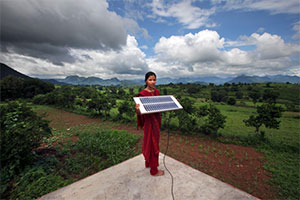 Bringing clean energy to rural India. Credit: Abbie Trayler-Smith / Panos Pictures / Department for International Development
Large reserves of oil, gas and minerals in developing countries generate opulent revenues. They could be used to stimulate economic growth and reduce poverty, but often result in environmental destruction and conflict, benefiting large companies and corrupt governments. Furthermore, competition over natural resources often manifests through geopolitical conflict. For example, before the US-Iraq war, Iraq’s domestic oil industry was nationalized. With US aggression came weakened Iraqi institutions and foreign intervention, thus eventually leading to the privatization of Iraqi oil, leaving the industry now largely dominated by Western companies. As another example, China’s rising investments within the lithium sector in South America are increasing the US-China rivalry across the Western Hemisphere. Notably, Bolivia has the largest reserves of lithium in the world, and the nation’s state-owned lithium extraction firm recently signed a contract with China’s CBC Consortium, while rejecting the entry of Western firms into the nation. In Bolivia’s case, rising Chinese investment in the nation’s lithium sector also raises concerns about environmental sustainability and the sociopolitical rights of Indigenous communities. More broadly, Sub-Saharan Africa holds nearly 30% of global reserves of critical minerals required for low-carbon technologies. Despite this, the region attracts less than 10% of global exploration investment, depicting a critical barrier to both the clean energy transitions and Sub-Saharan Africa’s economic development. Furthermore, resource wealth continues to fuel conflict like Sudan’s civil war, which has led to 9.1 million internally displaced people and is intensely connected to competition over gold, water, and agricultural land. IPS covers news about major oil, gas, and mining projects, their effects on the environment and local communities, and the ideas and actions of the interest groups involved.

The Week with IPS

NEXT STOP - SDGs
Tracking global progress towards a sustainable world
Tracking global progress towards a sustainable world
