Languages
Wednesday, October 28, 2026



News and Views from the Global South
Natural Resources

World Bank and Other MDBs Need to Tackle Rich Country GHG Emissions to Support Development
The World Bank and other multilateral development banks recently have begun reconsidering their self-imposed restrictions on financing fossil fuel projects. This change is being prompted in part by the new U.S. administration and is also supported by developing country experts. Yet, the reality remains that greenhouse gas emissions (GHG) from fossil fuels, and specifically the climate change they induce, can severely undermine multilateral development bank projects and overall developing country growth prospects.
Guiding Disaster Risk-Reduction Investments Through AI-Powered Tools
The theme of this year’s International Day for Disaster Risk Reduction, “Fund Resilience, Not Disasters,” called for the urgent need to shift from reactive spending on recovery to proactive investment in disaster risk reduction.
Science-Informed Policy Action Key to Biodiversity Conservation
Global biodiversity is disappearing at breakneck speed and, in the process, threatening the future of humanity. The loss is not a future threat but a present crisis that Dr. Luthando Dziba, the new Executive Secretary of the Intergovernmental Platform on Biodiversity and Ecosystem Services (IPBES), believes can be tackled with science-based policy action.
Belarus Prisoner Release a Diversion, Say Rights Activists
As Belarusian president Alexander Lukashenko continues to pardon political prisoners in an apparently increasingly successful attempt to improve diplomatic relations with the US, rights groups have warned the international community must not let itself be ‘tricked’ into thinking repressions in the country are easing.
From Storm to Strength: Odisha’s “Zero Casualty” Model for Community-Centered Disaster Resilience
South Asia is home to nearly two billion people and ranks among the most disaster-prone subregions in Asia and the Pacific. Every year, millions face exposure to floods, cyclones and other extreme events. The Bay of Bengal alone accounts for nearly 80 per cent of global cyclone-related deaths, with storms striking Bangladesh, India and Sri Lanka with growing frequency.
Weaving Wisdom and Science: Pacific Voices Call for Ocean Protection
In the packed conference hall of the Heritage Hotel, the sound of Pacific voices filled the air—not just through speeches, but in song, rhythm, and poetry. The Dreamcast Theatre Performing Arts group opened the Second Pacific Island Ocean Conference with an evocative performance, reminding leaders and practitioners why they had gathered: to listen. To listen to science. To listen to communities. To listen to the ocean itself.
The Ranch Fighting to Save Nigeria’s Endangered Drill Monkeys
For the past 23 years, Gabriel Oshie has started his mornings at Drill Ranch in the Afi Mountain Wildlife Sanctuary, Boki, Cross River state, southern Nigeria.
Drought-hit Tanzania’s Villages Confront Harshest Reality of Climate Change
The dust was already swirling when Asherly William Hogo lifted himself from a makeshift bed before dawn. The 62-year-old pastoralist, lean from a lifetime of walking these plains, slipped into his sandals and stepped outside. Stars glittered over Dodoma, but the air was warmer than it used to be, Hogo swears. He whistled for his cows. Years ago, this hour meant an arduous trek to distant waterholes.
It’s Past Time to Make Polluters Pay
I was 16 years old when Super-Typhoon Haiyan tore through my community in Eastern Samar in the Philippines. It remains one of the deadliest storms in history, killing more than 6,000 people and displacing millions. My community lost everything: Loved ones, family homes and land, our ways to earn a living and rebuild, and our sense of safety all vanished overnight.
From Reforestation to Low-Emission Food, Climate Action Starts with Seeds
When you think of climate action, images of wind farms, solar panels, bicycles or electric vehicles may come to mind. Perhaps lush forests or green landscapes. What you may not think of is the humble seed.
An Overdose of Renewables, New Energy Risk in Brazil
Wind and solar power sources, essential for the energy transition to mitigate the climate crisis, have become a risk of power outages in Brazil.
UN80 – Is it time for the Re-emergence of the Global Ministerial Environment Forum?
“We shall have to do more with less” was the summary message from a meeting in Oslo, Norway, this spring (2025), where the Minister of Foreign Affairs of Norway, Espen Barth Eide and Guy Ryder, Under-Secretary-General for Policy at the UN and Chair of UN80, both spoke about UN80 and the necessity to reform the UN.
Frontline of a Planetary Emergency: Africa Demands Climate Justice and Action
The room at the Swiss Inn Nexus Hotel in Bole was silent but tense as Sunita Narain, one of the world’s most influential environmental voices, fixed her gaze on rows of African journalists, scientists, and policymakers. Her tone was gentle, but the words cut deep.
Better Use of the World’s Expertise in Navigating the Polycrisis
Other articles in this series on clustering conventions that are addressed by the Triple Environmental Crisis of pollution (Stanley-Jones), biodiversity (Schally) and climate change (Azores) I have touched on the idea of clustering not only conventions but the science-policy bodies established separately to serve them. We address the question of the negative consequences of maintaining status quo and identify how “consolidating knowledge” might make a difference.
Mexico Experiments With Residential Solar Panels, But They Are Still Insufficient
Over the past four months, Mexican researcher Nicolás Velázquez has paid around US$23 for electricity, thanks to the photovoltaic system installed in his home in the northern city of Mexicali.
‘Angola produces large quantities of oil and diamonds, yet most people don’t see the benefits’
CIVICUS discusses recent protests in Angola with Florindo Chivucute, founder and executive director of Friends of Angola, a US-based civil society organisation established in 2014 that works to promote democracy, human rights and good governance in Angola.

Kerala’s Human-Elephant ‘Conflict’: Time To Understand a Complex Relationship
In the early part of this year, two deaths in Kerala garnered major media attention. A farmer in Wayanad and a female plantation worker in Idukki were killed in two separate events, within a matter of a few days, by wild elephants. Arikomban, another wild elephant, has become a media favorite recently due to his brushes with human settlements near his habitat. Named so because of his love for ari (rice), the elephant had been relocated from Kerala to Tamil Nadu in 2023 following constant protests from people who also claimed him to be ‘life-threatening.’ Kerala's news outlets widely covered Arikomban's relocation.
The Debacle of the Global Plastics Treaty Negotiations –& Some Ideas for a Way Forward
The debacle that was the latest round of negotiations for a global treaty on plastics (including in the marine environment); known as “INC 5.2” has already been written about at length by many colleagues on all sides of the issues. Despite all the very informative posts, articles, and other analyses, I believe I have several key observations to make, particularly about the process to-date.
Chile Aims to Become a Latin American Hub for Data Storage and Transmission
Chile wants to be a hub in Latin America in data storage and transmission by developing data centers, leveraging its wealth of renewable energy, and its optimal digital interconnection.
UN 80 – Clustering the Climate Conventions
The international governance of environmental challenges has progressively evolved over the past decades, transitioning from isolated treaties addressing specific issues to a complex web of multilateral agreements that aim to foster sustainable development and environmental integrity.
Toward Enhanced Synergies among Biodiversity Related MEAs: Addressing Fragmentation with Strategic Coordination
The governance of nature and biodiversity has evolved from early 20th-century treaties on hunting and migratory species to today’s complex web of multilateral environmental agreements.« Previous Page — Next Page »





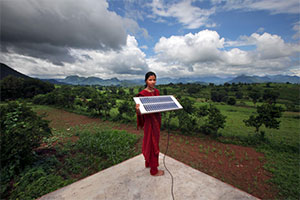 Bringing clean energy to rural India. Credit: Abbie Trayler-Smith / Panos Pictures / Department for International Development
Large reserves of oil, gas and minerals in developing countries generate opulent revenues. They could be used to stimulate economic growth and reduce poverty, but often result in environmental destruction and conflict, benefiting large companies and corrupt governments. Furthermore, competition over natural resources often manifests through geopolitical conflict. For example, before the US-Iraq war, Iraq’s domestic oil industry was nationalized. With US aggression came weakened Iraqi institutions and foreign intervention, thus eventually leading to the privatization of Iraqi oil, leaving the industry now largely dominated by Western companies. As another example, China’s rising investments within the lithium sector in South America are increasing the US-China rivalry across the Western Hemisphere. Notably, Bolivia has the largest reserves of lithium in the world, and the nation’s state-owned lithium extraction firm recently signed a contract with China’s CBC Consortium, while rejecting the entry of Western firms into the nation. In Bolivia’s case, rising Chinese investment in the nation’s lithium sector also raises concerns about environmental sustainability and the sociopolitical rights of Indigenous communities. More broadly, Sub-Saharan Africa holds nearly 30% of global reserves of critical minerals required for low-carbon technologies. Despite this, the region attracts less than 10% of global exploration investment, depicting a critical barrier to both the clean energy transitions and Sub-Saharan Africa’s economic development. Furthermore, resource wealth continues to fuel conflict like Sudan’s civil war, which has led to 9.1 million internally displaced people and is intensely connected to competition over gold, water, and agricultural land. IPS covers news about major oil, gas, and mining projects, their effects on the environment and local communities, and the ideas and actions of the interest groups involved.

The Week with IPS

NEXT STOP - SDGs
Tracking global progress towards a sustainable world
Tracking global progress towards a sustainable world
