Languages
Tuesday, November 17, 2026



News and Views from the Global South
Economy & Trade

From Cocoa to Chocolate, Made With Love in Africa
A premium chocolate maker in São Tomé and Príncipe is on a drive to promote the taste for "made in Africa" chocolate, and tap into a $100 billion global indulgence associated with Valentine’s Day.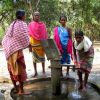
Are Economic Systems Sexist?
Women’s unpaid care work is the hidden engine that keeps the wheels of our economies, businesses, and societies moving, yet it is not accounted for.
Intellectual Property Raises Costs of Living
Many medicines and medical tests are unaffordable to most of humanity owing to the ability of typically transnational pharmaceutical giants to abuse their monopoly powers, enforced by intellectual property laws, to set prices to maximize profits over the long-term.
Inequalities in Human Development in the 21st Century
Inequalities. The evidence is everywhere. And although they may be hard to measure and summarize, there is a sense in many countries that many are approaching a precipice beyond which it will be difficult to recover.
Synergy with Hydropower Plants Boosts Biogas Production in Brazil
Fomenting biogas production among agricultural producers may seem at first glance to be a distraction from the purpose of Itaipu, the giant hydroelectric power plant shared by Brazil and Paraguay, but in fact it is part of their energy business strategy.
Could Africa’s Marketplace Platforms Help Upskill a Generation for the Digital Age?
By 2030, sub-Saharan Africa will be home to more than a quarter of the world’s population under 25. Between 15 and 20 million young people will enter the African workforce each year, joining the ranks of the millions of currently under- and unemployed people searching for better livelihoods.
Pulses for a Sustainable Future
Reducing poverty and inequalities, eliminating hunger and all forms of malnutrition and achieve food security for all – these are some of the most important objectives of the Sustainable Development Goals. Still, the rate of poverty and inequalities is increasing and over 820 million people are going hungry. In addition, 2 billion people in the world are food insecure with great risk of malnutrition and poor health. This alarming situation is further aggravated by current trends such as the rate of population growth, impacts of climate change, loss of biodiversity, soil degradation and many others. Transition to more sustainable food systems can provide adequate solutions to all these challenges. Pulses could play an important role in this transition, having nutritional and health benefits, low environmental footprint, and positive socio-economic impacts as well. What is required to promote and support the production and consumption of more pulses? This question is particularly relevant now, since 10 February is the World Pulses Day.
Strengthening Caribbean Regional Integration
The Caribbean economies have long recognized the value of working together. Improving regional integration—for instance, through more intraregional trade and policy coordination—can help the region’s small-size economies build greater resilience and scale, as well as enhance bargaining power on the global stage.
World Drains Away Valuable Energy, Nutrients & Water in Fast-Growing Wastewater Streams
Vast amounts of valuable energy, agricultural nutrients, and water could be recovered from the world’s fast-growing volume of municipal wastewater.
Venezuela: Violent Abuses in Illegal Gold Mines
Residents of Venezuela’s southern Bolívar state are suffering amputations and other horrific abuses at the hands of armed groups, including Venezuelan groups called “syndicates” in the area and Colombian armed groups operating in the region, both of which exercise control over gold mines, Human Rights Watch said Tuesday, February 4.
Africa Must Prioritise Upskilling its Unemployed Youth, Development Bank Urges
Africa’s inability to produce adequate skills is negatively impacting its economic growth.
Financialization Increases Inequality
Financialization has worsened inequality through various channels, including macroeconomic policies. For example, quantitative easing and low, if not negative interest rates have fuelled credit and asset price bubbles, while fiscal spending cuts have adversely affected those depending on government assistance.
Women & Girls Up Front — the Humanitarian Response in Democratic Republic of Congo
Eleven-year-old “Anne” went to a health facility with her mother in the conflict-affected province of Ituri, in northeastern Democratic Republic of the Congo. At first, she could barely tell her story.
A Bigger Impact in a Smaller World: The China Situation
We are now living in a hyper communicative world where news does travel faster than lightning. Boundaries, borders, geographical and time differences have become next to obsolete in today’s speed driven world. At any point in time people, news and local occurrences can influence internationally without much local isolation. Along with the advantages of technology, communications and connections world is also facing new challenges that are proportionally evolving with advancement. One region affected today is affecting the global economy and population in frenzy of minutes, hours and days.
Digital Civil Registration Can Reduce the Number of ‘Invisible’ People and Bring Kenya Closer to the SDGs
A recent opinion piece in the New York Times titled, “Kenya’s New Digital IDs May Exclude Millions of Minorities” raises an issue that the UN is passionate about: that the pursuit of sustainable development should leave no one behind.
The Role of Sherpas in Nature Conservation as Guardians of the Himalayas
 Since I was a kid, I grew up with adventures and stories of famous characters of the books of Jack London: White Fang, Make a Fire… and the incredible ode to perseverance of Martin Eden.
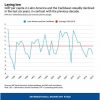
New Challenges to Growth in Latin America & the Caribbean
Economic activity in Latin America and the Caribbean stagnated in 2019, continuing with the weak growth momentum of the previous five years and adding more urgency and new challenges to reignite growth.
‘Organic is the Future’
Vandana Shiva, a pioneer of organic farming in India, is incensed by the 2019 draft law to compulsorily register all seeds used by farmers. On a wintry afternoon, at her farm Navdanya in the Himalayan foothills, the noted ecologist spoke on the future of the organic farming movement in India. Excerpts:
Oil-rich Gulf Turns to Renewable Energy
The increased frequency of climate-induced weather extremes and public opinion pressure are forcing even major fossil fuel exporting countries in West Asia to make a big push towards renewable energy.
Kenya Leapfrogging on 4 SDGS- Building Bridges Between Silicon Savannah and Silicon Valley
One year ago, the UN began implementing reforms meant to make it more effective in delivering on sustainable development. Now, with the start of 2020, the global body has declared this as the "decade of action" to turn the ambitious Sustainable Development Goals (SDGs) into a living reality for all humanity. But what does this look like, on the ground?
Exchange Rate Undervaluation for Export-Led Growth Promotion
One mercantilist view is that exchange rate undervaluation – e.g., via accumulation of foreign exchange reserves in China’s case – is ‘industrial policy’ to promote export-led growth, benefiting producers of exports while discouraging imports.« Previous Page — Next Page »


 UN Commission on International Trade Law Holds Colloquium on Harmonizing Law in Age of Digital Trade and Finance. Credit: UN Photo/Manuel Elías
Trade has historically been a geopolitical tool that can both be used to propel development as well as entrench inequalities. In various nations in East Asia and Latin America, increased trade, as often seen in export booms, has allowed them to achieve influential standings within the global economy. On the other hand, many low-income countries in Sub-Saharan Africa, Asia, and Latin America struggle to maintain a robust trade performance, and oftentimes are subjugated to exploitative trade dynamics through intense extraction of their natural resources. In recent decades, international trade has reached a new era as emerging economies across the world are rising in economic preeminence. Stable international trade is crucial to world peace as global interconnectedness facilitates reliable diplomacy. Nevertheless, significant challenges are on the rise. Notably, a major wave of United States tariff escalations in January 2025 lifted US import taxes to their highest level since the 1930s, changing market dynamics and forcing renegotiations with global trading partners.These articles are aimed at informing readers about the complexities of trade and its varying effects on development, with a special focus on the consequences of the global economic crisis, the potential of fair trade and the gender implications of trade policies.
Updated by Yilan Batista and Shuli Wong August 2026

The Week with IPS

NEXT STOP - SDGs
Tracking global progress towards a sustainable world
Tracking global progress towards a sustainable world
