Languages
Tuesday, November 17, 2026



News and Views from the Global South
Economy & Trade

CORRECTED VERSION: Stock Market Bubble Threat
The US is currently still in a stock market bubble which, if history is any guide, is likely to end, as argued by Thomas Palley. While President Trump would, of course, like to sustain it to strengthen his November re-election prospects, the Covid19 black swan is already showing signs of pricking the bubble
Brazil: Low on FSI but Much to Offer the South
Brazil is one of the world’s largest producers and exporters of coffee, sugar, beef, soya, cotton, and ethanol but due to its environmental and water footprint it ranks low on sustainability. Brazilian agriculture’s contribution to the loss of rainforest is a case in point – the Amazon lost as much as 3,465 square miles of forest due to fires last year – triggering widespread international outrage over the lax environment policies that allowed all of this to happen. Its large commercial cattle herd is also a source of greenhouse gas emissions. Brazil’s challenge is to make its model of agricultural development more environment-friendly.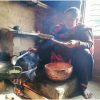
Air Pollution in South Asia: Biomass Burning Emissions & its Impact
A young adult man requires 15 m3 or 15 kg of air, 1.5 liters or 1.5 kg of water and 0.75 kg of solid food every day. This indicates around 87% of our everyday basic requirement is air.
An Ambitious Year for Climate Action Is a Big Year for Women’s Empowerment
This year, the Paris Agreement’s effectiveness as a global response to the climate crisis is being tested as governments are preparing to submit more ambitious national targets for mitigation and adaptation.
On 8th March – and All the Other Days: Each for Equal
Development efforts over the past two decades have seen millions of people freed from poverty and hunger, and inequalities reduced worldwide. This is an undoubted achievement, but is no reason for complacency. The fact is that inequality between men and women, between boys and girls, remains not only a social justice concern, but one of the impediments on development in countries across Africa and beyond. Addressing such inequalities is a duty for all of us, and one which is at the heart of the theme of this year’s International Women’s Day on 8th March: Each for Equal.
Slavery Modernises, Adapts to Stay Alive in Brazil
"Slave labour is not declining; it has taken on new forms and is growing; it expanded to new sectors where it did not previously exist," said Ivanete da Silva Sousa, an activist in the fight against modern-day slavery in northern Brazil.
Many Milestones but Painfully Slow Progress Towards Gender Equality
The narrative surrounding women’s rights in 2020 carries much hope and possibility. A new decade is ushering in important anniversaries and milestones: 25 years since the Beijing Platform for Action, 110 years since the birth of International Women's Day and the 10-year countdown to achieve the UN Sustainable Development Goals.
Coronavirus Exposes Global Economic Vulnerability
As the outbreak of the novel coronavirus COVID-19 threatens a global pandemic, major stock markets around the world have suffered their worst performance since the 2008 financial crush.
Personal Conviction Versus Fandom: The Case of Mitt Romney
The great American impeachment show has ended not with a bang, but with a whimper. The dirt was washed away from President Trump, the perfect Teflon Guy. Maybe his invulnerability comes from the fact that he appears to be more of a brand than a real person, adapted to a frame of mind that increasingly dominates social media – cheap entertainment, shallowness, vulgarity, invectives, and catchy phrases without support in well-founded facts. Trump is all and nothing, a shape shifting trickster pretending to be the role model for voiceless masses.
Mexico’s Battle with Obesity
Paradoxically, when the number of people suffering from undernourishment or hunger has risen in the world, so, too, have those afflicted by overweight and obesity. Latin America’s second largest economy, Mexico, for instance, is currently battling one of the world’s largest epidemics of obesity and its success is bound to be emulated by countries of the South. The numbers involved are staggering. The director-general of the National Institute of Public Health, Dr Juan Rivera told the Financial Times that “seventy five percent of adults and 35 percent of children and adolescents are overweight or obese… The State has a duty to protect public health.”
Government of Kenya, United Nations and Foreign Missions to Kenya Visit the Frontier Counties of Kenya
From 26 February to 28 February 2020, the United Nations in Kenya supported a joint visit to the Frontier Counties of Kenya.
The Italian Pyramid: Scientific Observatory at the Top of the World
 Hello! Are you Italian?
No, I’m from Nepal.
Oops.
Kaji Bista is the staff manager of the Ev-K2-CNR’s innovative Pyramid International Laboratory/Observatory (known as the Italian Pyramid) at 5,050 m a.s.l. located in Lobouche.

Climate-Smart Agriculture means More Time for Eswatini Women Farmers
Aside from the seven hours Mantfombi Msibi (63) would spend daily during the Eswatini farming season planting, applying herbicides and weeding her 1.2-hectare maize field, she would also spend E1 750 ($125) on tractor services. It was a huge cost of both time and money. But this season, Msibi will be benefiting from climate-smart farming technology that has opened up a new world of farming to her, saving her time in the process.
Lucky Trump Looking Smug
Meeting the President of the Republic of Korea in September 2019, President Donald J Trump bragged that the “US economy is the envy of the world”. Trump reiterated such claims in his State of the Union address in early February, hailing his own policies with typical humility.
Three Financial Firms Could Change the Direction of the Climate Crisis – and Few People Have Any Idea
A silent revolution is happening in investing. It is a paradigm shift that will have a profound impact on corporations, countries and pressing issues like climate change. Yet most people are not even aware of it.
Preserving World’s Biodiversity: Negotiations Convene at FAO Headquarters
“The world out there is watching and waiting for results,” Elizabeth Maruma Mrema warns while talking to IPS regarding the preservation of biodiversity of our planet.
India’s Orange Farmers Search for Sustainable Agriculture
Hillol Datta, 26, travelled for two days from Kolkata to Jampui Hills – a picturesque hill station in the north eastern province of India – to see its fruit-laden orange orchards. However, after driving for several hours, all the young traveller saw were bald patches along the hill slopes and scattered rows of areca (nut) palm trees.
Global Economy Still Slowing, Dangerously Vulnerable
In an annual ritual early in the year, most major economic organizations have released forecasts for the global economy in 2020. Incredibly, almost as a reminder of where financial power resides in this day and age, the International Monetary Fund (IMF) released its forecasts at the World Economic Forum’s 50th annual meeting in Davos.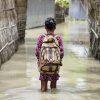
Tackling Climate Change and Preserving the Water Body: A Bangladeshi Perspective
For any riverine country, the state of the water body around big cities and conditions of major rivers hold a leadership position in the overall climate effects and how the water body is protected and preserved impacts the entire economy and living standards of that country. Bangladesh is renowned for the geomorphic features that include massive rivers flowing throughout the country. Within the border of Bangladesh lie the bottom reaches of the Himalayan Range water sources that flow into the Bay of Bengal totaling the number of rivers by a count of 700. The length of river bodies is about 24,140 km. There are predominantly four major river systems: the Brahmaputra-Jamuna, the Ganges-Padma, the Surma-Meghna, and the Chittagong Region river system. The Brahmaputra is the 22nd longest (2,850 km) and the Ganges is the 30th longest (2,510 km) river in the world. (1) The river system works as a backbone for agriculture, communication, drinking water source, energy source, fishing and as the principal arteries of commercial transportation in Bangladesh. During the annual monsoon period between June and October, the rivers flow about 140,000 cubic meters per second and during the dry period, the numbers come down to 7000 cubic meters per second.
Why Trade in Services Matters for Development and Inclusiveness in Africa
The rise of the services economy around the world represents a profound transformation that offers significant opportunities for countries' sustainable development strategies.
Coming Down the Davos Mountain with a Gender Lens
In a recent report by World Economic Forum (WEF) shows women suffer a “triple whammy” in the workplace. Without drastic action, gender parity will take more than a lifetime to achieve. This is the challenge that Katja Iversen, President and CEO of Women Deliver is staring down.« Previous Page — Next Page »


 UN Commission on International Trade Law Holds Colloquium on Harmonizing Law in Age of Digital Trade and Finance. Credit: UN Photo/Manuel Elías
Trade has historically been a geopolitical tool that can both be used to propel development as well as entrench inequalities. In various nations in East Asia and Latin America, increased trade, as often seen in export booms, has allowed them to achieve influential standings within the global economy. On the other hand, many low-income countries in Sub-Saharan Africa, Asia, and Latin America struggle to maintain a robust trade performance, and oftentimes are subjugated to exploitative trade dynamics through intense extraction of their natural resources. In recent decades, international trade has reached a new era as emerging economies across the world are rising in economic preeminence. Stable international trade is crucial to world peace as global interconnectedness facilitates reliable diplomacy. Nevertheless, significant challenges are on the rise. Notably, a major wave of United States tariff escalations in January 2025 lifted US import taxes to their highest level since the 1930s, changing market dynamics and forcing renegotiations with global trading partners.These articles are aimed at informing readers about the complexities of trade and its varying effects on development, with a special focus on the consequences of the global economic crisis, the potential of fair trade and the gender implications of trade policies.
Updated by Yilan Batista and Shuli Wong August 2026

The Week with IPS

NEXT STOP - SDGs
Tracking global progress towards a sustainable world
Tracking global progress towards a sustainable world
