Languages
Monday, November 9, 2026



News and Views from the Global South
Editors' Choice

Trump-Mideast: Much More than a ‘Kiss of Death’ to Palestinians
US President Donald Trump’s decision to recognise Jerusalem as Israel’s capital does not represent only a ‘kiss of death’ to the two-State solution, but also a strong blow in the face of 57 Muslim countries, let alone igniting fire in this easily inflammable region, providing more false arguments to criminal terrorist groups to escalate their brutal attacks, in addition to taking a step further in Washington’s new conflict with Iran and the ‘restructuring’ of the Middle East.
Post-Nuclear Nightmares Still Linger Over Pacific Islands
The Pacific islands have long remained victims of nuclear crimes – but the perpetrators, three of the world’s major powers with permanent seats in the UN Security Council, never paid for their deadly sins.
Resistance to Antibiotics: The Good, the Bad and the Ugly
The growing resistance to antibiotics and other antimicrobials due to their overuse and misuse both in humans and animals has become an alarming global threat to public health, food safety and security, causing the deaths of 700,000 people each year. This is a fact.
Indigenous People, Guardians of Threatened Forests in Brazil
Indigenous peoples, recognised as the best guardians of the world's forests, are losing some battles in Brazil in the face of intensified pressure from the expansion of agriculture, mining and electricity generation.
Lawmakers Impose Gender Parity in Argentina’s Congress, By Surprise
It was an unexpected move by a group of women in the lower house of the Argentine Congress. At one o'clock in the morning, during a long parliamentary session, they demanded the approval of a stalled bill for gender parity in political representation. There was resistance and arguments, but an hour later, the initiative became law by a large majority.
One Third of Food Lost, Wasted – Enough to Feed All Hungry People
Believe it or not, the way to eradicate hunger from the face of the Earth is as feasible as it is handy. In fact, the current loss and waste of one-third of all food produced for human consumption would be just enough to feed the nearly one billion people who go to bed hungry every single night.
Women Activists are Targets of Gender-Biased Violence
Veiled and direct threats, defamation, criminalisation of activism, attacks on their private lives, destruction of property and assets needed to support their families, and even murder are some forms of gender violence that extend throughout Latin America against women defenders of rights.
Foreign Investment Expands in Cuba…Despite Everything
“Maybe many of us thought that this project was a dream six years ago, but not anymore. The geography has completely changed, because of everything that has been built and the investments that have been approved," said Nathaly Suárez, director of Construction Management at the Mariel Special Development Zone (ZEDM).
Will DNA Data Base Deter Sexual Abuse at UN?
The United Nations is fighting a losing battle against the widespread – and continued – sexual exploitation and abuse (SEA) by UN peacekeepers and civilian staff resulting in relatively few convictions amidst daunting problems in tracking abusers and nailing down paternity claims.
Climate-Smart Agriculture in Vanuatu: Learning to Grow
It’s been dry in Isavai on the island of Aniwa for last couple of years – ever since Tropical Cyclone Pam tore through Vanuatu in March 2015, leaving an El Nino-induced drought in its wake. A dry phase is bad news for farmers anywhere, but in Aniwa, where there is no constant water source and the only water supply comes almost exclusively from harvesting rain into tanks, it’s disastrous.
White Elephants and the Urban Challenges of Brasilia
Two white elephants - a huge football stadium that draws almost no fans and an empty 16-building complex that was to be the new headquarters of the district government – reflect Brasília’s challenges as a metropolis, beyond its role as the capital of Brazil.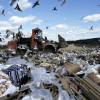
Desperate Need to Halt ‘World’s Largest Killer’ — Pollution
Now that the lights of the UN climate change summit’s meeting rooms have been turned off in Bonn, after a week of intense negotiations and some partial results, another major environmental event is now scheduled in Nairobi, this time to search for ways to halt the world’s major killer – pollution.
The World is Losing the Battle Against Child Labour
The IV Global Conference on the Sustained Eradication of Child Labour, which drew nearly 2000 delegates from 190 countries to the Argentine capital, left many declarations of good intentions but nothing to celebrate.
Climate Change: The World’s Poorest Will Judge us by Action
Two years ago, 197 parties came together in Paris and agreed to the historical Paris Framework. Since that December 2015, we all have seen countless pictures of utterly devastating floods, wildfires, hurricanes happening more and more frequently all over our planet mainly affecting the poorest among us.
Good to Know (Perhaps) That Food Is Being ‘Nuclearised’
It might sound strange, very strange, but the news is that scientists and experts have been assuring, over and again, that using nuclear applications in agriculture --and thus in food production—are giving a major boost to food security. So how does this work?
Coal Pollution Continues to Spread in Latin America
Despite growing global pressure to reduce the use of coal to generate electricity, several countries in Latin America and the Caribbean still have projects underway for expanding this polluting energy source.
Vanuatu: Community Farms Helping Small Islands Adapt to Climate Change
Here in Vanuatu, the ocean has been getting warmer and more acidic. Scientists are predicting that cyclone patterns will change, we’ll see heavier rainfalls, a wetter wet season and a drier dry season. We’re already seeing the sea rising six millimeters per year in the capital, Port Vila; higher than the global average.
How to Ensure Farming is More Than Just a Footnote in Climate Talks
If change comes from within, then climate action in agriculture must logically start with farmers. They need to find ways to adapt to and mitigate climate change. But when that involves 800 million of the world’s poorest people, they are going to require systematic and dedicated support.
The Harsh Plight of 152 Million Child Labourers
While trillions of dollars are being spent on exploring remote galaxies, Planet Earth is still home to harsh realities that could be easily –and much less expensively—resolved. One of them is that worldwide 152 million children are currently victims of child labour.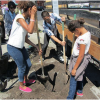
How US Is Taking Climate Action Without Trump
Even after President Trump announced his intention to pull the United States out of the Paris Agreement, much of the country is moving forward with climate action anyway. According to new analysis, more than 2,500 non-federal actors representing more than half the U.S. economy—including cities, counties, states, businesses and more—have pledged their support for the Paris Agreement goals. If these actors were their own country, they’d be the world’s third-largest economy.
Climate Change Poses Alarming Threat to Food Security in Pacific Islands
A high-level meeting of political leaders -– hosted by the Food and Agriculture Organisation (FAO) -– sounded an ominous warning: that climate change poses an “alarming threat to food systems and food security in the Pacific islands.”« Previous Page — Next Page »





The Week with IPS

NEXT STOP - SDGs
Tracking global progress towards a sustainable world
Tracking global progress towards a sustainable world
