
Monday, October 19, 2026



News and Views from the Global South
Combating Desertification and Drought
World Environment Day, 2026

2025 was one of the three hottest years ever recorded. The years from 2015 to 2025 were the hottest eleven years on record.

Delegates Push for Greater Accountability, Community Inclusion as GEF Crosses Major Environmental Milestones
While the Global Environment Facility (GEF) said its eighth replenishment cycle (GEF-8) was about to exceed environmental targets for biodiversity protection, marine conservation, ecosystem restoration, and reducing greenhouse gas emissions, governments and civil society groups called for stronger safeguards to ensure that local communities, Indigenous Peoples, and smaller implementing agencies are not left behind as funding mechanisms become more complex.
GEF Council Welcomes New Green Pledges, Highlights Old Access Barriers
The 71st Council meeting of the Global Environment Facility (GEF) opened today amid a sharp divide, with donor nations urging broader and increased funding commitments, while developing countries called for more equitable and accessible pathways to environmental finance.
“The Heat Is No Longer Distant: A Global Climate Reckoning“
‘As record heat sweeps the world, the climate crisis is no longer a warning for the future, but a reality of the present.’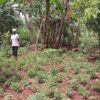
From Seed to Canopy: How a GEF-Funded Smallholder Project is Restoring the Environment, Building Livelihoods
As 52-year-old Alice Onyango walks through her farm in Siaya county, Kenya, you can tell she is proud of her trees, as some tower over her, providing her with shade, while others seem ready to provide her with fruit for the market.
‘Do More With Less’: GEF CEO Claude Gascon on Speed, Scale and Reform
As governments prepare for the Eighth Assembly of the Global Environment Facility (GEF) – scheduled to be held from May 30 to June 6 in Samarkand, Uzbekistan – the stakes are unusually high.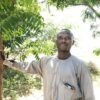
Ambitious Great Green Wall Shows Slow, Steady Progress in Strengthening Landscapes, Improving Livelihoods
In 2021, Gadeja Shehu and about a hundred farmers in Garbadu village, Zamfara State in northwestern Nigeria, were invited by officials of the National Agency for the Great Green Wall to plant trees across a large stretch of land in their community.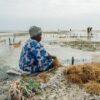
Explainer: How the GEF Funds Global Environmental Action
The Global Environment Facility, widely known as the GEF, plays a central role in financing environmental protection across the world. It supports developing countries in tackling climate change, biodiversity loss, land degradation, pollution, and threats to ecosystems.
Nations pledge $3.9bn to Global Environment Facility as Race to Meet 2030 Goals Tightens
With just four years left to meet a series of global environmental targets, governments are committing to shore up one of the world’s main environmental funds, the Global Environment Facility (GEF), with a $3.9 billion pledge.
EXCLUSIVE: Water Laureate Kaveh Madani on Arrest, Exile and Fight for Science
Professor Kaveh Madani of Iran has been named the 2026 Stockholm Water Prize laureate. The award will be formally presented by King Carl XVI Gustaf of Sweden in August during World Water Week in Stockholm.
World Heating Faster Than Expected, Scientists Sound Alarm in latest UN Report
The global climate system continued its alarming trajectory in 2025, with multiple indicators reaching record or near-record extremes, underscoring the accelerating pace of climate change and its cascading impacts on ecosystems and human societies, according to the latest State of the Global Climate 2025 report released by the World Metereological Organisation (WMO).
80 Percent of Rural Households Without Direct Water Access – World Water Report
A new United Nations report has warned that global water inequality remains one of the most pressing development challenges of the decade, with billions still lacking safe drinking water and sanitation – while women and girls continue to bear the heaviest burden of water insecurity.
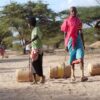
When Drought Steals Childhood: How Climate Shocks in Northern Kenya Are Testing the SDGs
Every morning before sunrise, 10-year-old Amina Adan walks away from school and toward a shrinking water pan on the outskirts of Rhamu, Mandera County. By the time her classmates would be opening exercise books, Amina was already balancing a yellow jerrycan almost half her size.
World Living Beyond Its Means: Warns UN’s Global Water Bankruptcy Report
The world has entered what United Nations researchers now describe as an era of Global Water Bankruptcy, a condition where humanity has irreversibly overspent the planet’s water resources, leaving ecosystems, economies, and communities unable to recover to previous levels.
Living with nature, the climate lesson from Brazil’s caatinga
“The work of collecting seeds saved me from depression,” caused by her daughter's suicide at the age of 29, said Maria do Desterro Soares, 64, who lives in the poor rural community of Jatobá in northeastern Brazil.
Climate Justice Denied by Delays
Opinions have been divided over the annual UN climate conferences. While some see COP30 in Belém, Brazil, as confirming their irrelevance, others see it as a turning point in the struggle for climate justice.
From COP28 to Belém – Climate Security is Health Security
Around the world, the climate crisis is fast becoming the biggest public-health threat of the century. Extreme heat now kills more Europeans than any other natural disaster. Floods in Asia displace millions and contaminate water supplies. Mosquito-borne diseases once confined to the tropics are appearing in southern Europe and the United States.
As COP30 Takes Place, Can Africa Draw Lessons from Brazil on How It Develops Its Livestock Sector?
As the world gathers in Brazil for the UN climate talks, the country’s livestock sector - one of the largest in the world - is understandably in the spotlight.
Hollow Promises or Hope?
COP30 Brazil – Moment of Truth for the Planet
COP30 Brazil, though shadowed by the absence of many world leaders, remains a pivotal milestone in the global fight against climate change, tasked with building on the Paris Agreement’s momentum. Yet the glaring lack of commitment, coupled with withdrawals from the accord, casts a grim shadow over the future. The planet continues to warm, and scientists warn that current targets may not prevent a catastrophic temperature spike. While the summit’s focus on implementation not just new promises—is a welcome shift, it’s clear: words alone won’t cool the Earth.

Turning Indigenous Territories From ‘Sacrifice’ Zones to Thriving Forest Ecosystems
A report by the Global Alliance of Territorial Communities (GATC) and Earth Insight paints a stark picture of how extractive industries, deforestation, and climate change are converging to endanger the world’s last intact tropical forests and the Indigenous Peoples who protect them.
Guatemalan Peasants Overcome Drought in the Dry Corridor
Water scarcity that relentlessly hits the rural communities in eastern Guatemala, located in the so-called Central American Dry Corridor, is a constant threat due to the challenges in producing food, year after year. But it is also an incentive to strive to overcome adversities.« Previous Page — Next Page »





Today, some two billion people depend on ecosystems in dryland areas, with 90 percent of them living in developing countries. But the pace of arable land degradation is accelerating – now estimated at 35 times the historical rate -- impacting biodiversity, availability of clean water and food security, as well as exposing vulnerable communities to the harsh impacts of climate change. As the only legally binding international agreement linking environment and development to sustainable land management, the United Nations Convention to Combat Desertification (UNCCD) works to improve the living conditions of people in the drylands. IPS looks at local solutions being implemented around the world, from restoring soil productivity and mitigating the effects of drought, to projects that empower communities to manage their dryland resources more effectively.

The Week with IPS

Tracking global progress towards a sustainable world
