
Thursday, October 1, 2026



News and Views from the Global South
Combating Desertification and Drought
DEVELOPMENT: Climate Change Likely to Increase African Hunger Woes
Africa, the continent already most affected by hunger and food scarcity, is likely to see its woes increased due to climate change and the changing rain patterns it provokes, experts and scientists say.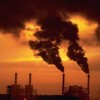
CLIMATE CHANGE: The Rising Tide of Environmental Refugees
Our early twenty-first century civilisation is being squeezed between advancing deserts and rising seas.
Q&A: Desertification and Climate Change Go Hand in Hand
"The entire social fabric of an area is compromised when soils are depleted," says Italian expert Massimo Candelori, whose fight against desertification is increasingly linked to global efforts to combat climate change.CLIMATE CHANGE: Food Supply Hangs in the Balance
Rocketing food prices and hundreds of millions more starving people will be part of humanity's grim future without concerted action on climate change and new investments in agriculture, experts reported this week.ENVIRONMENT: Synergies in Fight Against Desertification , Climate Change
Climate change aggravates soil degradation, but sustainable use of land resources can, in turn, mitigate global warming, according to participants at the United Nations conference on desertification in the Argentine capital.ENVIRONMENT: Could Food Shortages Bring Down Civilisation?
In early 2008, Saudi Arabia announced that, after being self-sufficient in wheat for over 20 years, the non-replenishable aquifer it had been pumping for irrigation was largely depleted.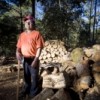
ENVIRONMENT: Desertification – a Macroeconomic Problem
Understanding desertification as a macroeconomic problem, with financial, productive, environmental and civil society aspects, is a major concern for Christian Mersmann, the managing director of the Global Mechanism of the United Nations Convention to Combat Desertification (UNCCD).LATIN AMERICA: Desertification – an Invisible Cancer
"Desertification is the cancer of the earth," Argentine geographer Elena Abraham told IPS. "It is a process of degradation that does not manifest itself in spectacular ways but furtively advances, and by the time it is visible there is nothing to be done, and people have to move away, in search of an alternative."MALI: Technology Transfer So Slow "We’ll Have to Copy Like China"
Cars and motorcycles are stuck because of the heavy rains that have drenched Mali’s capital for the past few days. It is late afternoon and the water, mud and damaged fruit from nearby stalls make the journey for those heading home to celebrate Ramadan even more treacherous.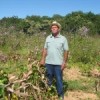
BRAZIL: When the Arid Northeast Turns Green
The rain - usually much desired because it is so scarce - has come in excess this year, destroying many crops. But in this farming district in far north-eastern Brazil, the impact of the heavy rainfall was less marked than in the past, thanks to the diversification of crops and productive activities.
BRAZIL: Courts – the Battleground for Fight Against Paper Mills
The battle against the wood pulp ndustry has intensified in the Brazilian courts, especially in those states where eucalyptus plantations have expanded the most: Bahia and Espírito Santo in the east and Rio Grande do Sul in the south.
Q&A: 'If You Feed the Land, It Will Feed You Back'
Luc Gnacadja, who took over as Executive Secretary of the United Nations Convention to Combat Desertification (UNCCD) last October, is a man with a mission - a mission that goes beyond explaining that his job is not to battle deserts.ENVIRONMENT-CAMEROON: Operation Green Sahel Resumes
"I have come to plant trees - that is why I have left my jacket and tie in Yaoundé" declared Cameroon's Minister of Forest and Wildlife, Elvis Ngolle Ngolle, as he launched the tree planting at a small village near the town of Kousseri, in the north of the country. In four minutes, the minister and his staff planted a hundred trees as a bulwark against rapidly encroaching desert.ENVIRONMENT-BURKINA FASO: Winning People Over to Fight Deforestation
In the West African nation of Burkina Faso, millions of trees are planted every year to reverse desertification. However the growing socio-economic needs of local populations pose a constant threat to these efforts.AUSTRALIA: Food At Risk From Bee Pest
Australia’s food security is under threat from a tiny parasite with the potential to devastate the nation’s bee and pollination industries.
G8 SUMMIT: Japan To Champion Africa's Cause
The state of the world economy will as usual top the agenda of the G8 summit of major western industrial nations. But Japanese Prime Minister Yasuo Fukuda, who will chair the high-level gathering, is keen to devote equal attention to climate change and the development of Africa.
DEVELOPMENT-KENYA: Water Studies – But Where Are the Water Supplies?
The road leading to the informal settlement of Korogocho is narrow and winding. Here, in Nairobi's third largest slum, up to 150,000 people are crammed into an area of just over one square kilometre, their shanties made of cardboard, wood or metal.ENVIRONMENT: Not Enough Done to Protect Biodiversity
The UN conference on biodiversity opened in the former German capital Bonn this week in the face of new evidence that many countries, particularly the industrialised ones, are not complying with their declared goal of "substantially reducing the loss of biological diversity."CLIMATE CHANGE: Displacements Set To Increase
Climate change is likely to lead to an increase in conflicts and forced migrations of poor people in the south, a new report warns. Developing countries can reduce this impact by adopting preventative measures now, while international law and human rights principles need to be updated.
ETHIOPIA: A Leader Who Is Living History
Ethiopia is better known for recurring droughts and famines, a protracted civil conflict, and a border war with Eritrea. It is one of the poorest countries in the world, and a large percentage of the population lives in absolute poverty.ENVIRONMENT-NICARAGUA: Indigenous Groups Sound Forest Fire Alarm
Indigenous community leaders have sent a letter to the Nicaraguan authorities requesting protection against the risk of a potentially huge forest fire that would endanger about 60,000 families.« Previous Page — Next Page »


Today, some two billion people depend on ecosystems in dryland areas, with 90 percent of them living in developing countries. But the pace of arable land degradation is accelerating – now estimated at 35 times the historical rate -- impacting biodiversity, availability of clean water and food security, as well as exposing vulnerable communities to the harsh impacts of climate change. As the only legally binding international agreement linking environment and development to sustainable land management, the United Nations Convention to Combat Desertification (UNCCD) works to improve the living conditions of people in the drylands. IPS looks at local solutions being implemented around the world, from restoring soil productivity and mitigating the effects of drought, to projects that empower communities to manage their dryland resources more effectively.

The Week with IPS

Tracking global progress towards a sustainable world
