
Friday, November 20, 2026



News and Views from the Global South
Climate Change
CLIMATE CHANGE: Crisis After Kyoto Confronted
Human-made emissions of greenhouse gases believed to provoke damaging climate change must peak in the next 10 to 15 years, and be reduced afterwards by well over 50 percent from current levels until 2050, a top UN climate official said here Tuesday.ENVIRONMENT-US: Flying Blind Into Monster Storm Season
Category Five Hurricane Dean is just the first of several monster storms coming this hurricane season, meteorologists predict.
ENVIRONMENT: Carving Up the Melting North
As climate change hit a cultural tipping point in 2007, with more and more people expressing concern and awareness of the risks posed by rising greenhouse gases, warming in the Arctic is already altering the landscape in Canada's north.ENVIRONMENT: Satellites Show Logging Decline in Peru’s Amazon Region
Rainforest conservation policies are reducing the rate of deforestation in the Peruvian Amazon, but roads are unquestionably the drivers of change, new satellite data reveal.CLIMATE CHANGE: Deniers Jump on NASA Gaff, While Greenland on Verge of Meltdown
Scientists warn that climate change tipping points are imminent, and will lead to potentially catastrophic events like a seven-metre sea level rise. Meanwhile, conservatives in the North American media are focusing on a NASA admission of a climate calculation error.DEVELOPMENT: Water as a Right and Key to Social Stability
A top United Nations official has learned through personal experience what it is like to live without safe drinking water during her visits home to the Tanzanian capital.
Q&A: Global Fight to Protect the Ozone Layer Celebrates 20 Years
The main achievement of the 20-year-old Montreal Protocol was to establish the process for recovering the ozone layer that protects life on Earth, although the enormous hole that opens every year over Antarctica will continue to happen for the next decade, says the head of the Ozone Secretariat, Marco González.ENVIRONMENT: UN Skips Gender Perspective in Climate Change
When the United Nations concluded a two-day debate Thursday on the potential devastation from climate change, it covered a lot of territory: deforestation, desertification, greenhouse gases, renewable energy sources, biofuels and sustainable development.CLIMATE CHANGE: EU Car Makers Have a Long Road Ahead
Over the next few months, members of the European Parliament (MEPs) will mull proposed limits on the amount of greenhouse gases emitted by the traffic that clogs up the continent's roads each day. If the experience so far this year is anything to go by, the MEPs will almost certainly be heavily lobbied by car makers determined to avoid measures that could prove vital in fighting climate change but which they deem too costly.
ENVIRONMENT: Climate-Driven Pest Devours Canada’s Forests
Environmentalists and researchers say that climate change is a significant factor in the pine beetle epidemic that has ravaged forests in the western Canadian provinces of British Columbia (BC) and Alberta.PAKISTAN: Uncontrolled Population Blamed for Climate Change
When it comes to climate change population matters, particularly for countries in South Asia, Africa and some Arab countries, says Prof. Khalid Rashid. A mathematician and physicist in Pakistan, he has long been studying the phenomenon of global warming and views the uncontrolled population explosion with much trepidation.
ENVIRONMENT: Tiny Tuvalu Fights for Its Literal Survival
The second smallest nation on Earth hopes to turn itself into an example of sustainable development that others can emulate.ENVIRONMENT-JAPAN: Quake Devastates Nuclear Power Plans
Reports of radiation leakages at a nuclear power plant, following the Niigata earthquake on Monday, have raised widespread public alarm and dealt a devastating blow to the government’s plans to boost the nuclear power industry, both domestically and abroad.ENVIRONMENT: Act Now on Global Warming – Top US Companies
The chief executives of 160 largest United States companies released a new policy statement on climate change here, Tuesday, warning that ‘’the consequences of global warming for society and ecosystems are potentially serious and far-reaching’’ and asserting that ‘’the time for action is now.’’
ENERGY: Nuclear Power No Panacea, Critics Say
The nuclear mishap caused by Monday's earthquake in Japan has unleashed another wave of environmental concerns about the use of nuclear technology to meet the world's energy needs.
ECUADOR: Doubts Surround Carbon Absorption Project Near Galapagos
Later this month a U.S. company, Planktos Inc., plans to dump 100 tonnes of iron dust into the ocean near Ecuador's Galápagos Islands, despite opposition from environmental groups and marine scientists.
Q&A: "Climate Change Will Be Important for Years to Come"
This week, Florida's Republican governor announced that he would set a target of cutting the state's greenhouse gas emissions to 20 percent of 1990 levels by 2050, boost energy efficiency standards in new construction and require utilities to produce 20 percent of their electricity from renewable sources.SOUTH-EAST ASIA: Big Bucks Behind Forest Blaze, Haze
The annual phenomenon that is oddly called the ‘haze’ is back and beginning to blanket parts of Malaysia, Singapore and Brunei in thick, acrid smoke from the forest fires in Indonesia, mainly from the Kalimantan and Sumatra islands.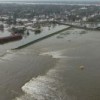
ENVIRONMENT-US: The Lessons of the Levees
Despite mounting data that storms coming out of the Gulf of Mexico could bring catastrophic flooding to the U.S. Gulf Coast, the U.S. Army Corps of Engineers (USACE) failed to implement a proposed barrier plan in New Orleans that would have used floodgates to keep storm surge out of Lake Pontchartrain and the canals leading into the city.
CLIMATE CHANGE-CARIBBEAN: Uniting Against Future Adversity
Adapting to climate change in the island nations of the Caribbean, a region particularly vulnerable to rising sea levels, requires strengthening collective responses based on exchange and cooperation.
ENVIRONMENT: Replanting the Planet
In reviewing the literature on soil erosion, references to the "loss of protective vegetation" occur again and again. Over the last half-century, we have removed so much of that protective cover by clearcutting, overgrazing, and overplowing that we are fast losing soil accumulated over long stretches of geological time.« Previous Page — Next Page »


As unsustainable human consumption and production systems are driving changes in average temperatures and weather patterns, "abnormal" is increasingly becoming the norm. So far, a lack of financing has been standing in the way of a comprehensive global plan for climate adaptation, and a global financial crisis has contributed to an increasing reliance on public-private partnerships. Our Climate Change page provides you with the latest news about international and local efforts to address what's frequently been called "the challenge of our time", the forces behind the climate change and the impact it has on the world's most vulnerable populations. Along the way, we bring you stories on growing citizen awareness, new scientific data, and emerging climate policies towards sustainable development.

The Week with IPS

Tracking global progress towards a sustainable world

